Review of the 10 LEGO Speed Champions Formula 1 Cars from 2025: Are They All Worth Buying?
Published on 05-06-2026
I personally purchased the set featured in this review for my own collection. I am therefore offering you an independent opinion based on my hands-on experience with the set and my experience as a LEGO enthusiast.
Summary of the 2025 LEGO Speed Champions Formula 1 Sets Review
- ✅ Highly detailed models of the 2024 season F1 cars
- ✅ Interesting building experience, as always with Speed Champions
- ✅ All 10 teams available
- ✅ Exclusive driver helmets
- ✅ Variations in the building techniques used for each F1 car...
- ⛔️ ...but building all ten sets in a row becomes repetitive
- ⛔️ A lot of stickers
- 👍 Recommended purchase for Speed Champions collectors and F1 fans
- 45%
best price 14.90 $*
77242 - Ferrari SF-24
 Number of pieces :275,
  Number of minifigures :1,
  Issue date :Mar 2025
* Prices on this page correspond to the best prices, excluding shipping cost, found during the last verification for sellers shipping to USA. Price and availability may have changed since verification, go to the product page to check updated prices and offers available in other countries.
Review of the First 10 Speed Champions Cars from the F1 Partnership
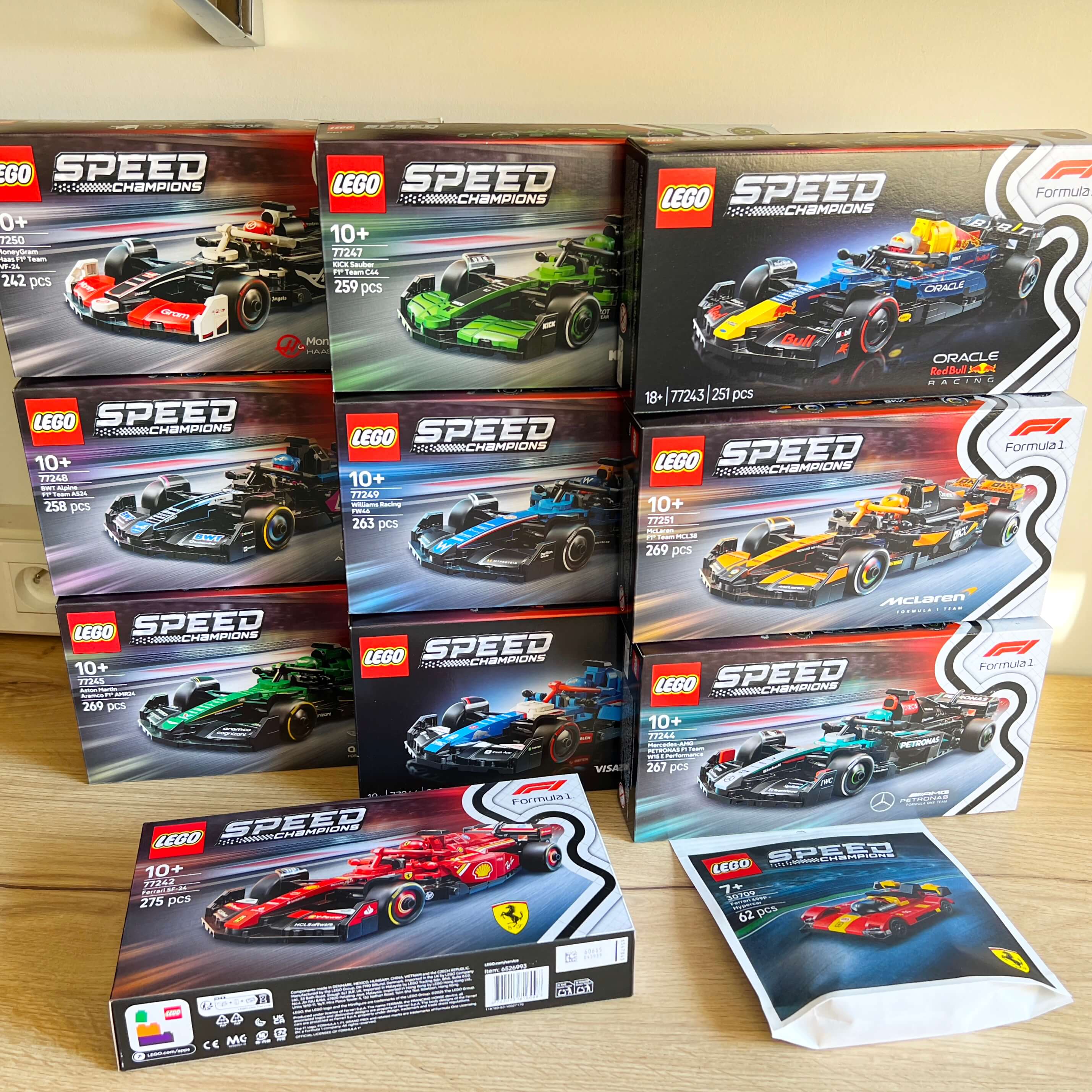
For this new review, we're returning to the LEGO Speed Champions theme for a combined review of the 10 Formula 1 cars released in March 2025 as part of the official LEGO F1 partnership. While Speed Champions sets are usually released one at a time, LEGO chose on this occasion to launch all 10 cars simultaneously, representing the ten teams that competed in the 2024 Formula 1 World Championship.
As a Speed Champions collector, I was somewhat skeptical when LEGO announced these 10 sets, which appeared almost identical apart from their colors. However, I still decided to buy them to see how they would hold up in person. That's exactly what I invite you to discover in this combined review.
F1 Speed Champions Set Specifications: A Standard Price Point
| Set | Lego price | Year | Pieces | Minifigs | Price/ Piece | Price/ Minifig |
|---|---|---|---|---|---|---|
| 76919 2023 McLaren Formula 1 Car | 26.99 $ | 2024 | 245 | 1 | 0.11 $ | 26.99 $ |
| 77242 Ferrari SF-24 | 26.99 $ | 2025 | 275 | 1 | 0.098 $ | 26.99 $ |
| 77243 Oracle Red Bull Racing RB20 | 26.99 $ | 2025 | 251 | 1 | 0.108 $ | 26.99 $ |
| 77244 Mercedes-AMG PETRONAS F1 Team W15 E Performance | 26.99 $ | 2025 | 267 | 1 | 0.101 $ | 26.99 $ |
| 77245 Aston Martin Aramco F1 AMR24 | 26.99 $ | 2025 | 269 | 1 | 0.1 $ | 26.99 $ |
| 77246 Visa Cash App VCARB 01 | 26.99 $ | 2025 | 248 | 1 | 0.109 $ | 26.99 $ |
| 77247 KICK Sauber F1 Team C44 | 26.99 $ | 2025 | 259 | 1 | 0.104 $ | 26.99 $ |
| 77248 BWT Alpine F1 Team A524 | 26.99 $ | 2025 | 258 | 1 | 0.105 $ | 26.99 $ |
| 77249 Williams Racing FW46 | 26.99 $ | 2025 | 263 | 1 | 0.103 $ | 26.99 $ |
| 77250 MoneyGram Haas F1 Team VF-24 | 26.99 $ | 2025 | 242 | 1 | 0.112 $ | 26.99 $ |
| 77251 McLaren F1 Team MCL38 | 26.99 $ | 2025 | 269 | 1 | 0.1 $ | 26.99 $ |
For the usual price-per-piece comparison, I included the previous Speed Champions F1 set, 76919 McLaren Formula 1 2023 (released in 2024), to see how these new models compare. There has been no change in pricing: all 10 new F1 sets retail for $26.99, exactly the same price as the 2024 model, which remains the standard Speed Champions price. The part count is also similar: while the 2024 McLaren contained 245 pieces, the 2025 sets range from 242 pieces (Haas) to 275 pieces (Ferrari), resulting in a price-per-piece ratio between $0.10 and $0.11, which is perfectly in line with the Speed Champions theme.
Building the Sets: Inevitably Repetitive but with Some Welcome Variations
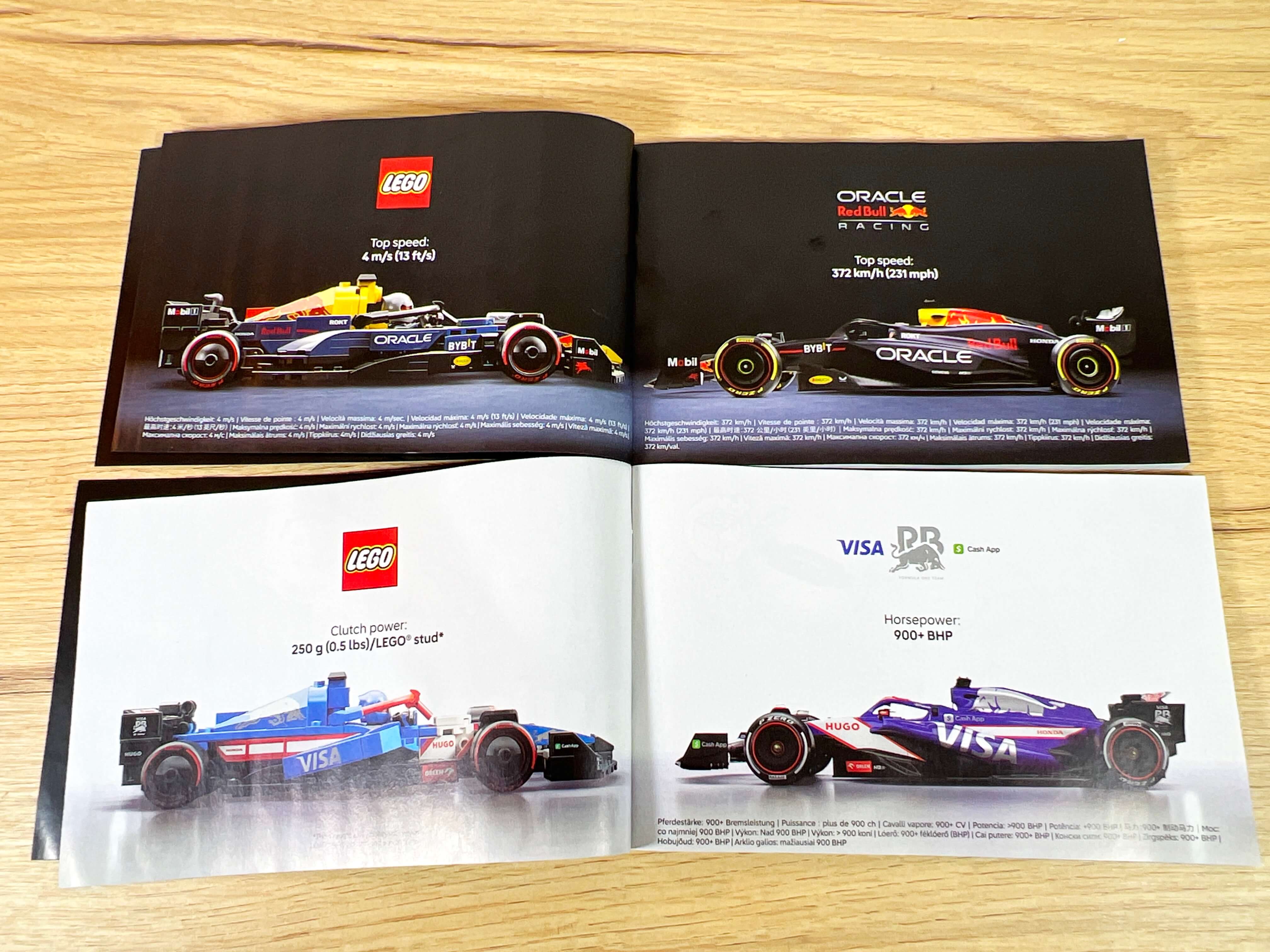
While the boxes of the ten Formula 1 cars are similar to all other LEGO Speed Champions sets, they stand out thanks to the presence of the F1 logo alongside the team's logo. Inside, each box contains six bags of parts, the chassis, the instruction manual, and of course the inevitable sticker sheet. Compared to the basic instruction booklets usually found in the theme, LEGO celebrated the F1 partnership by adding a double-page spread at the beginning of the manual featuring a photo of the real car opposite the LEGO model, along with a fun fact comparing data between the real car and the set: number of pieces, speed, build time, size, and more. While anecdotal, it gives the sets a collectible feel, as this type of content is usually reserved for adult-oriented sets. It's also worth noting that the Oracle Red Bull and Visa Cash sets are labeled 18+, featuring the characteristic black packaging, whereas the others are marked 10+ and use the standard box design. This distinction continues with the instruction manuals, whose covers are also different. It can be explained by Red Bull's presence as the main sponsor of those teams, with LEGO apparently considering that displaying the logo of an energy drink manufacturer on a children's toy would not be appropriate.
Since I bought all 10 sets together, I chose to build them in parallel to better appreciate their differences, completing step 1 of each car before moving on to step 2, and so on. As usual, I filmed the build for the Temple of Bricks YouTube channel.
As expected, the building experience is fairly repetitive across the sets, with some sections being almost identical on every model, such as the front and rear wings and the wheel mounting system. Fortunately, the designer showed considerable creativity when differentiating the rest of the bodywork: sidepods, aerodynamic deflectors, and air intakes all use different building techniques to ensure that each car feels unique.
The Driver Minifigures: Simple Yet Enhanced by a New Helmet
For once, let's start with the minifigures before looking at the cars themselves. As with every Speed Champions set, all ten F1 cars come with a driver. While one might have expected minifigures based on the real drivers, as is often the case with movie-based vehicle sets featuring public figures, that is not the case here. All ten sets include generic yellow-skinned drivers instead. While this choice may disappoint some F1 fans, it is probably due to image rights issues that would have required separate negotiations with each driver. LEGO opted for the simpler solution, and fans of the drivers can take comfort in the new Editions range, which, at the time of writing this review, includes four driver helmets accompanied by minifigures of Charles Leclerc, Lewis Hamilton, Oscar Piastri, and Lando Norris.
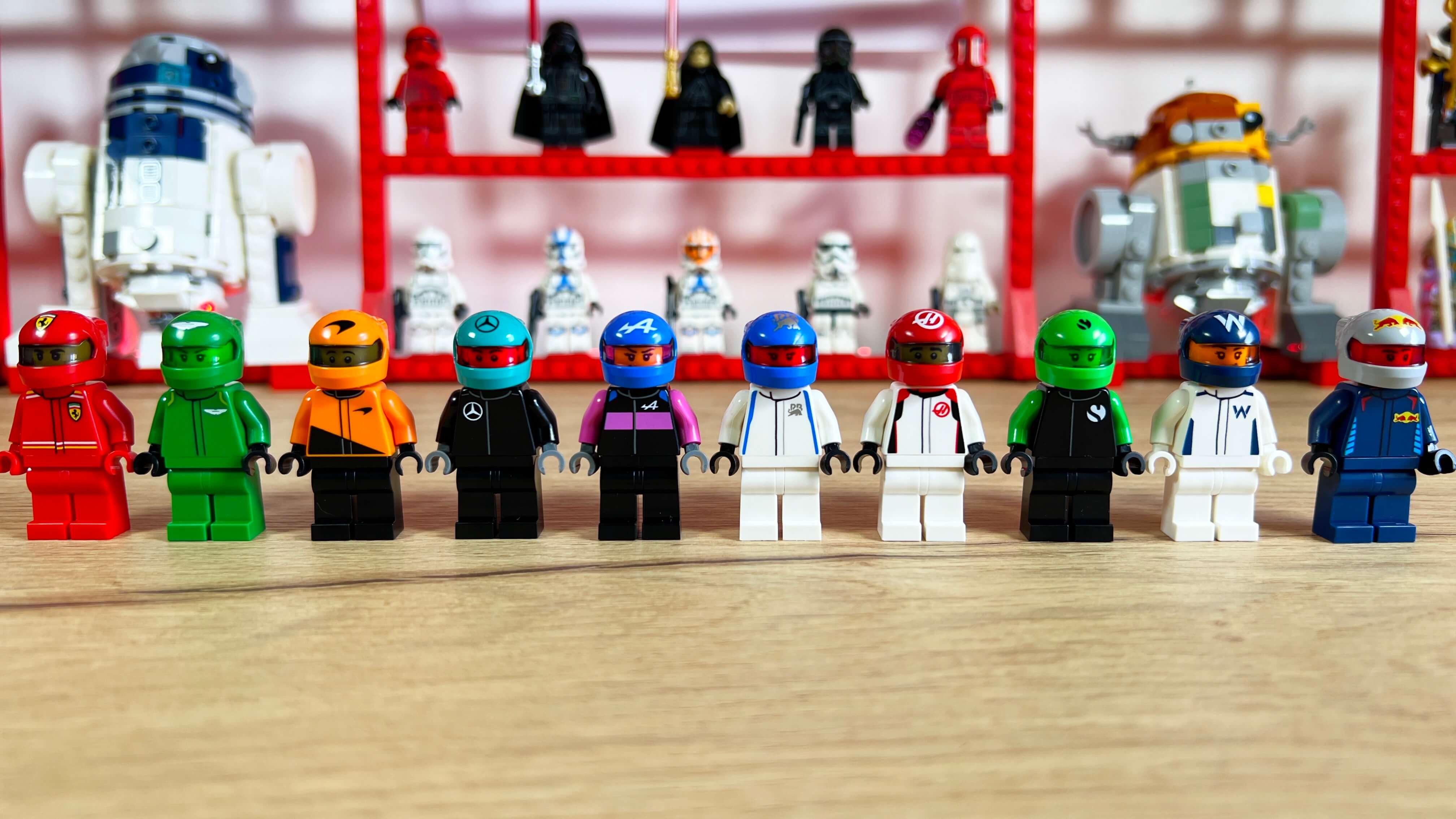
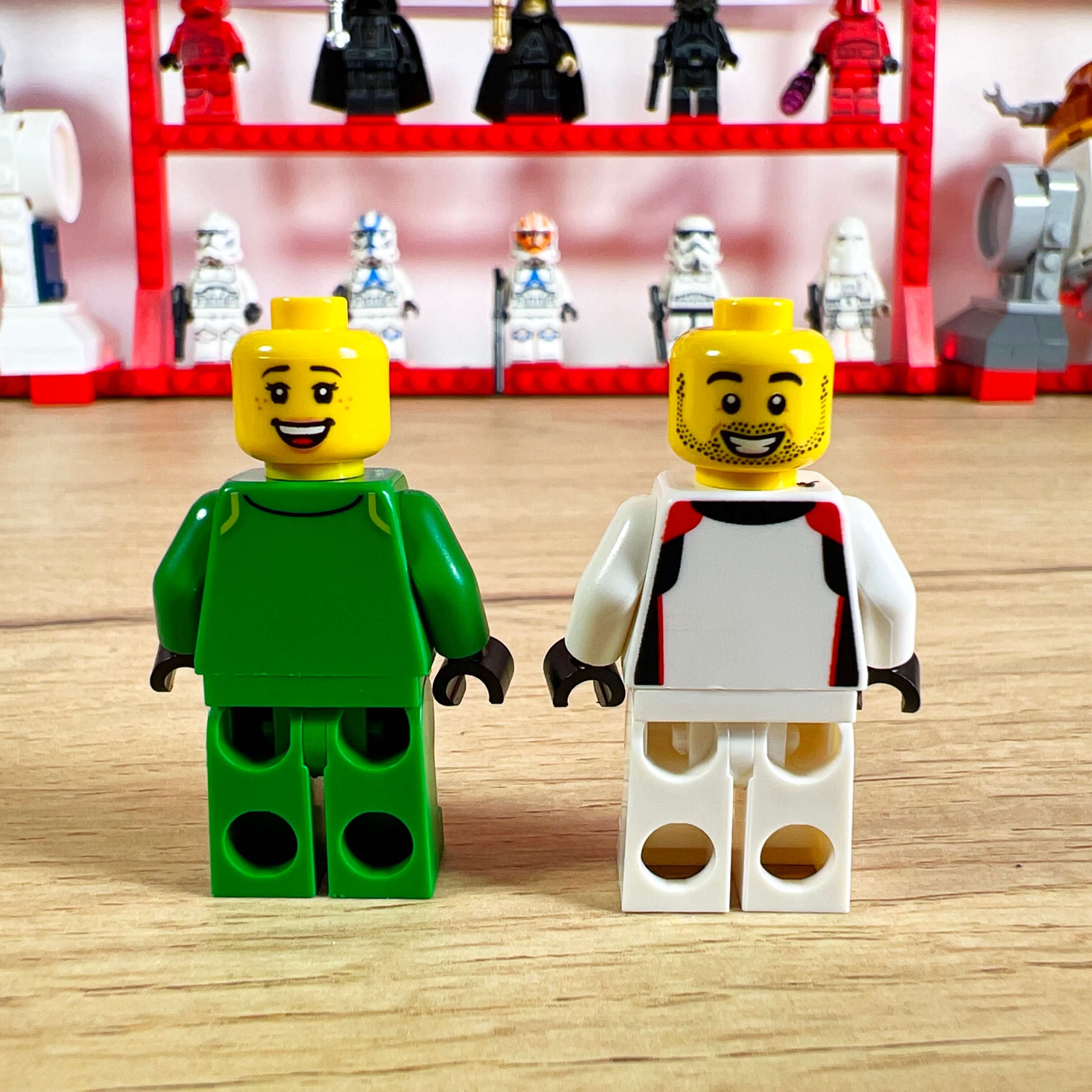
You'll also have to do without detailed racing suits: all ten drivers use plain legs and relatively simple torso designs featuring only the team's logo without any sponsors. Some torsos are exclusive (Red Bull, Visa Cash, Kick Sauber), while the others are also available in the F1 sets released under the City theme (Ferrari, Mercedes, Aston Martin, Alpine, Williams, Haas, and McLaren).
As for the famous yellow heads, they are generic pieces that have already appeared extensively in themes such as City, and LEGO chose to provide five male and five female drivers. Only two of the ten minifigures feature dual-sided faces.

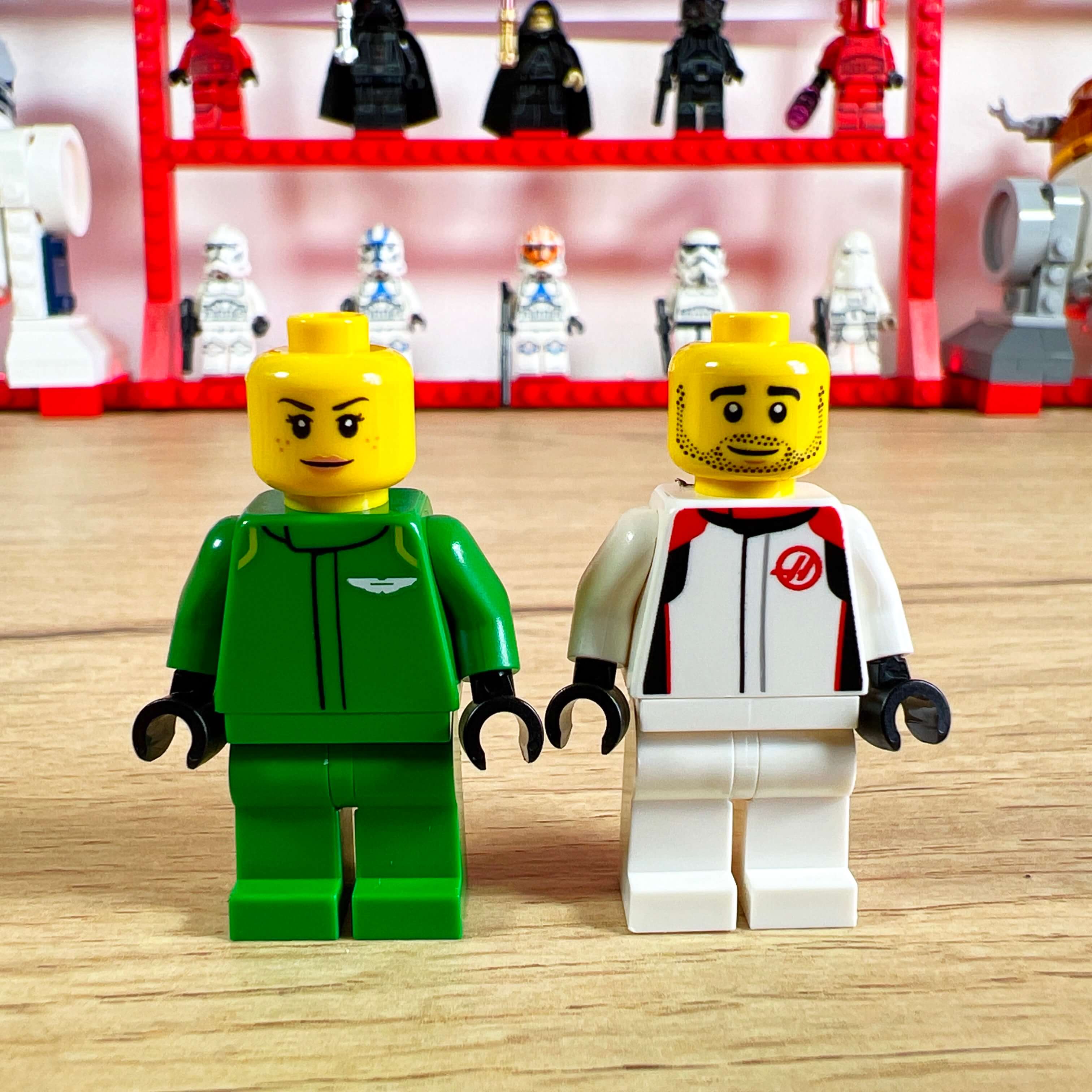
The only truly innovative feature of these minifigures is the new exclusive helmet. Instead of the standard piece, these sets include an exclusive helmet with a unique shape and a visor directly molded using dual-injection technology. The helmets also feature the team's logo printed on the front and are exclusive to these sets: LEGO City F1 sets use the standard helmets, while the collectible mini F1 cars use the same mold but with a different print that does not include the logo. As is often the case with Speed Champions sets, an additional hairpiece is included alongside the helmet.
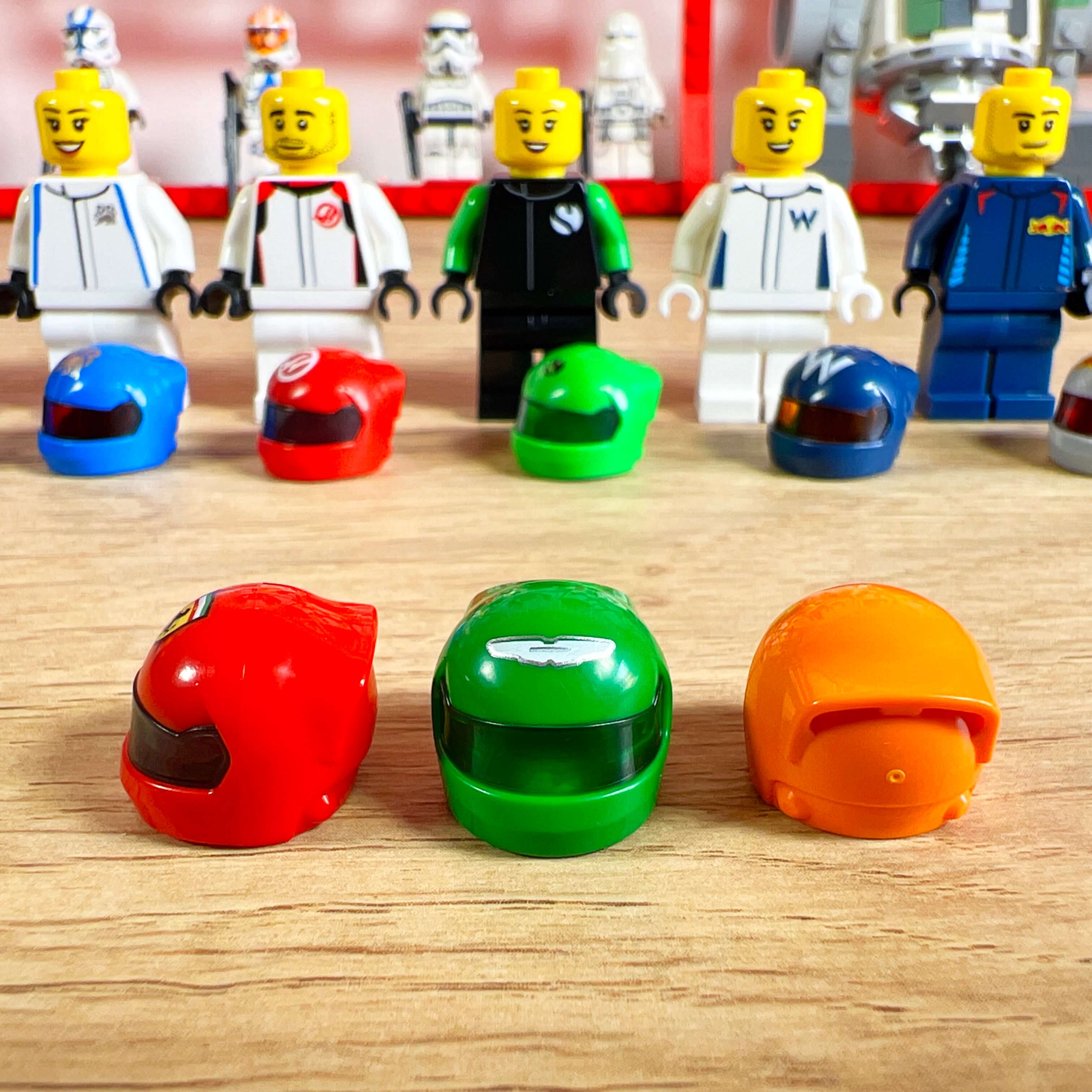
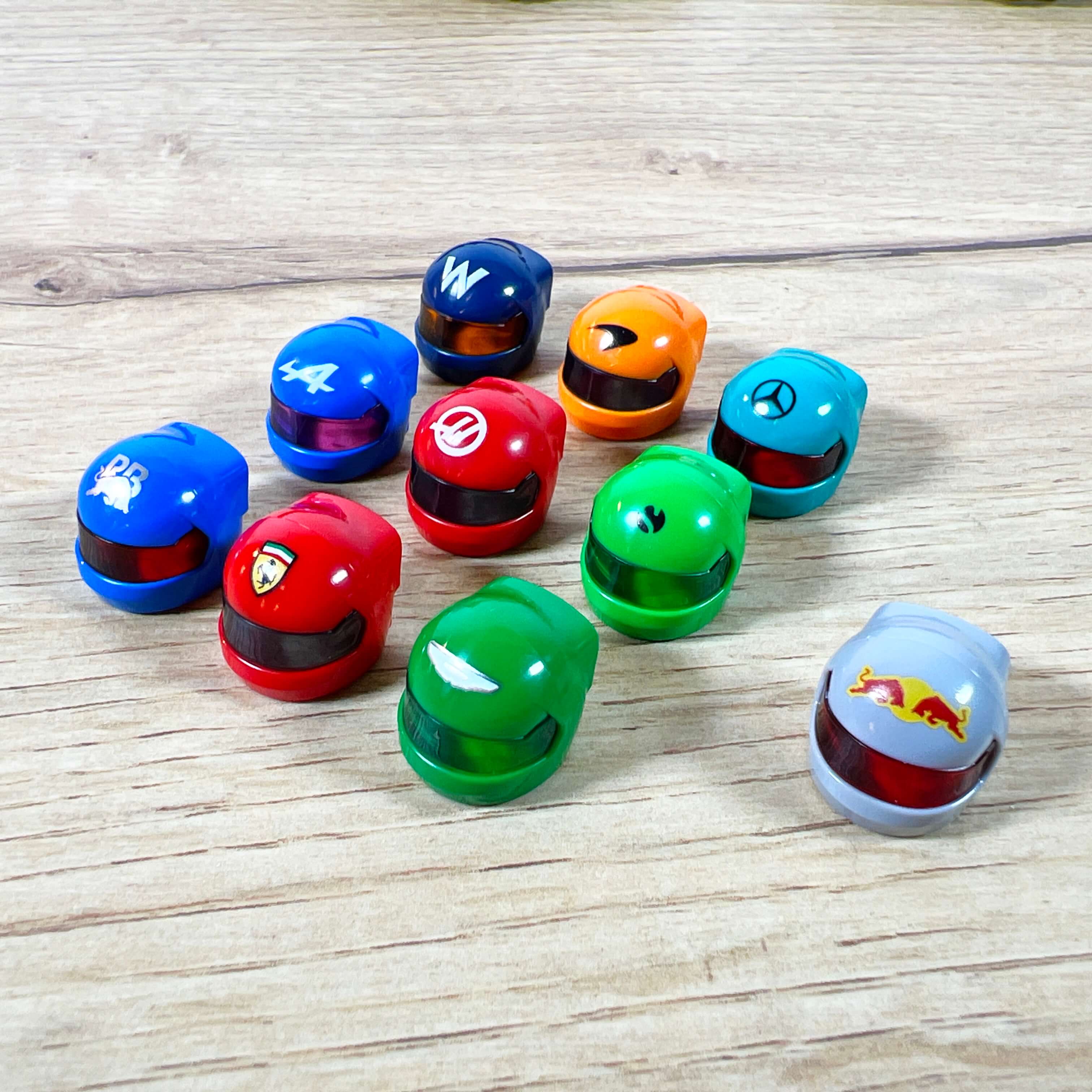
To conclude this section on the minifigures, while it's unfortunate that LEGO didn't include the actual drivers, which would have made these sets perfect, I'm perfectly satisfied with these generic minifigures. As I often say, you don't buy Speed Champions sets for the minifigures, and on these F1 cars, only the helmet remains visible once the driver is seated behind the wheel—and it's an excellent piece.
The F1 Speed Champions Review
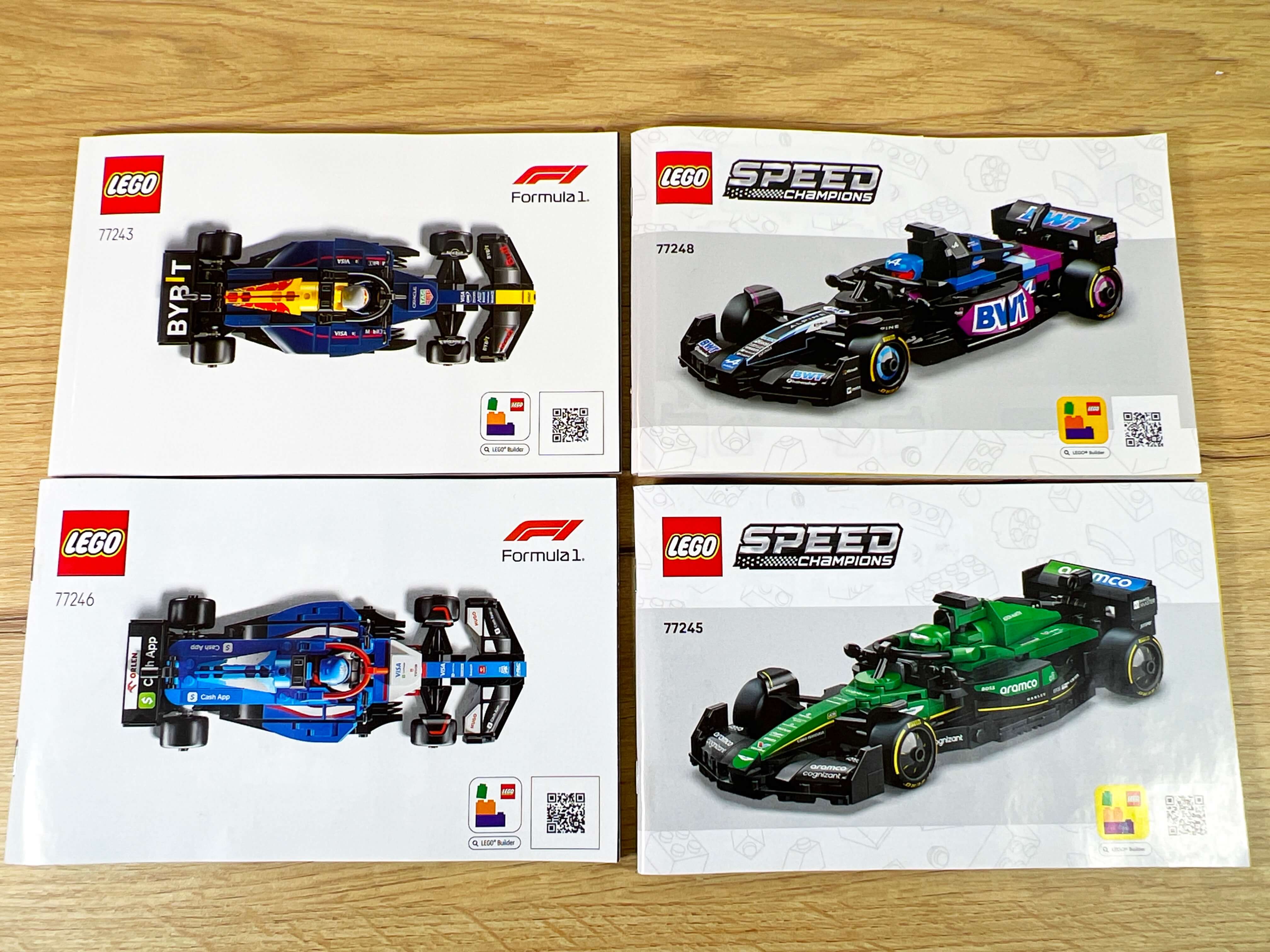
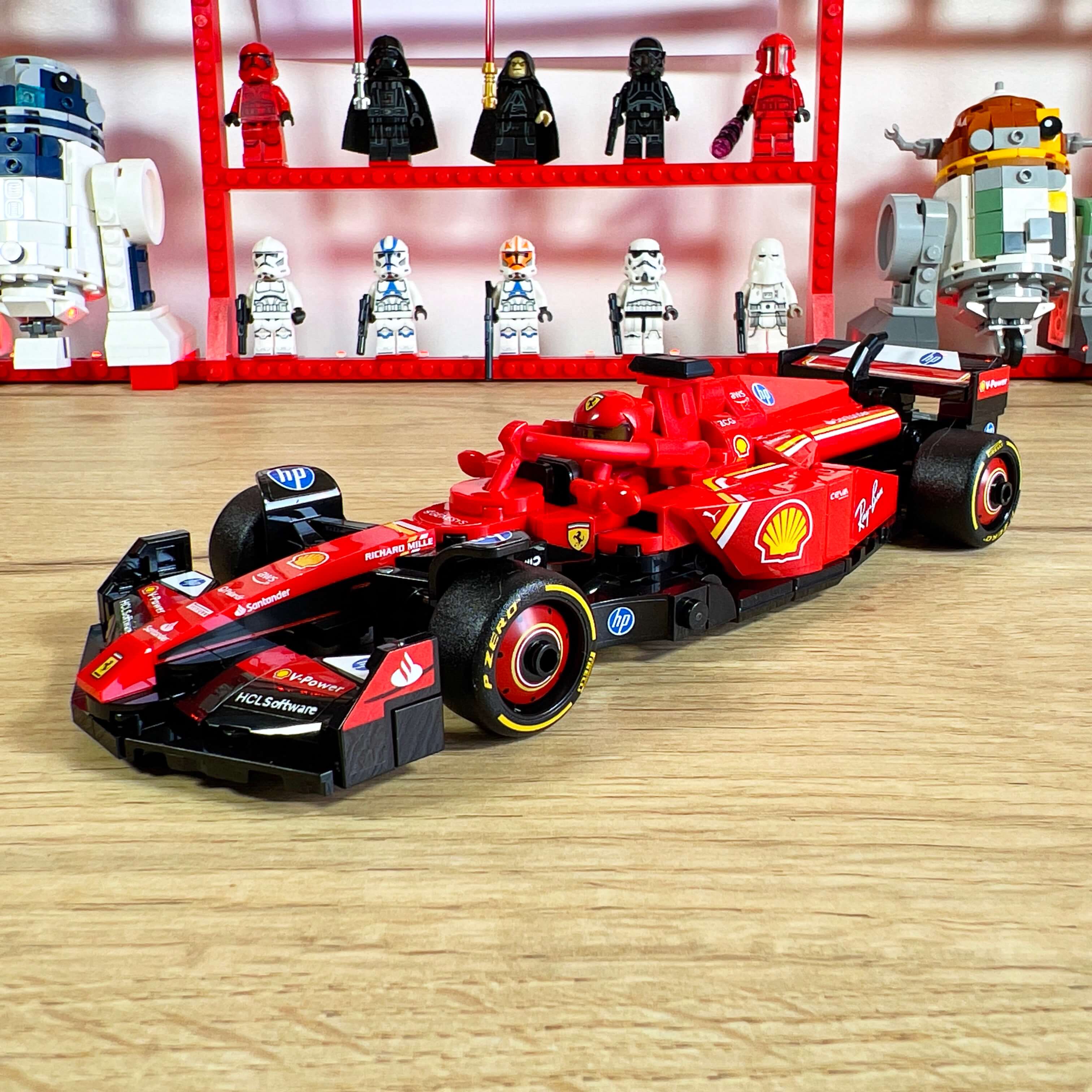
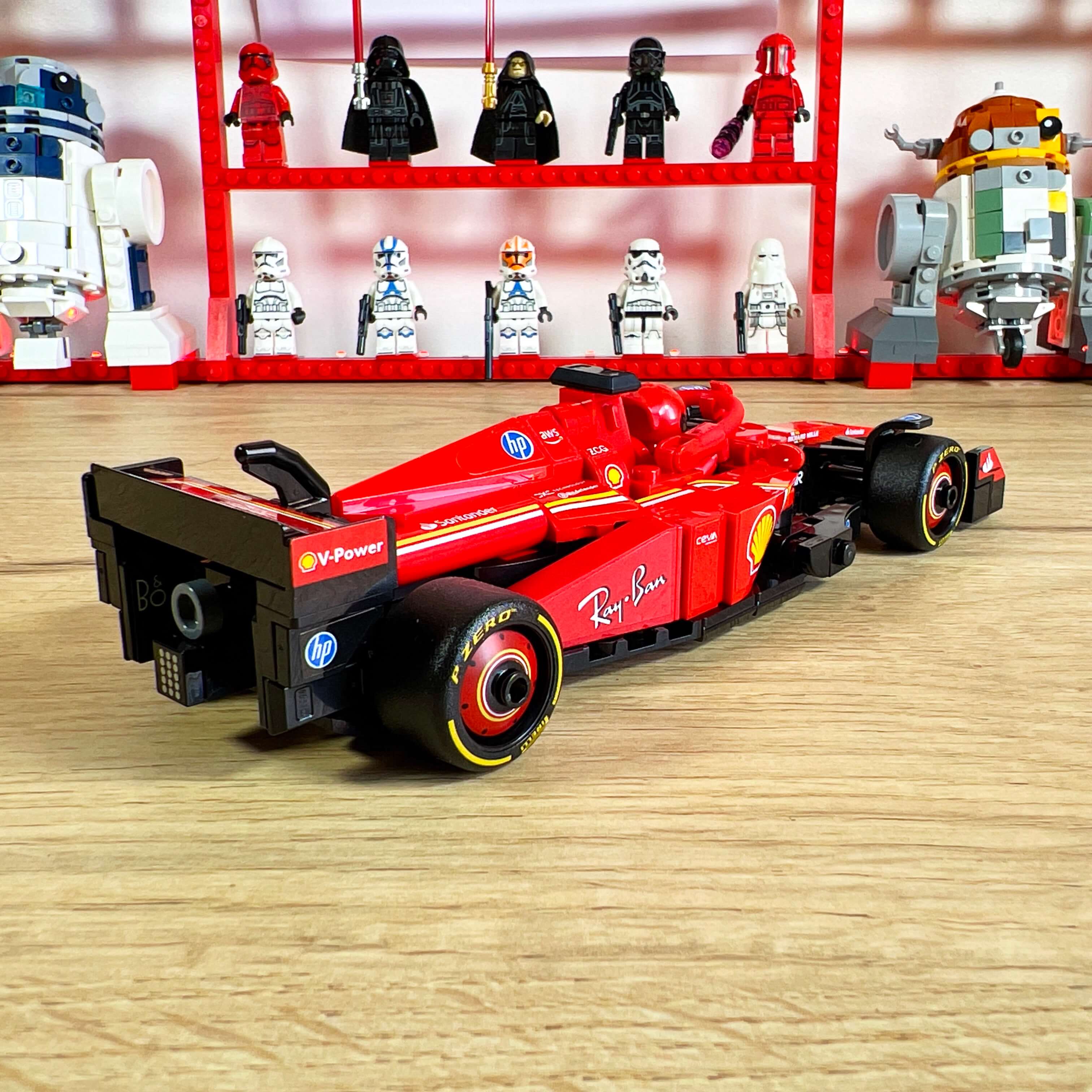
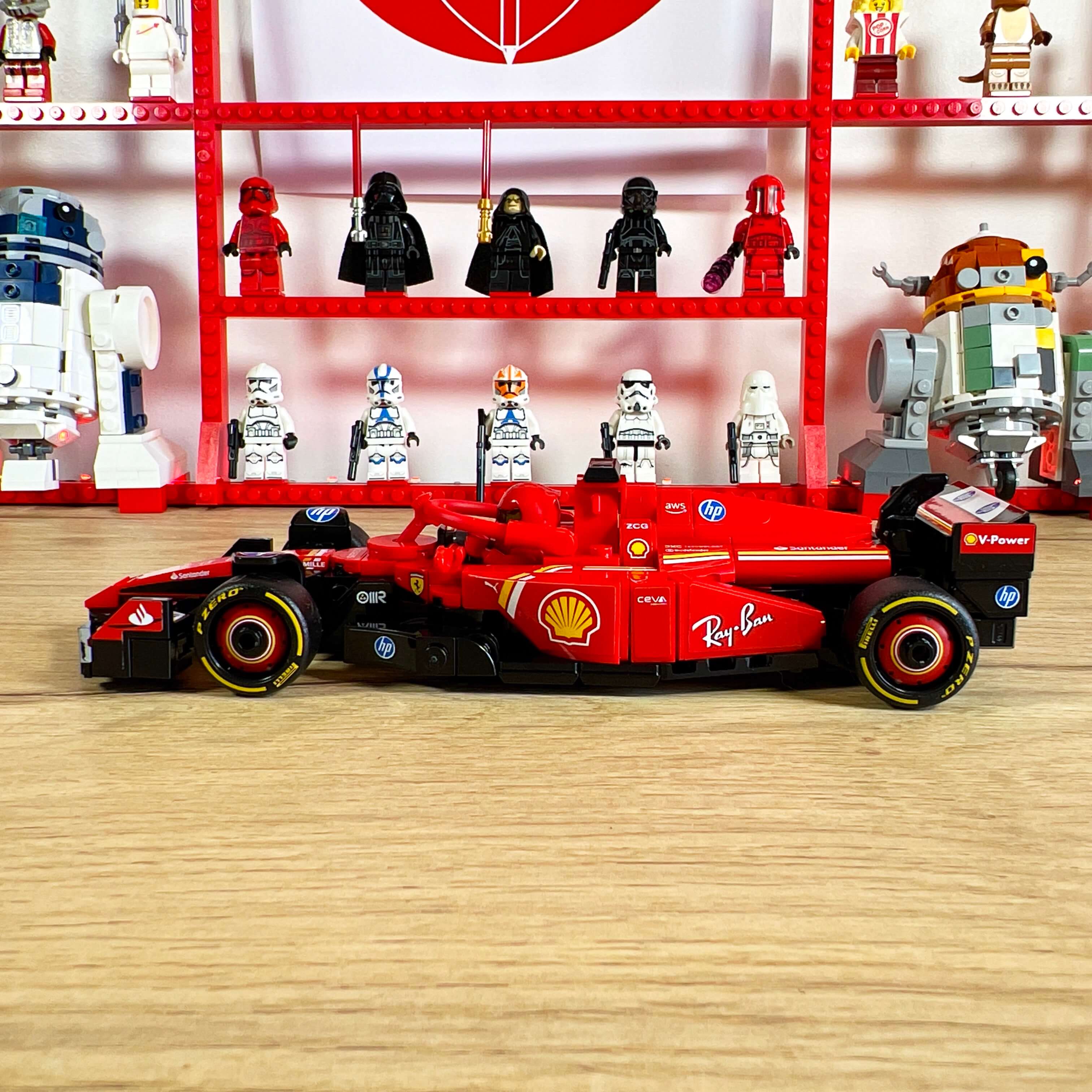
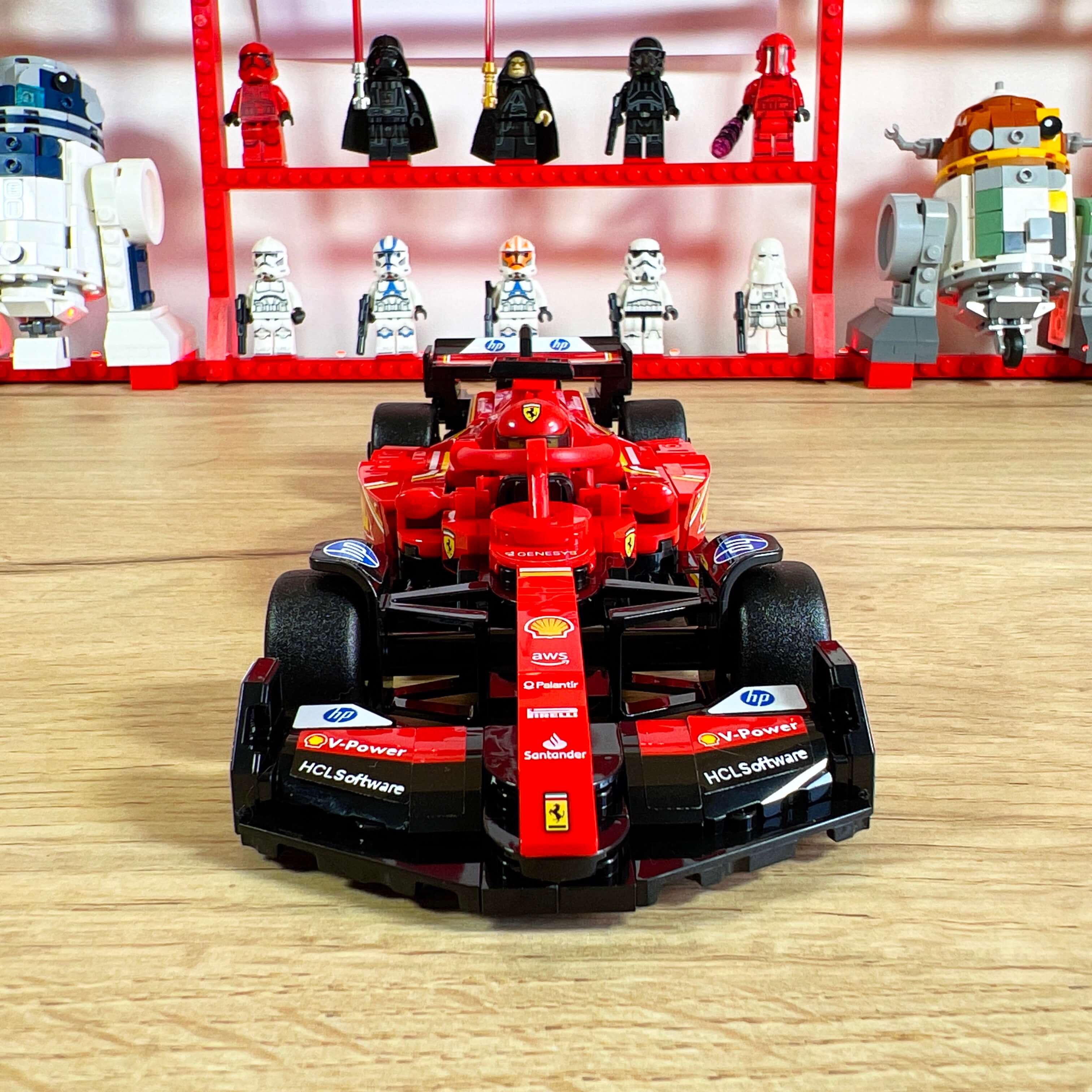
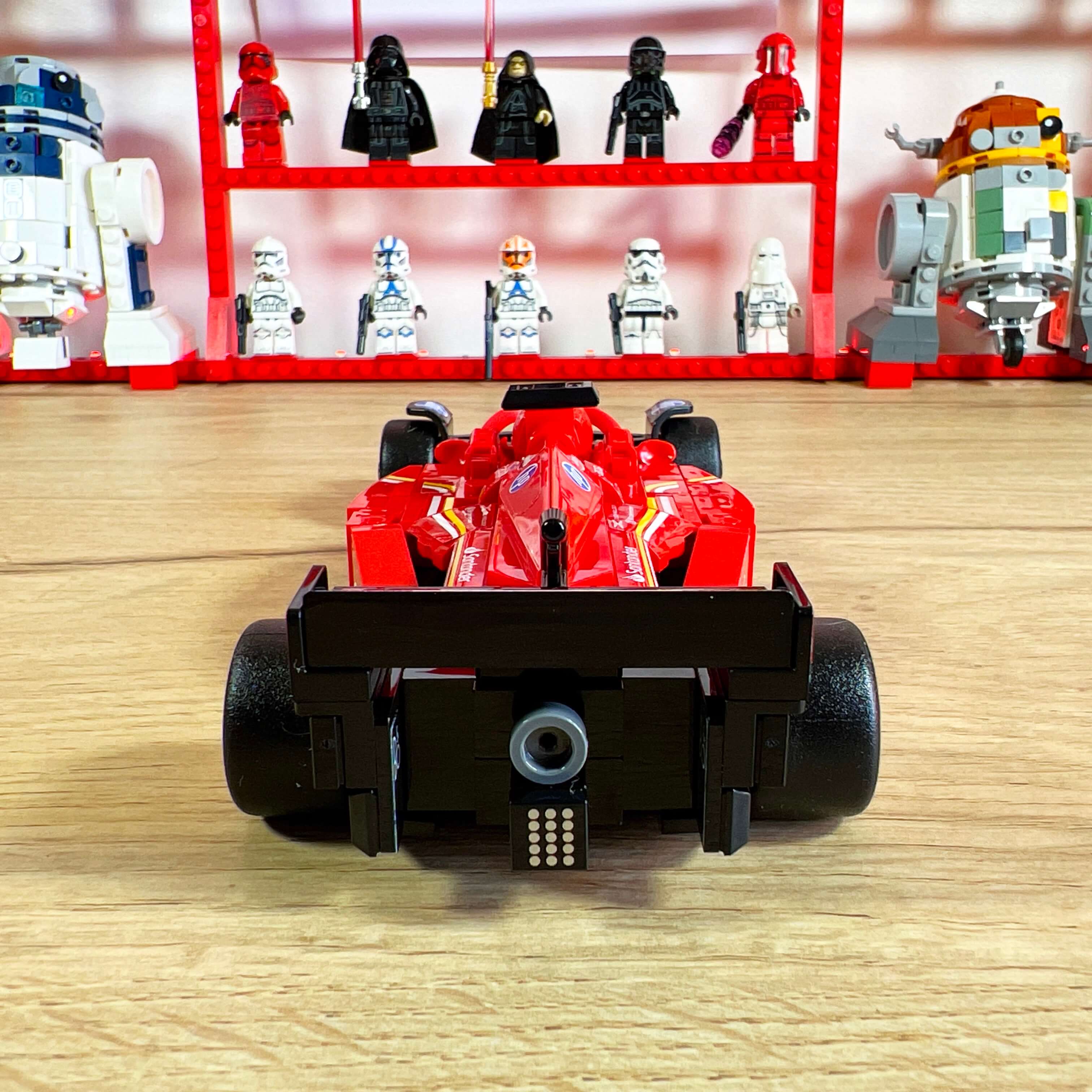
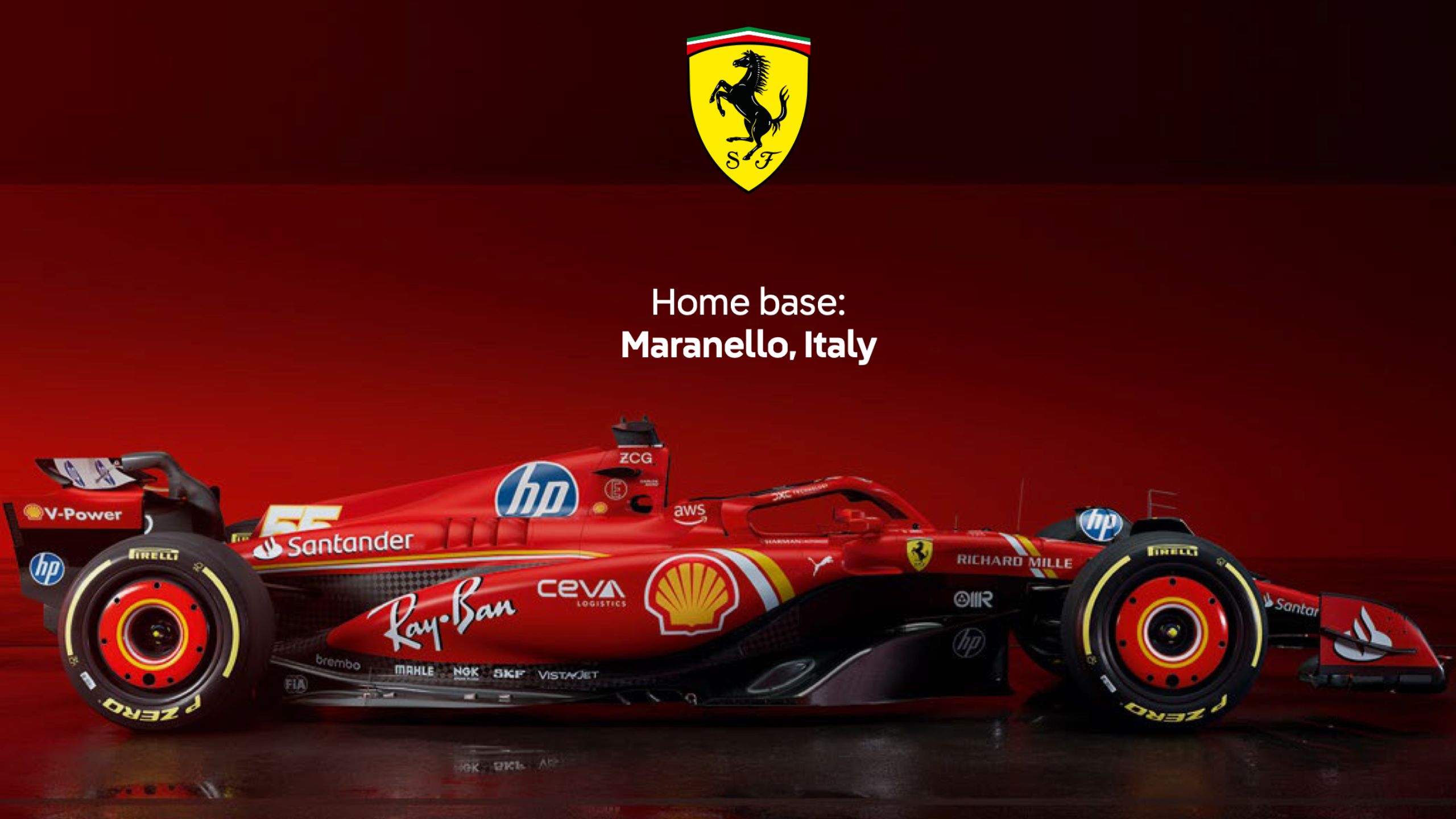
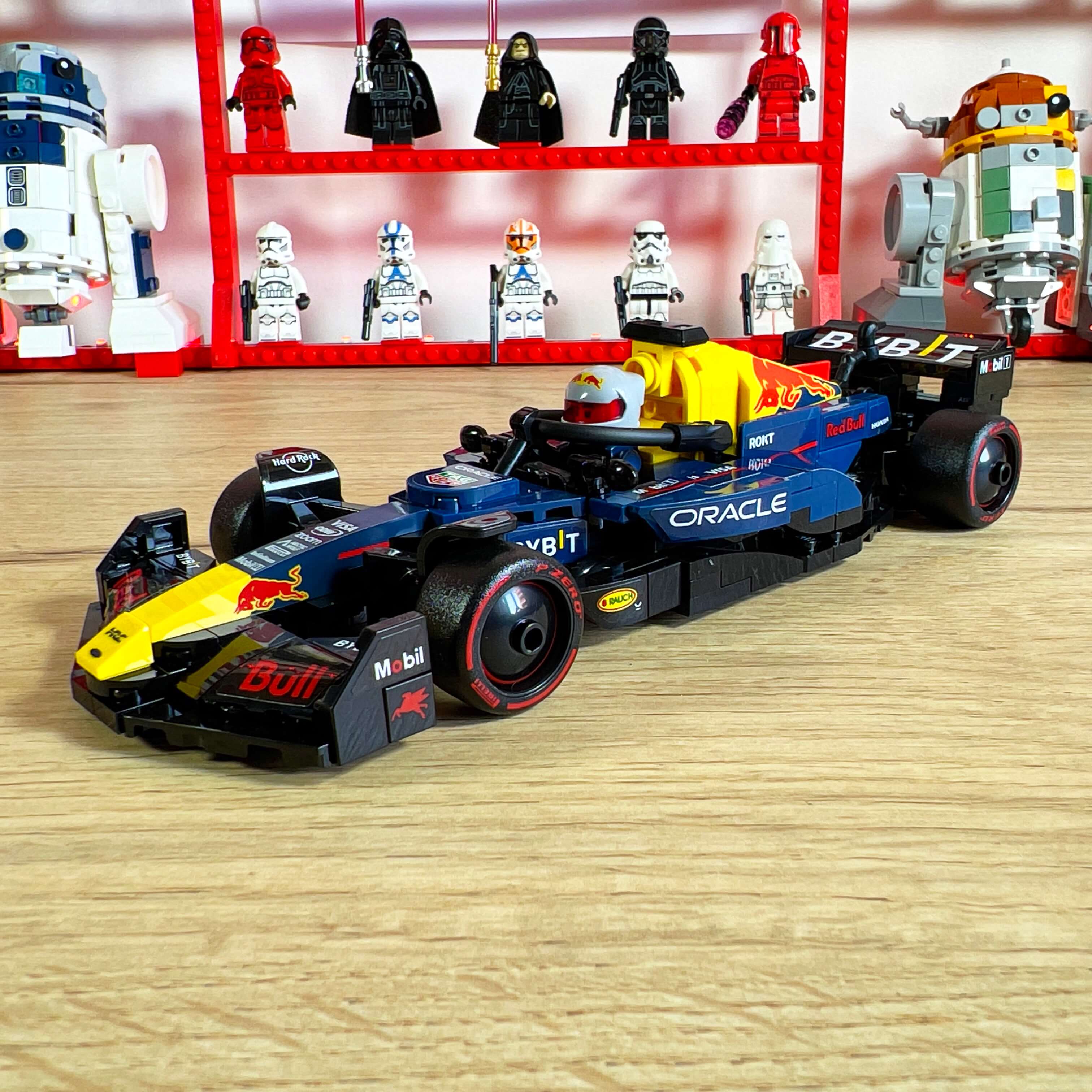
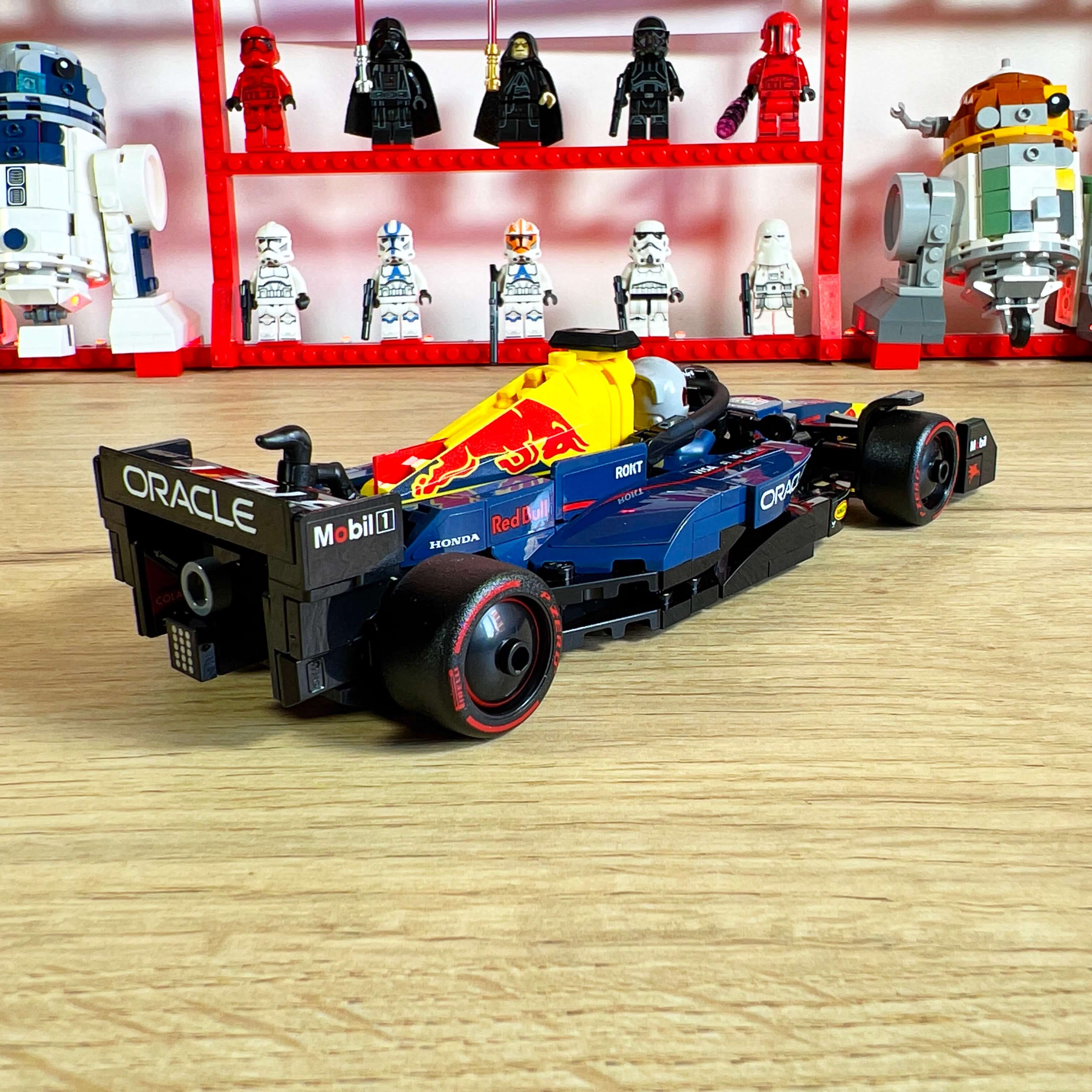
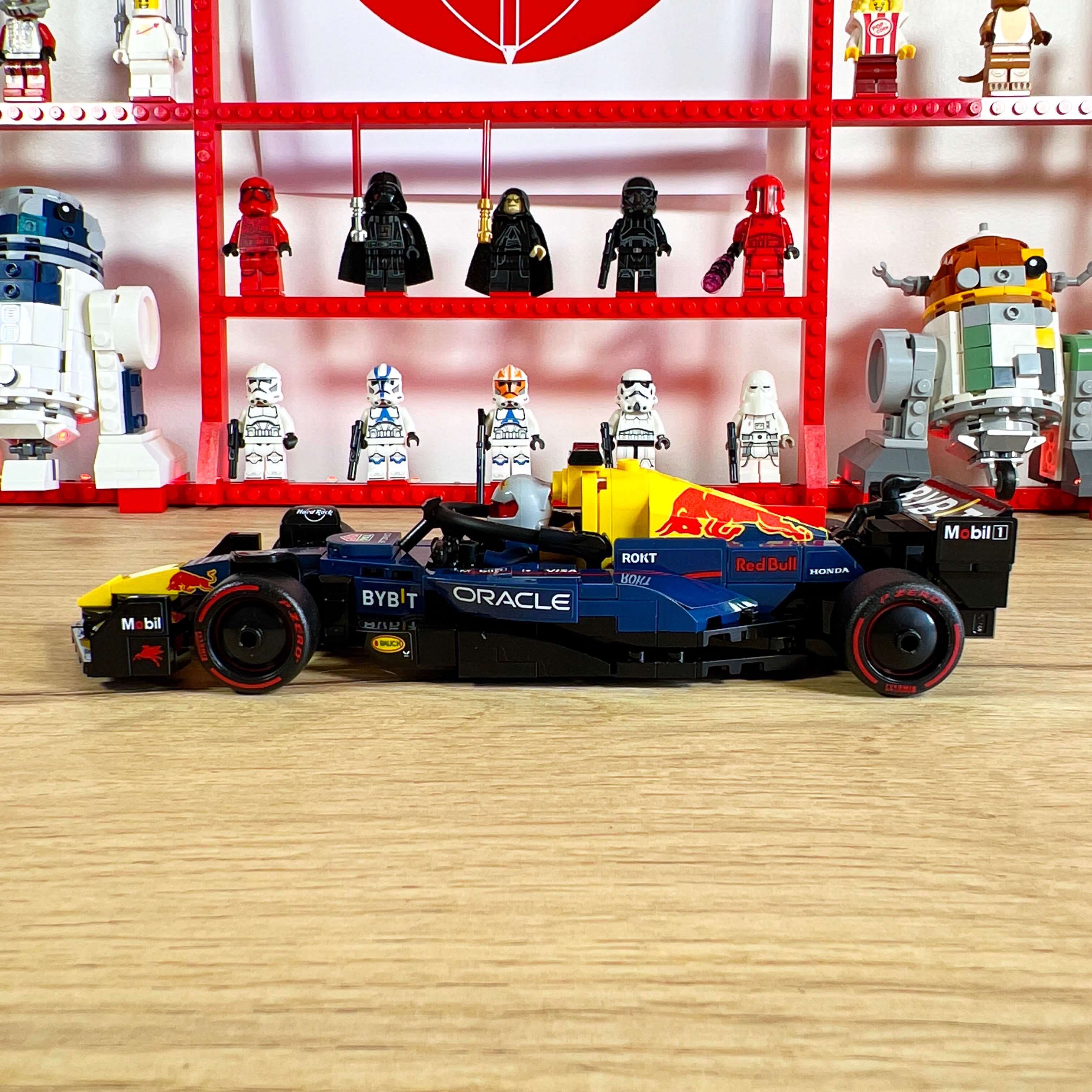
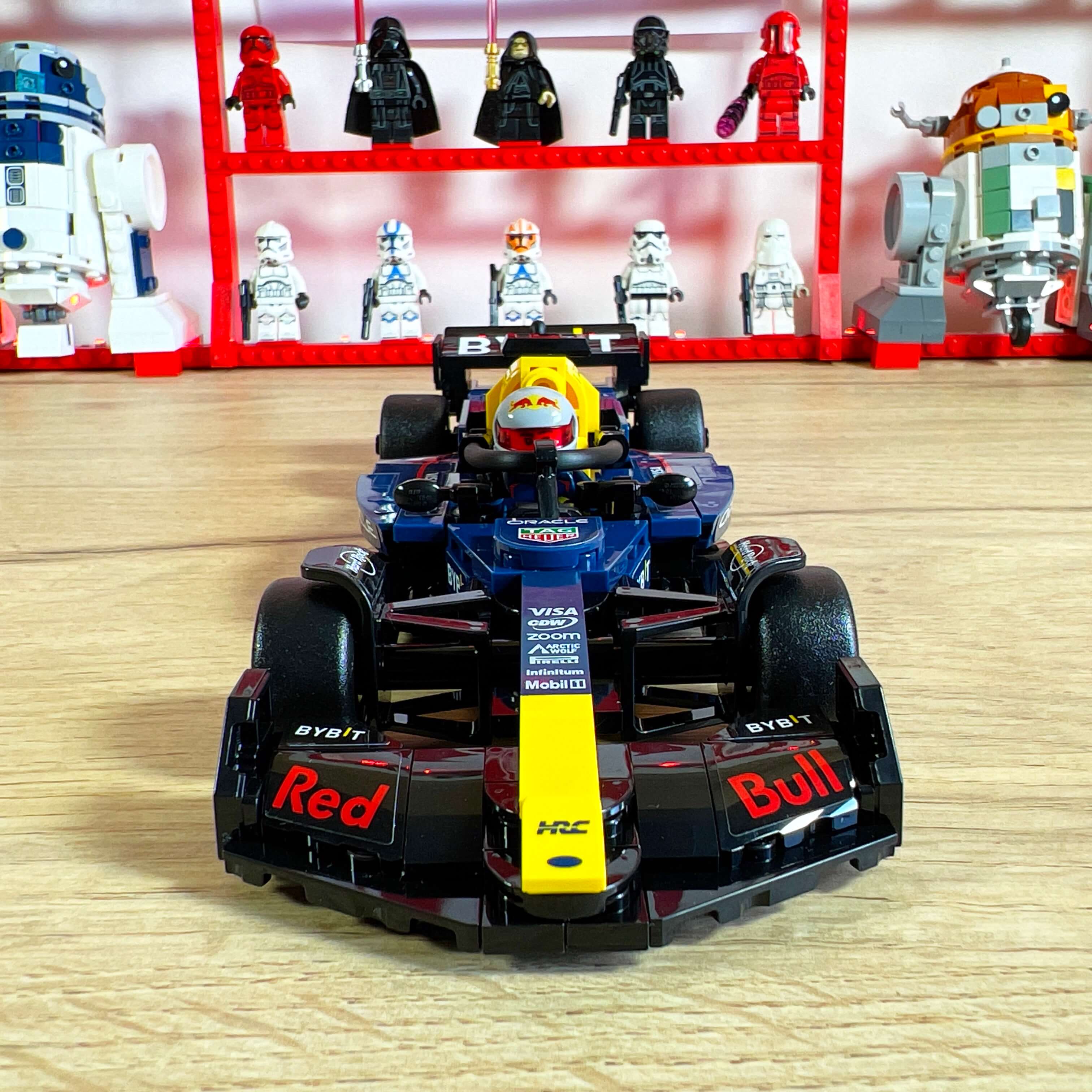
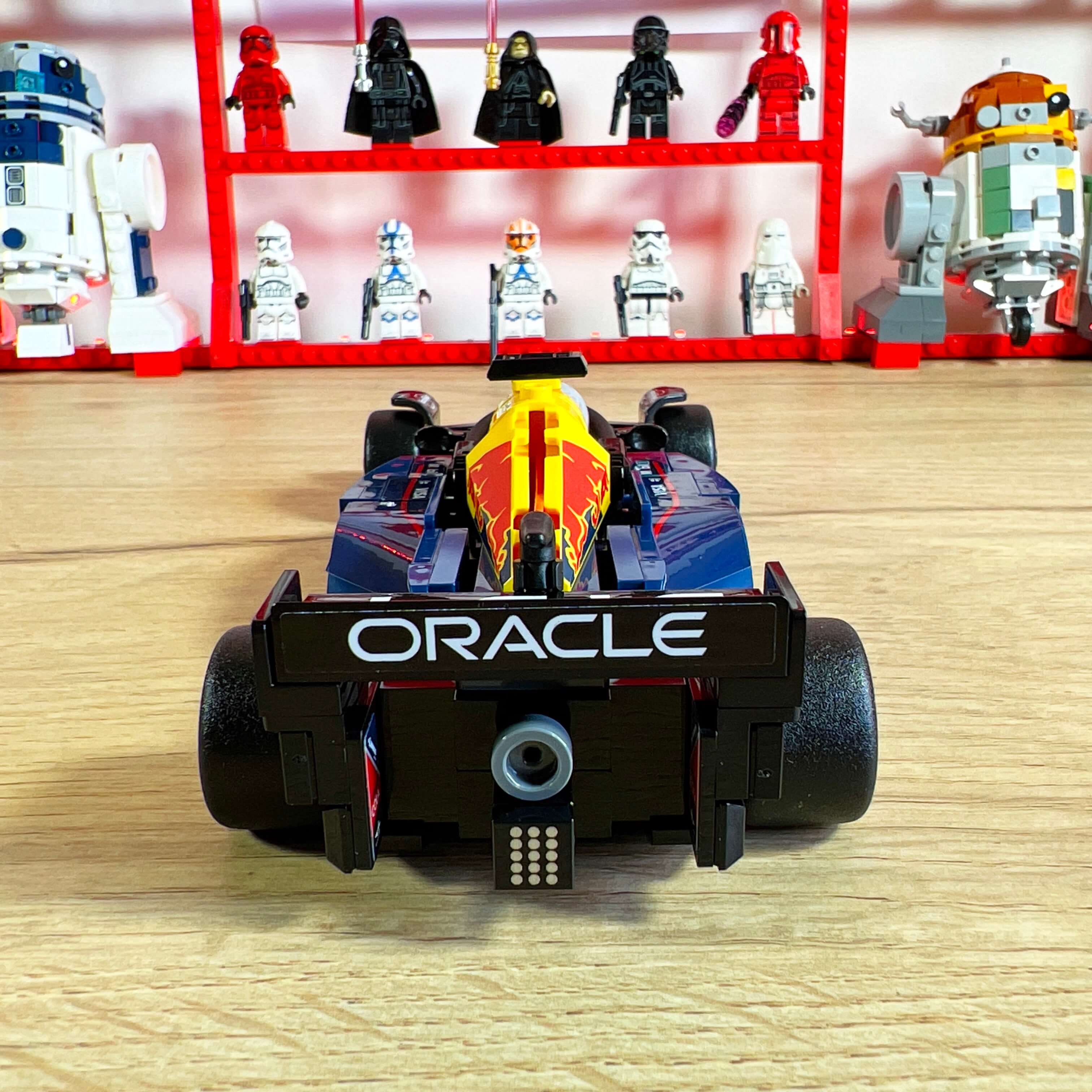
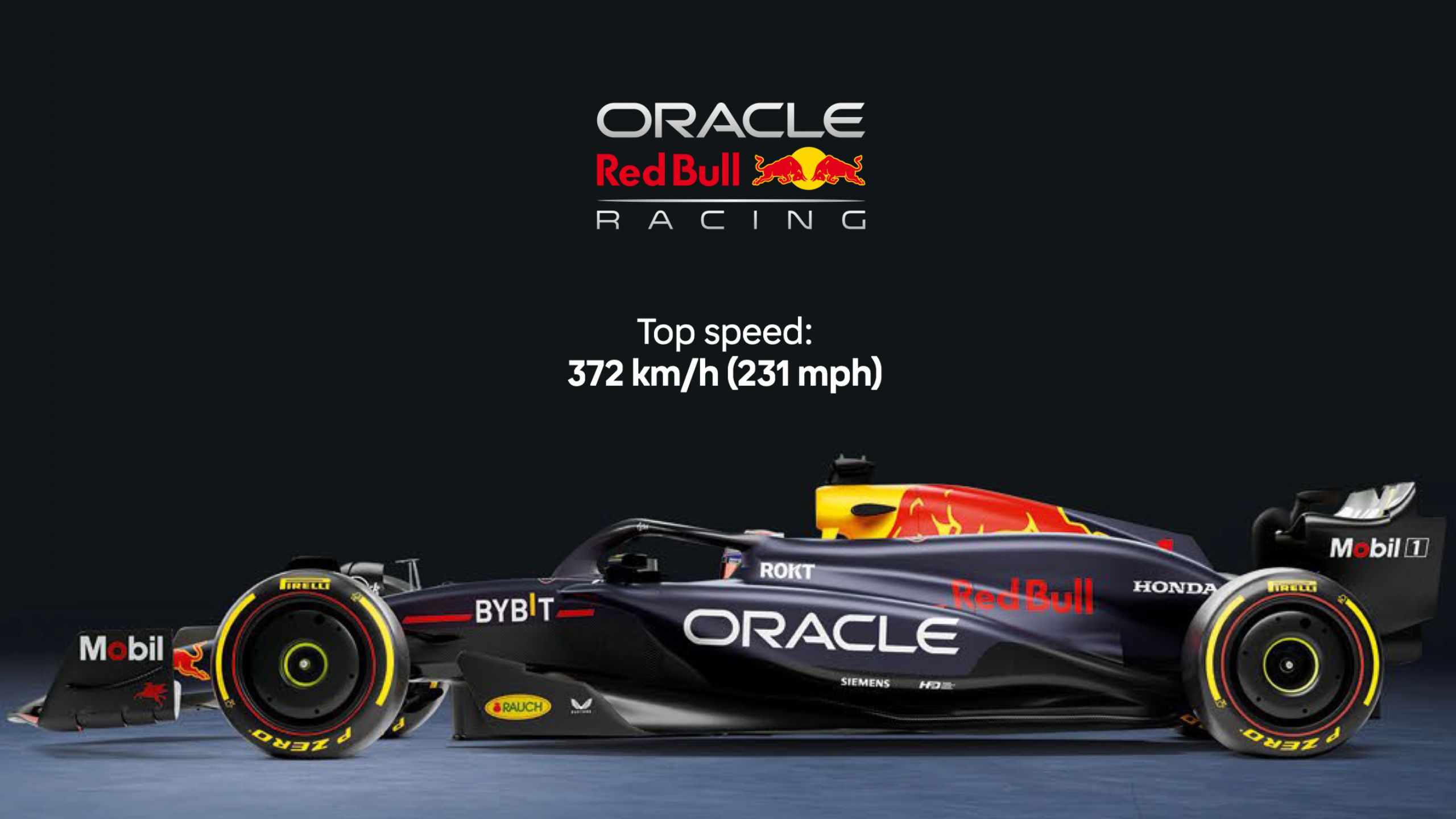
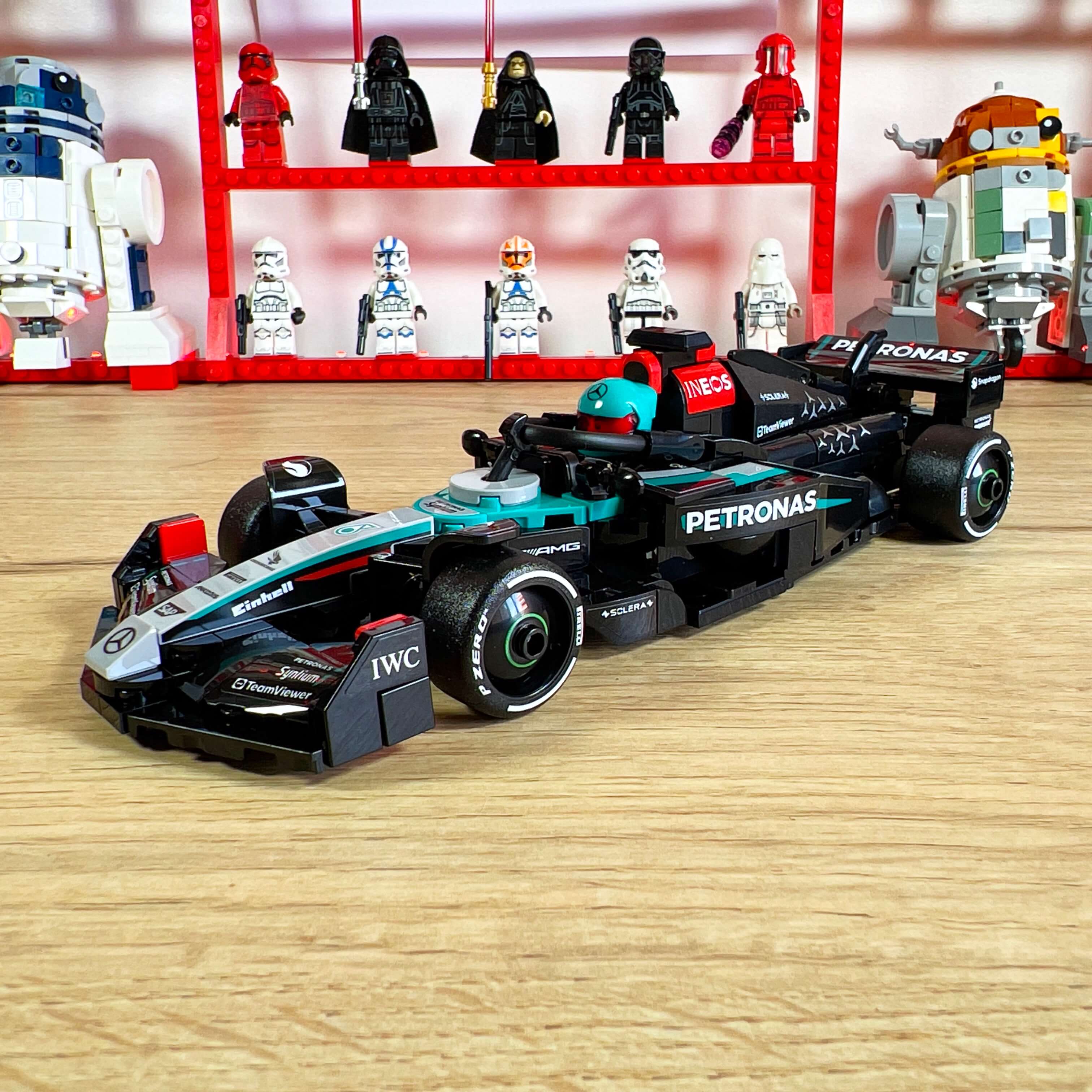
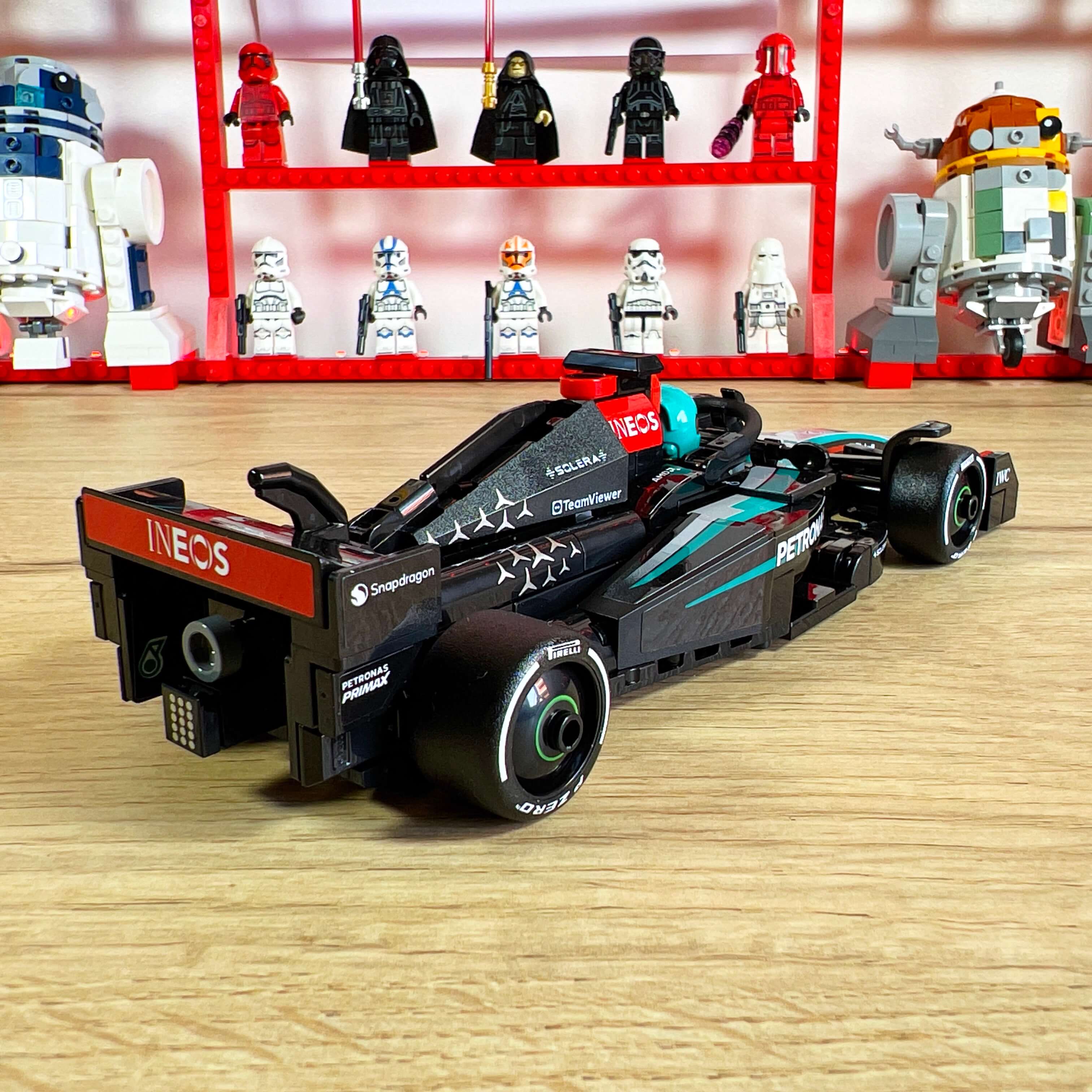
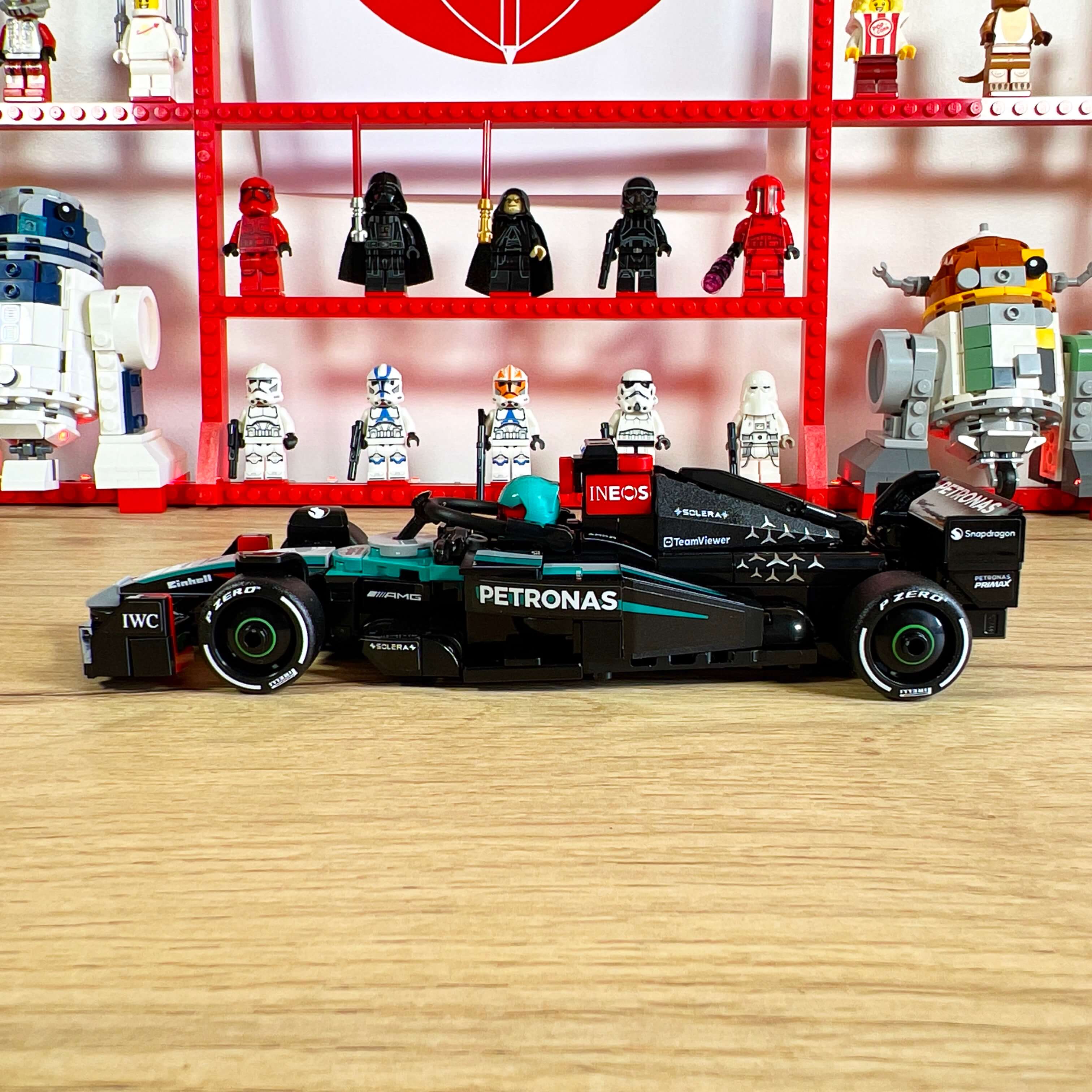
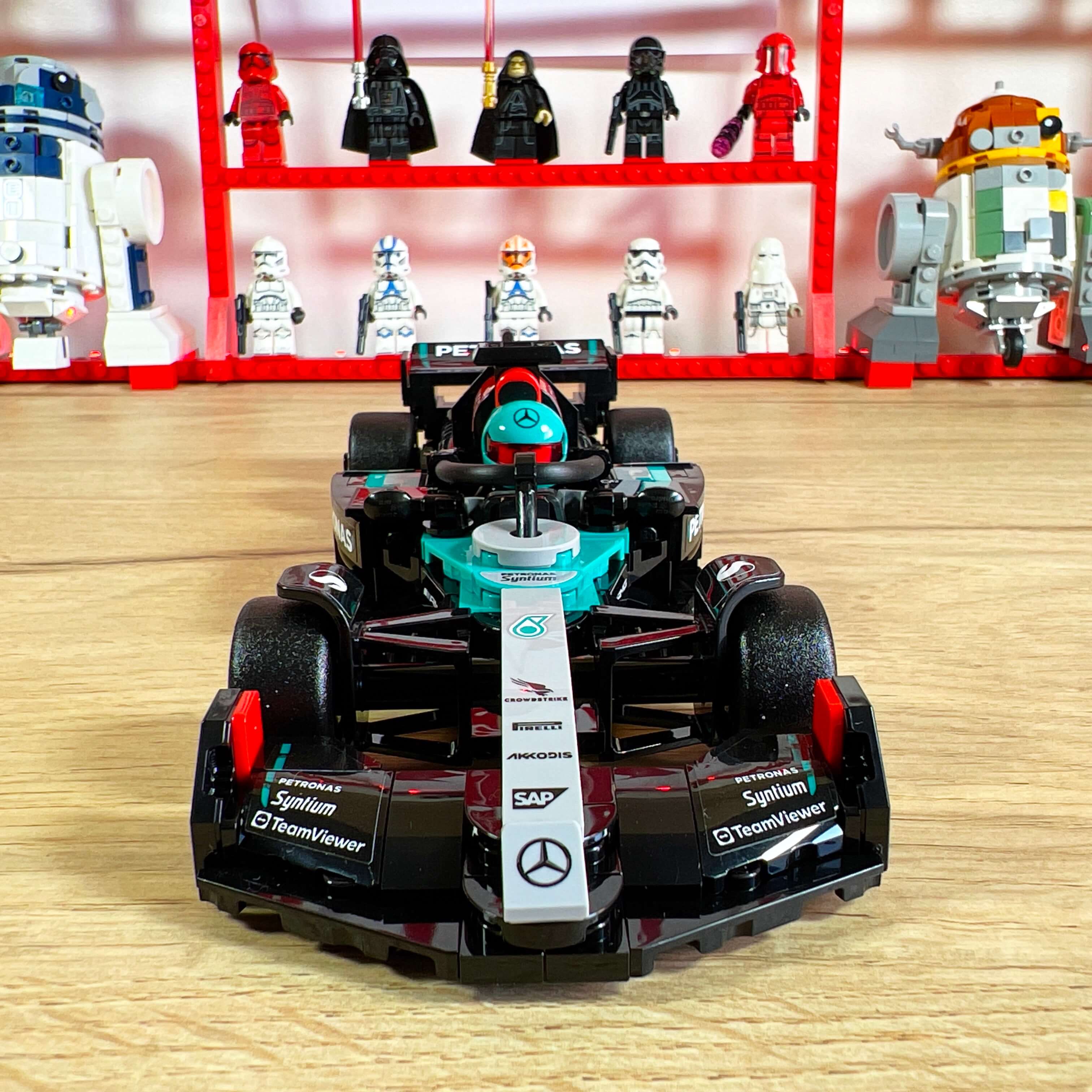
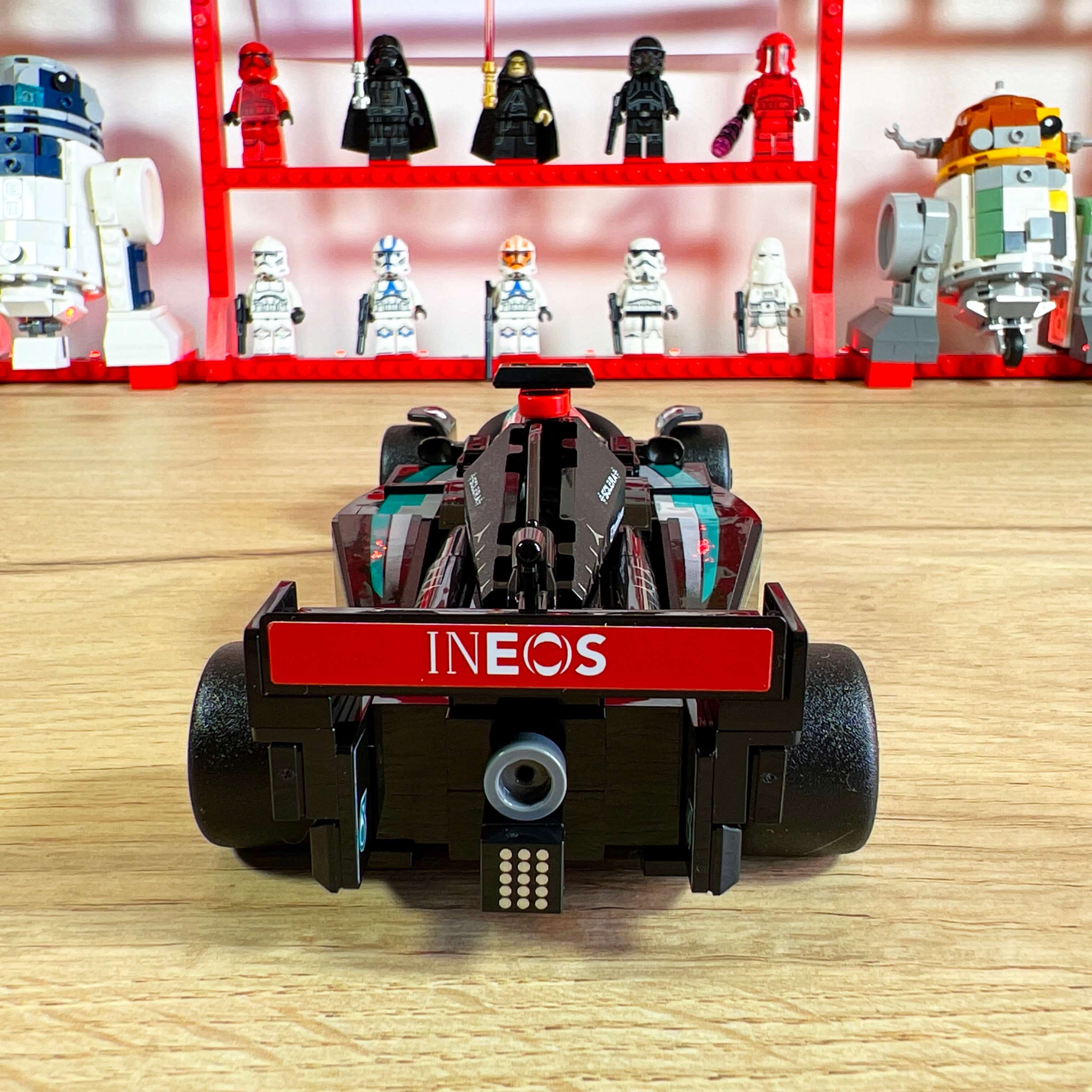
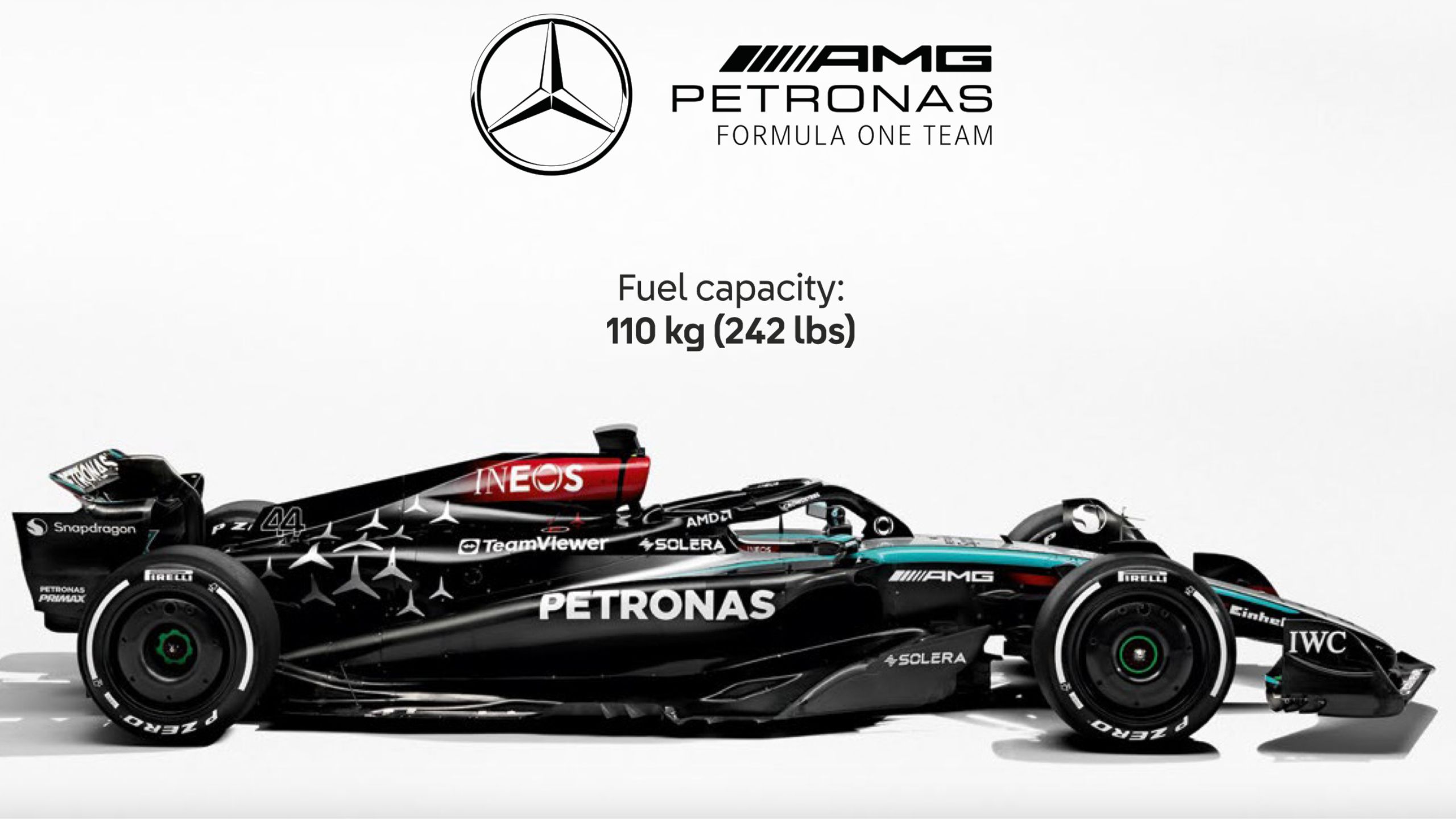
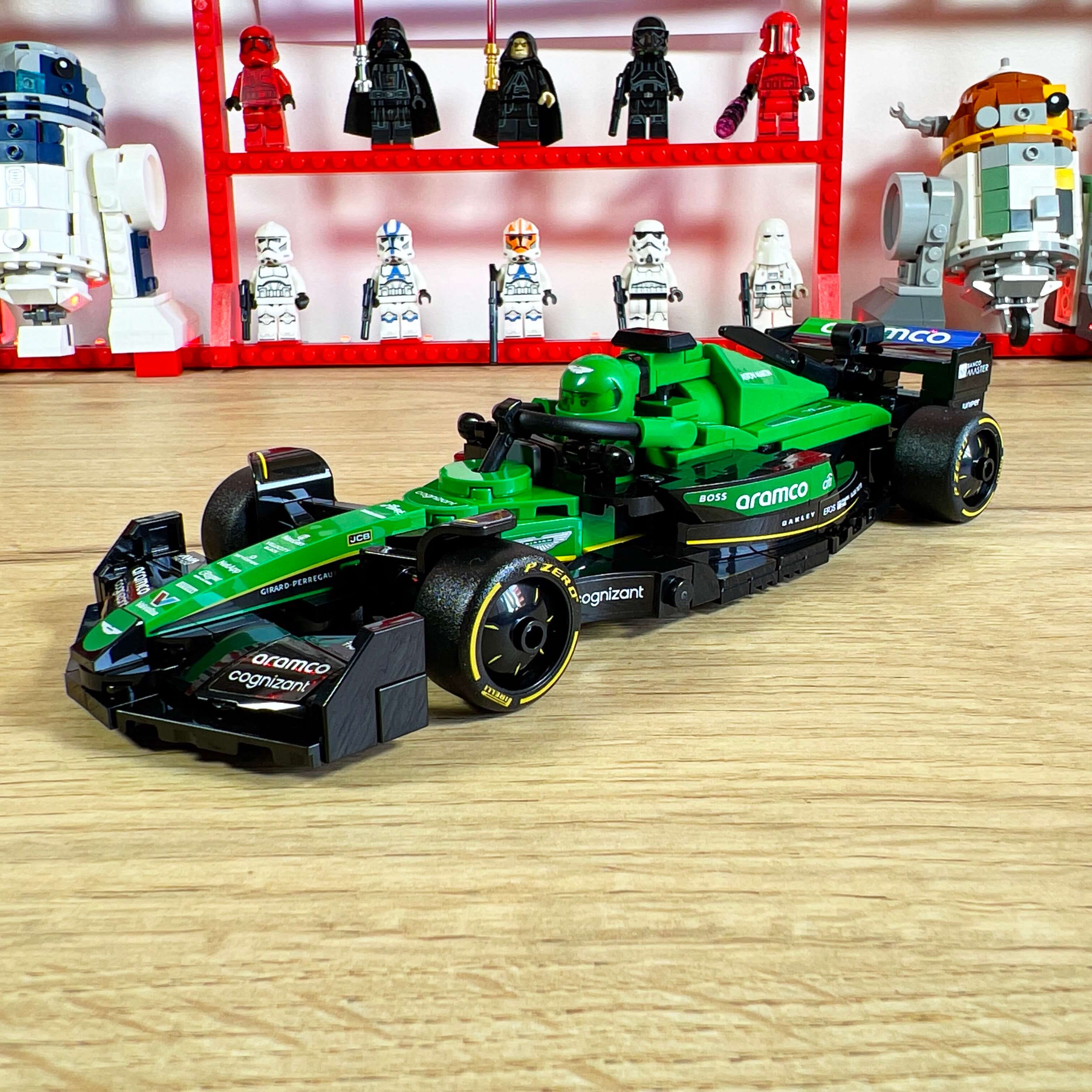
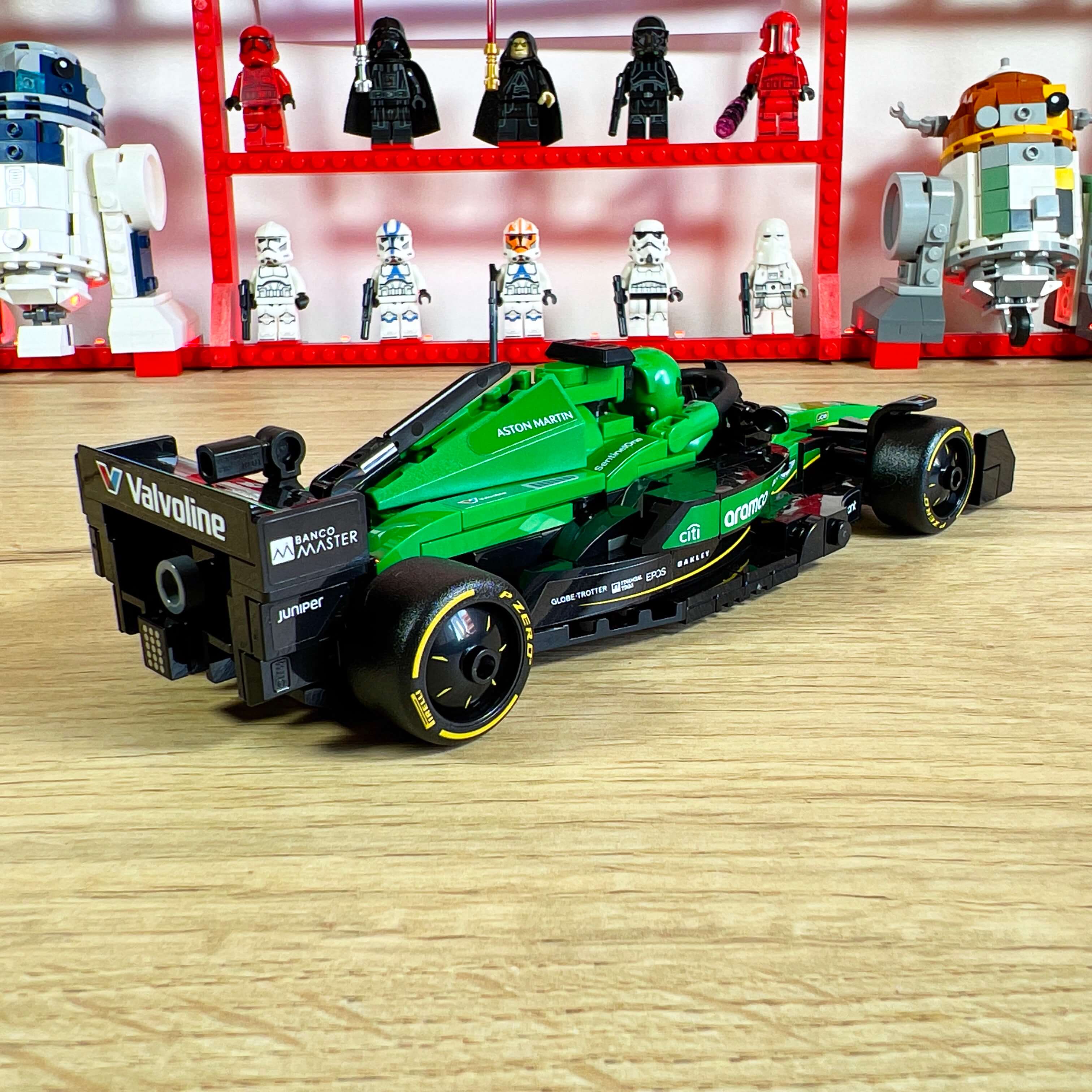
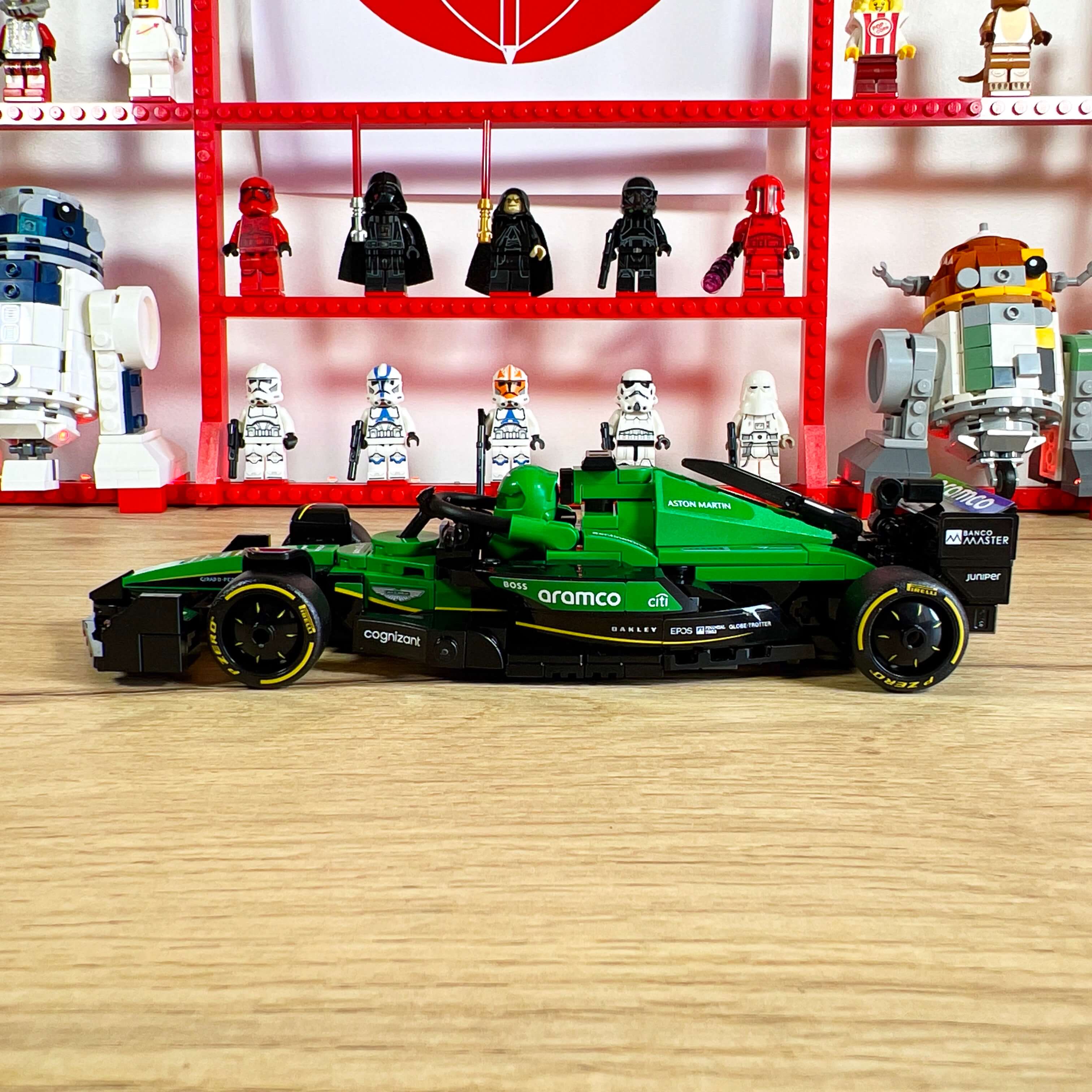
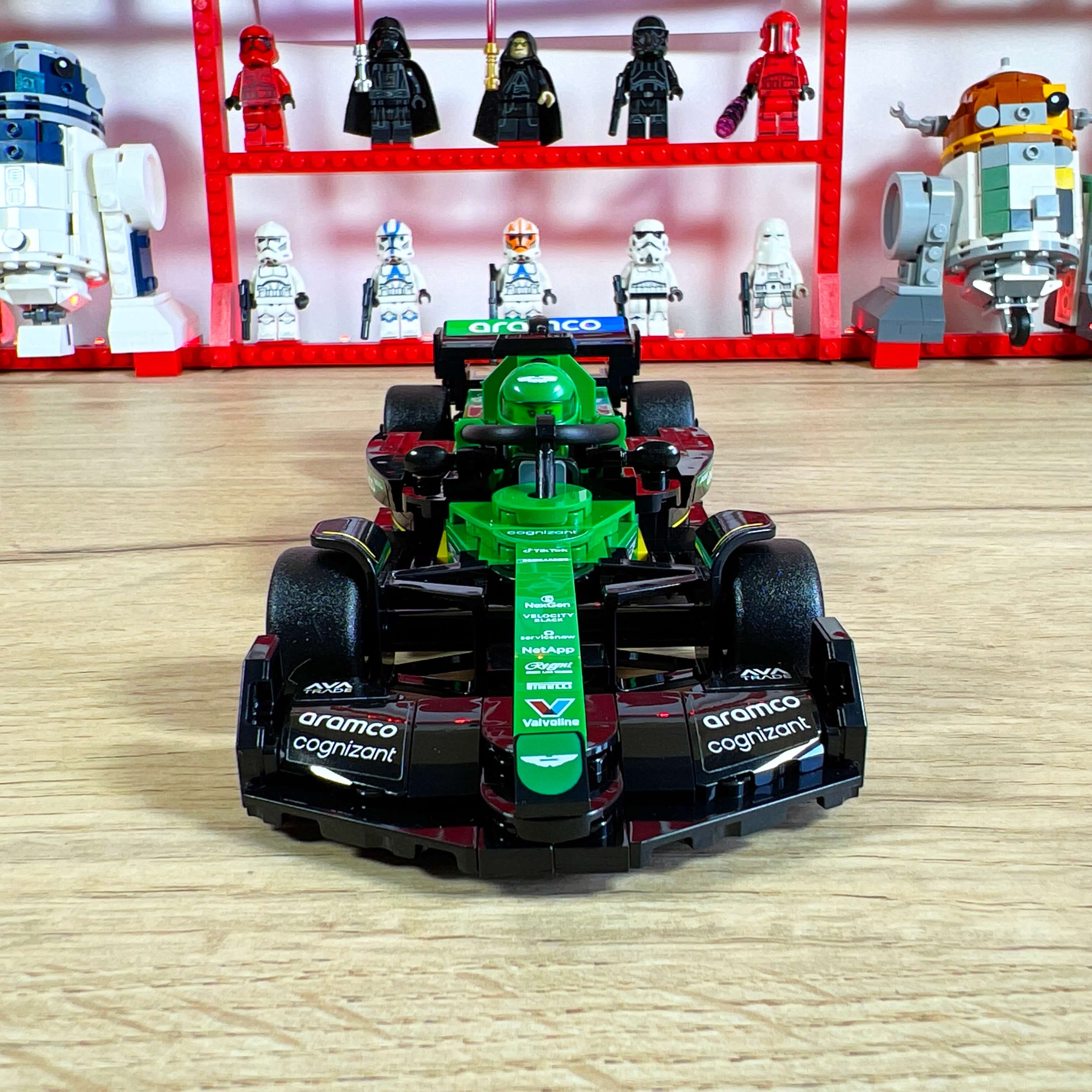
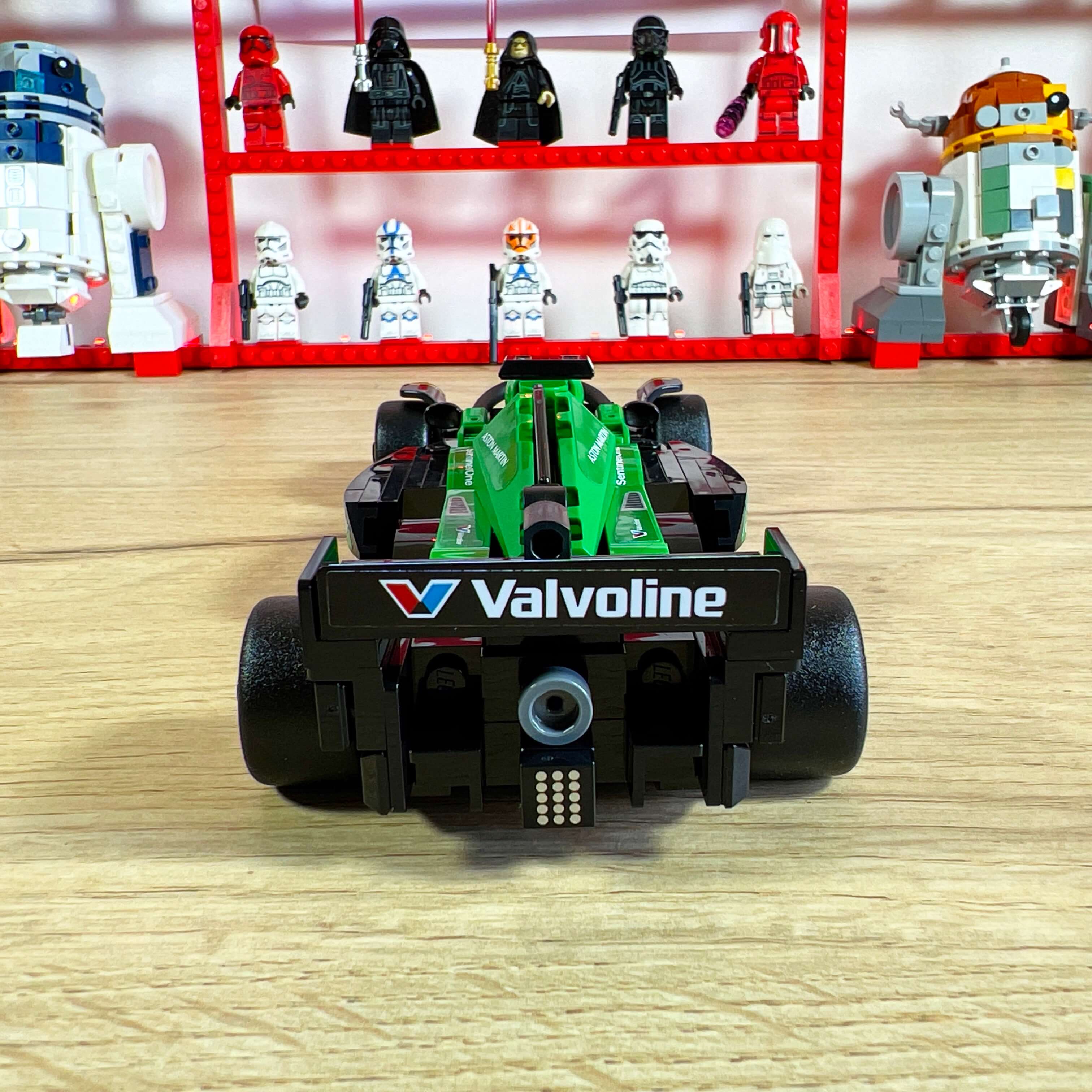
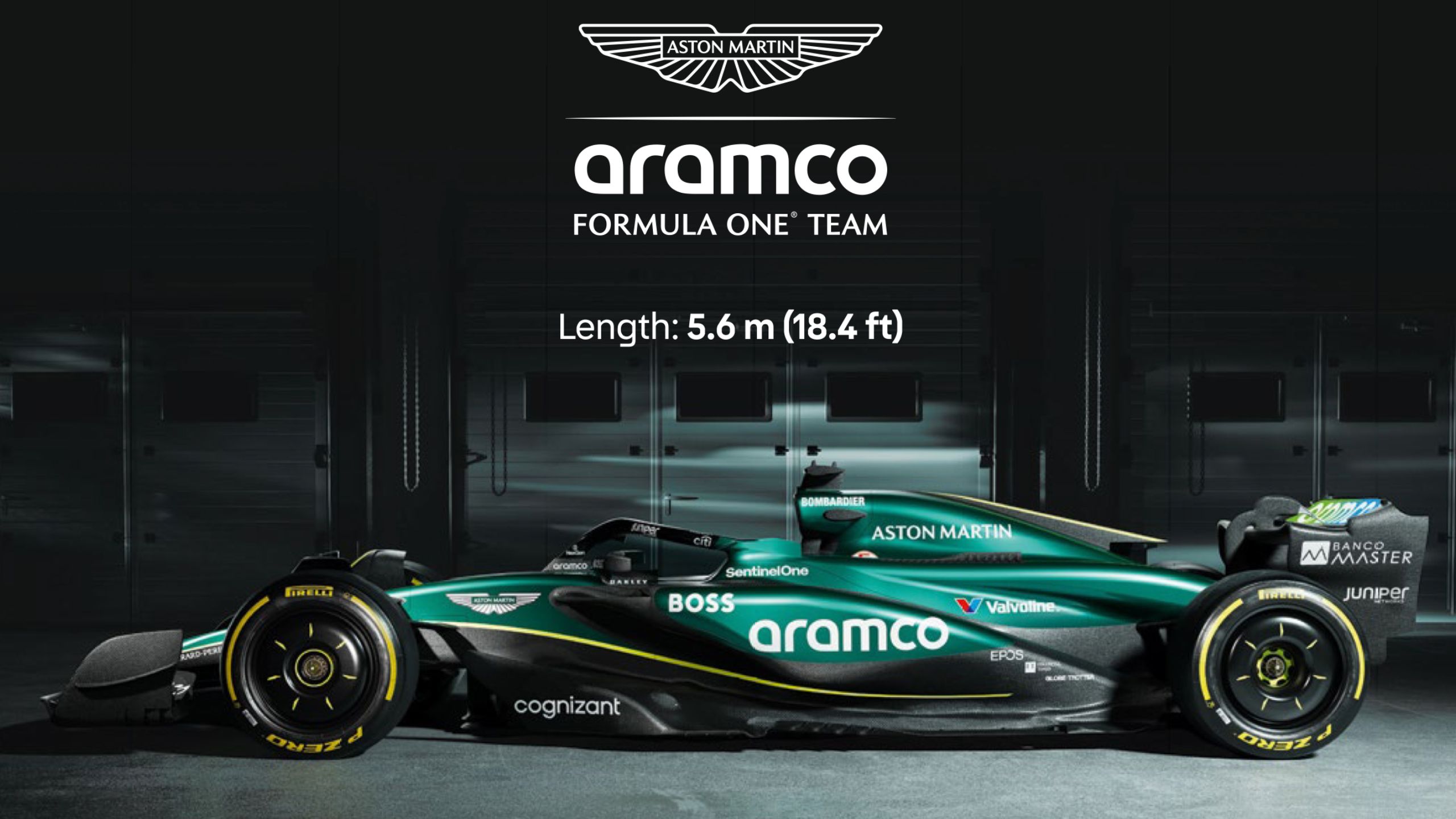
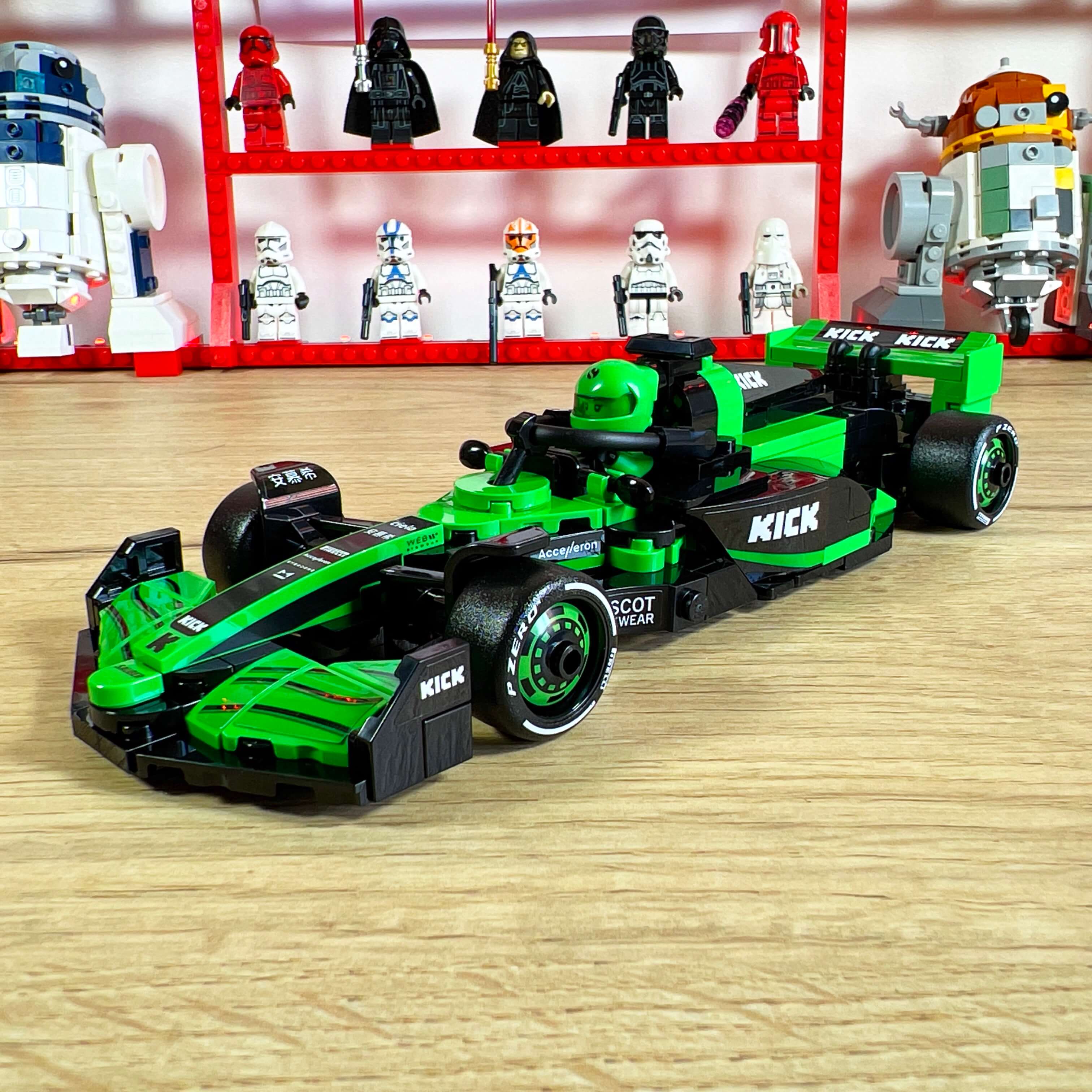
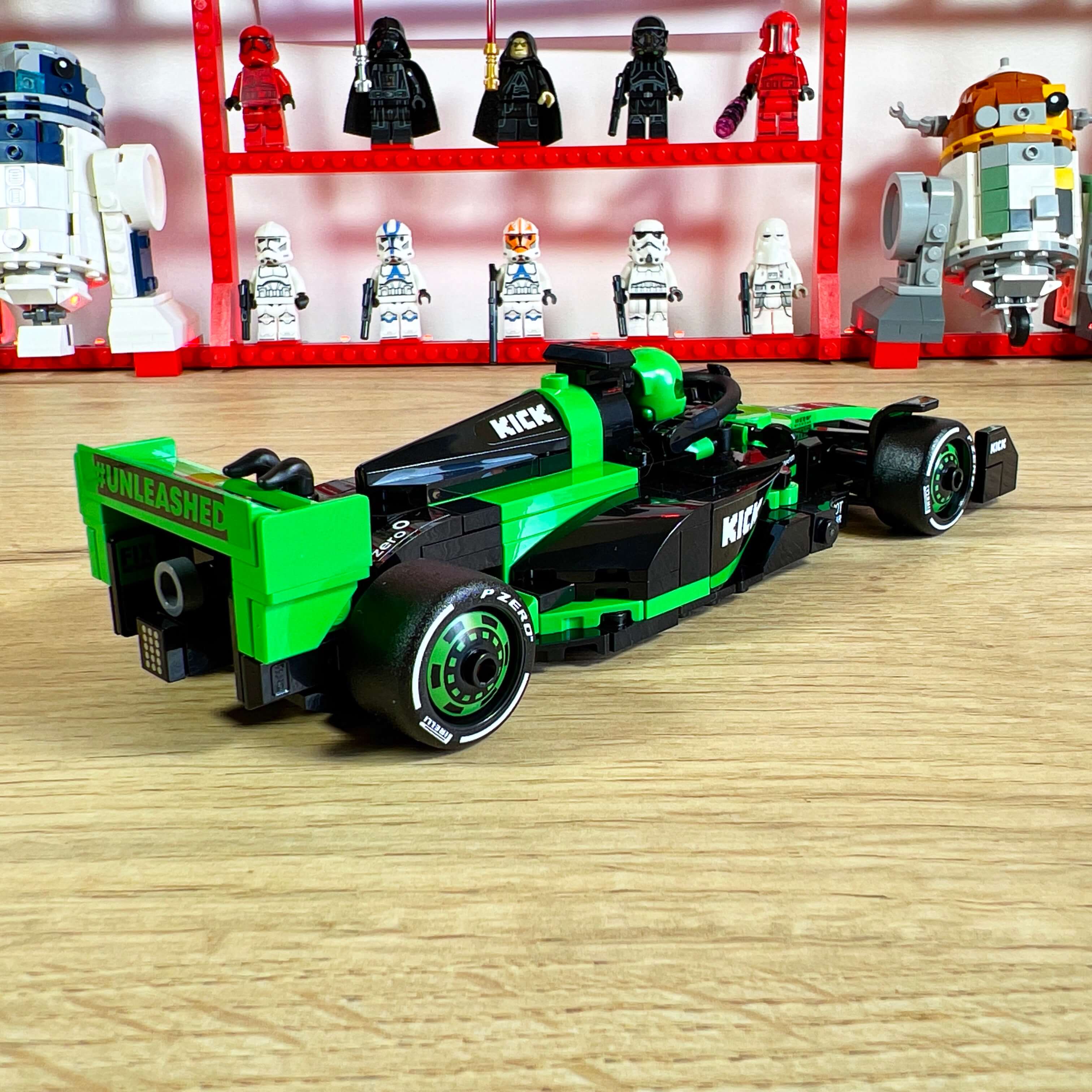
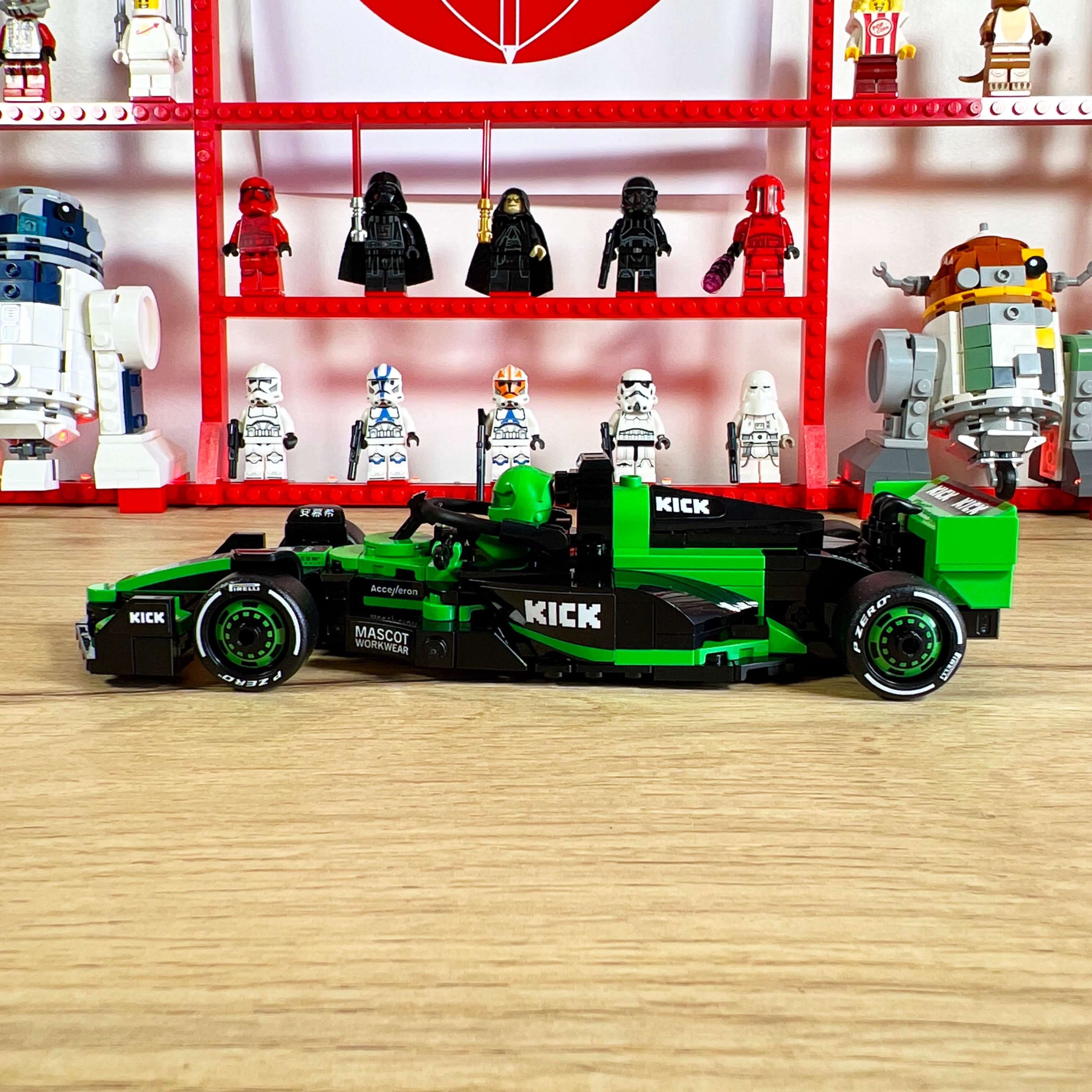
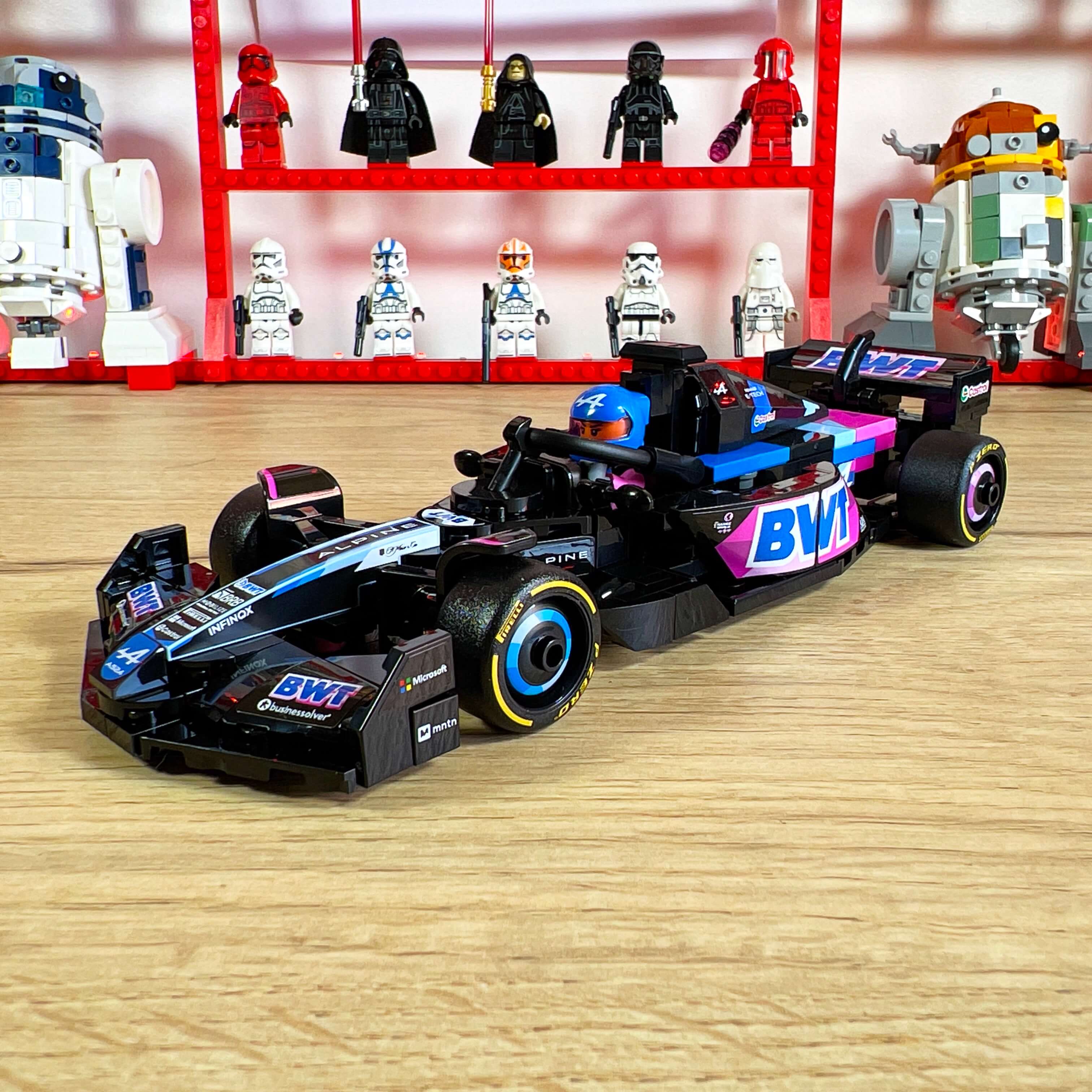
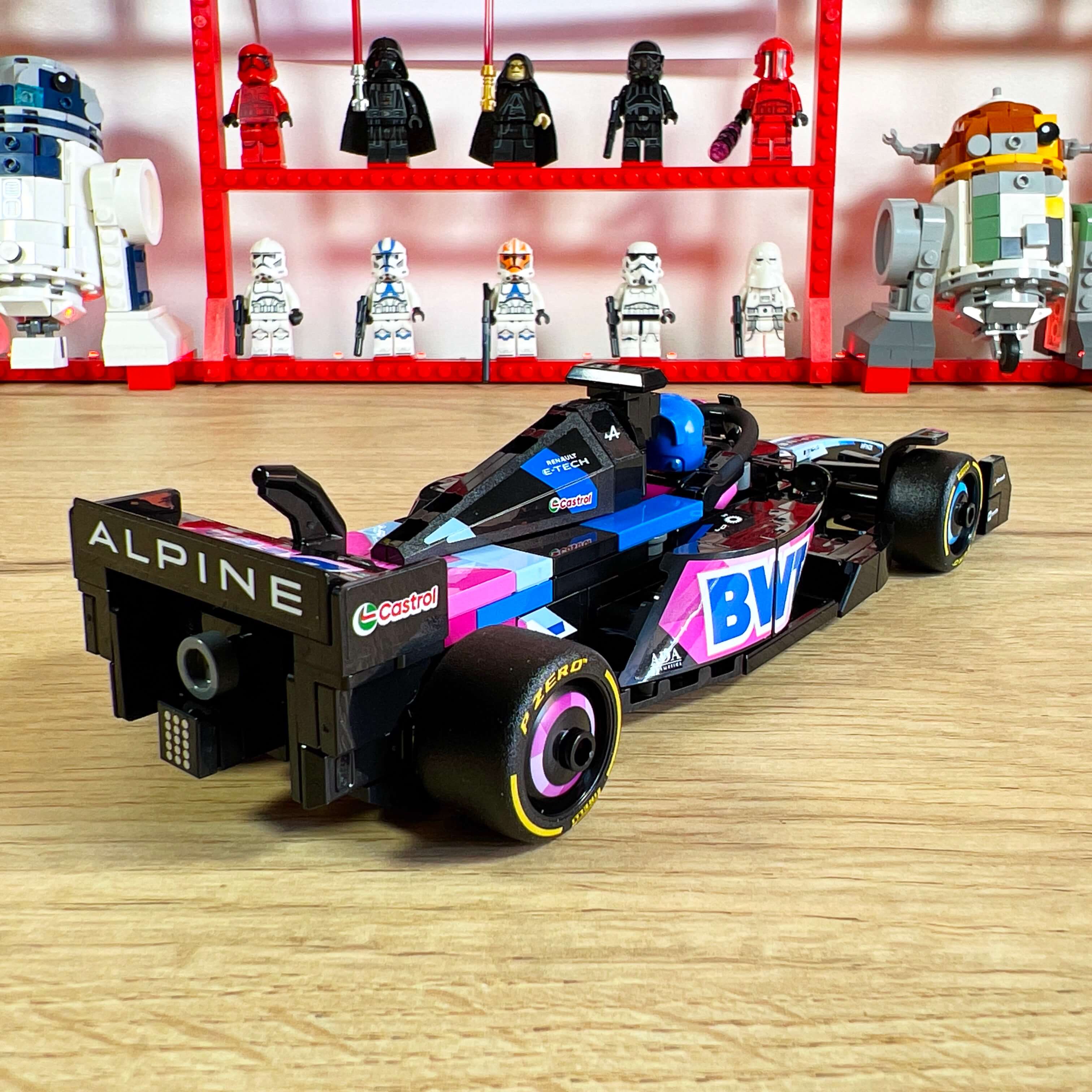
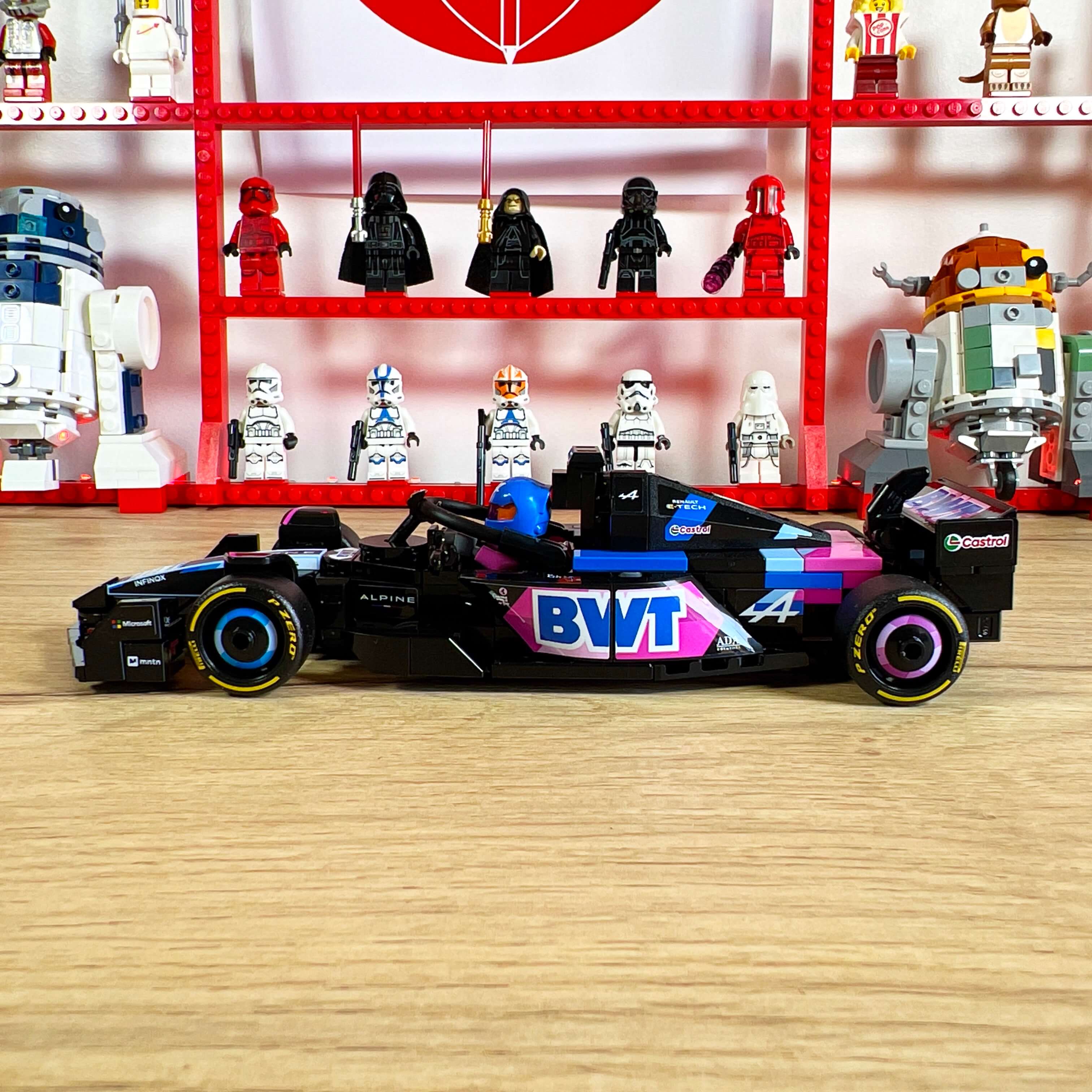
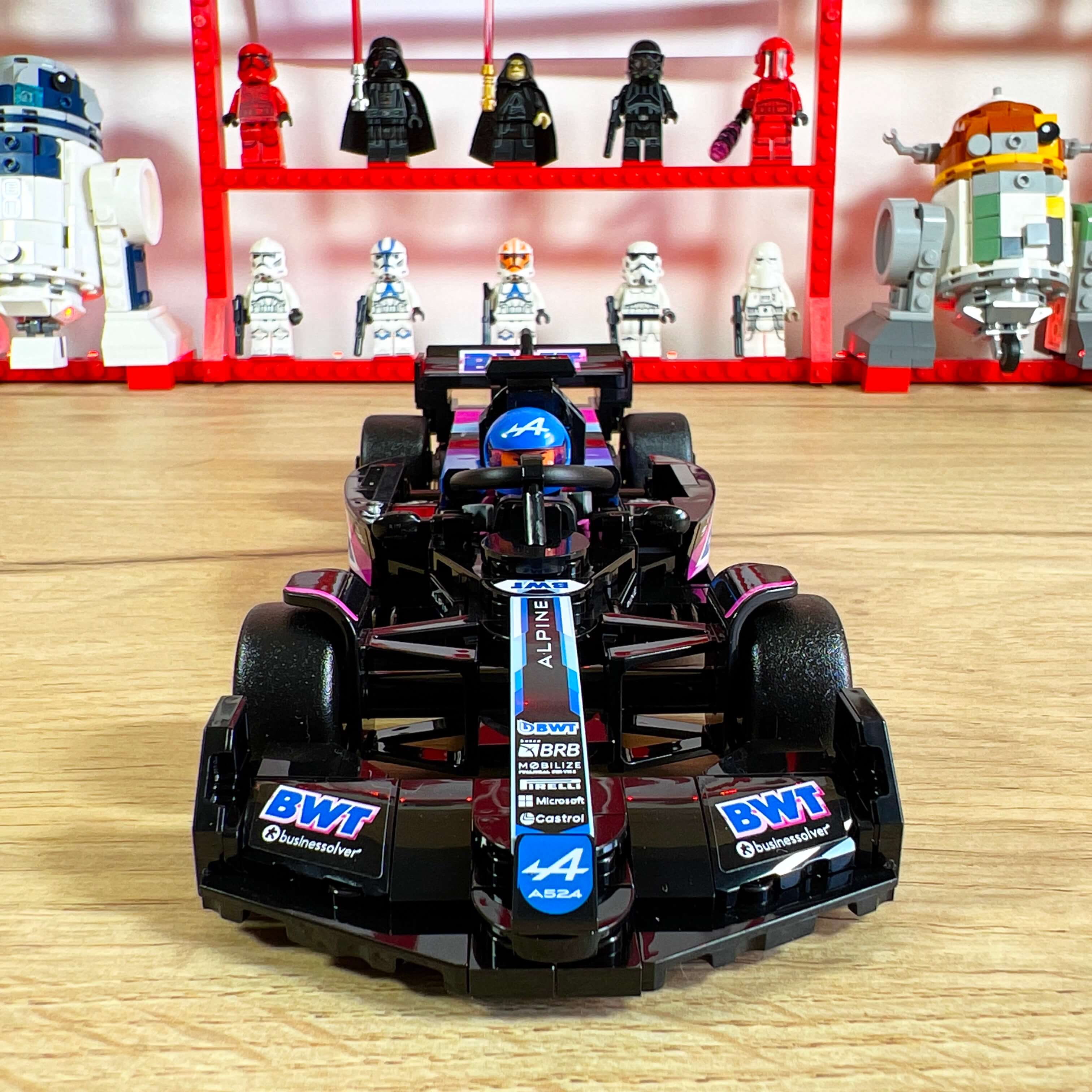
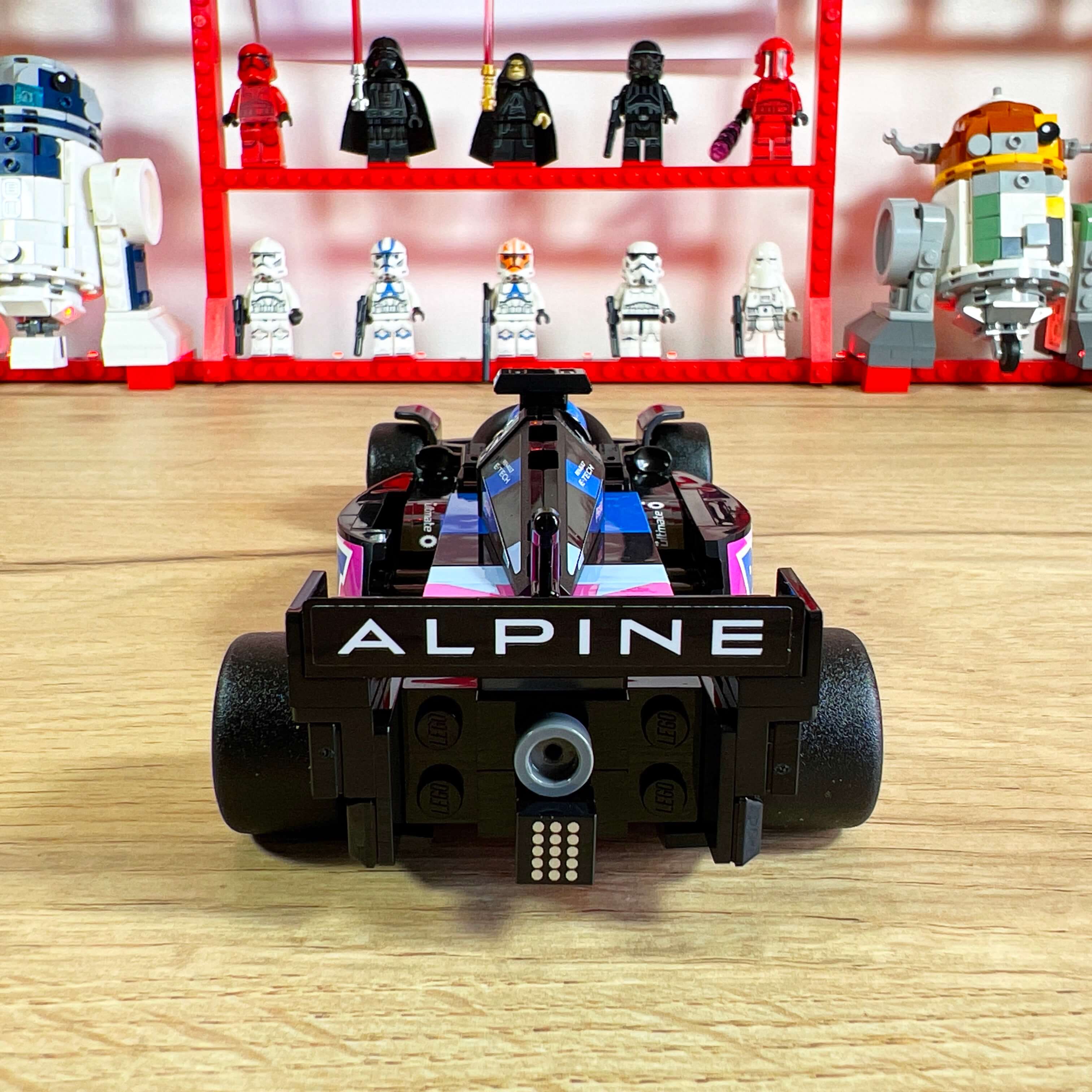
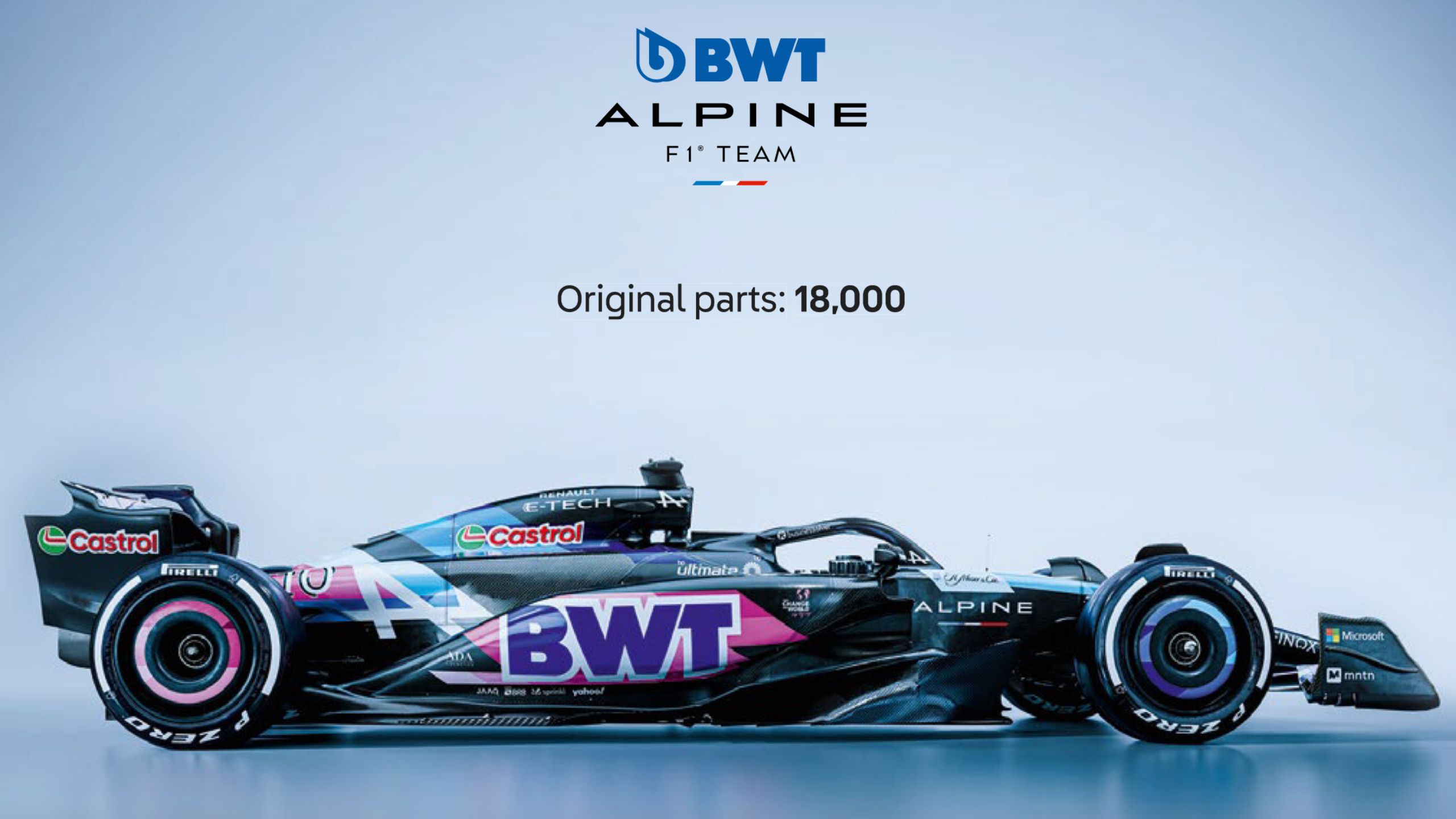
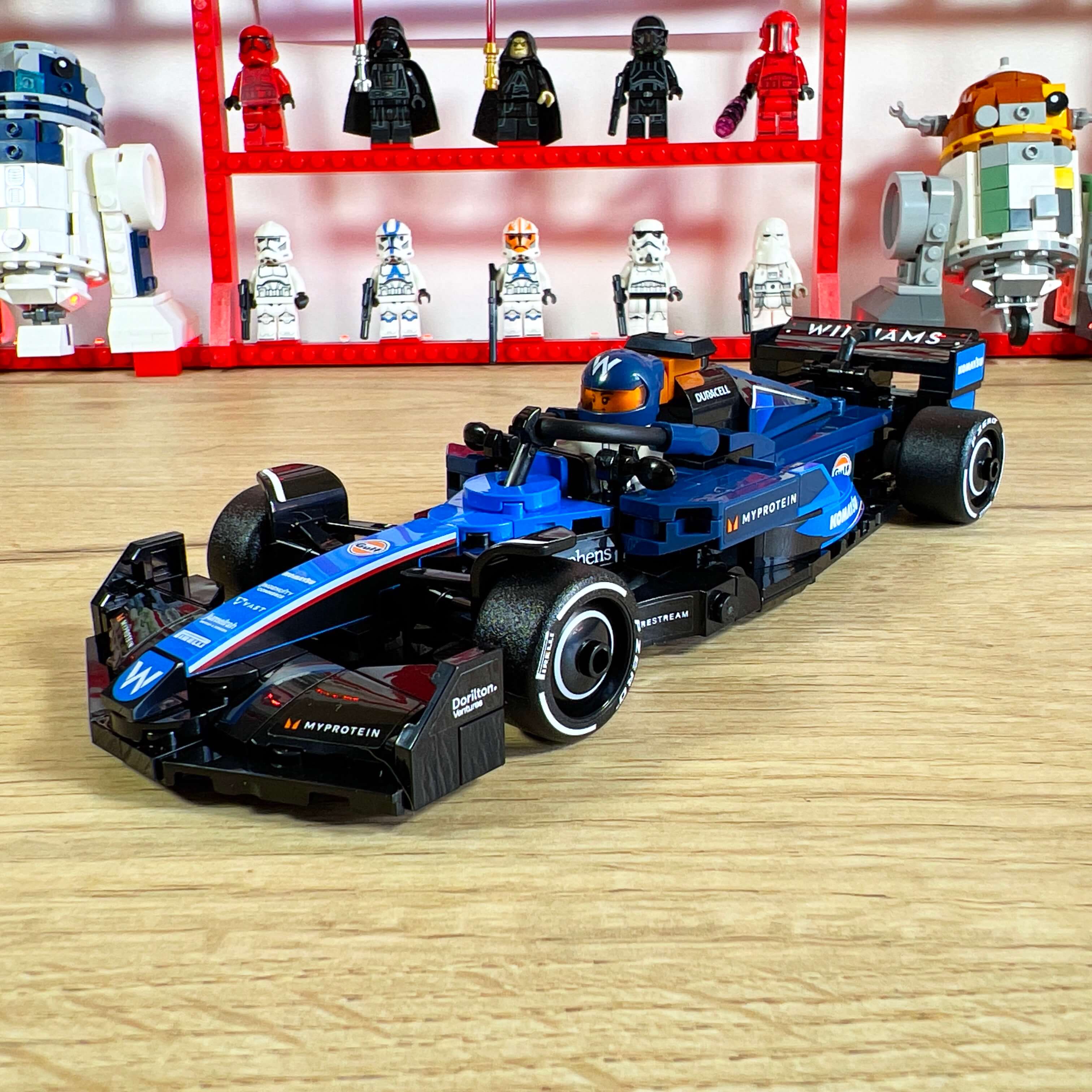
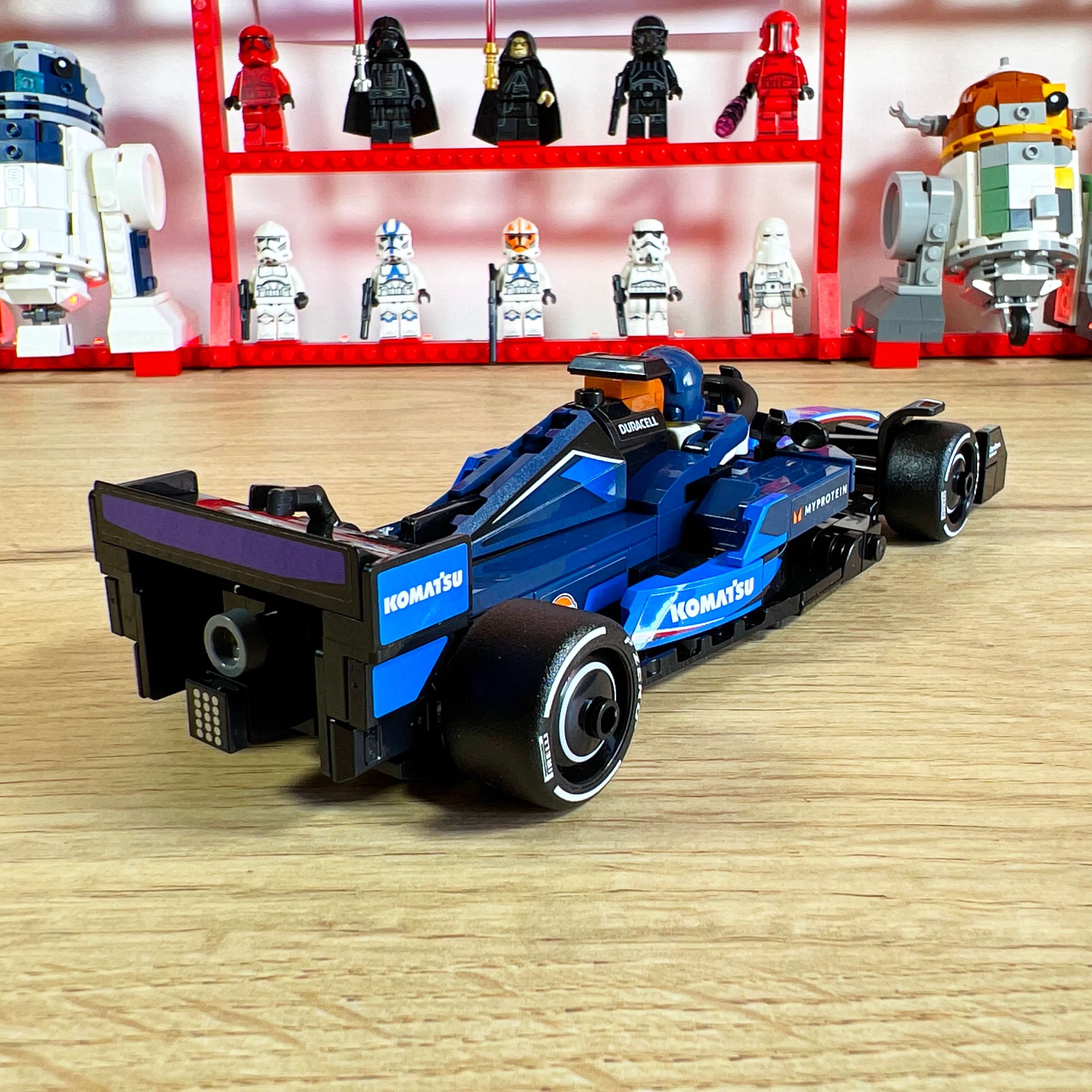
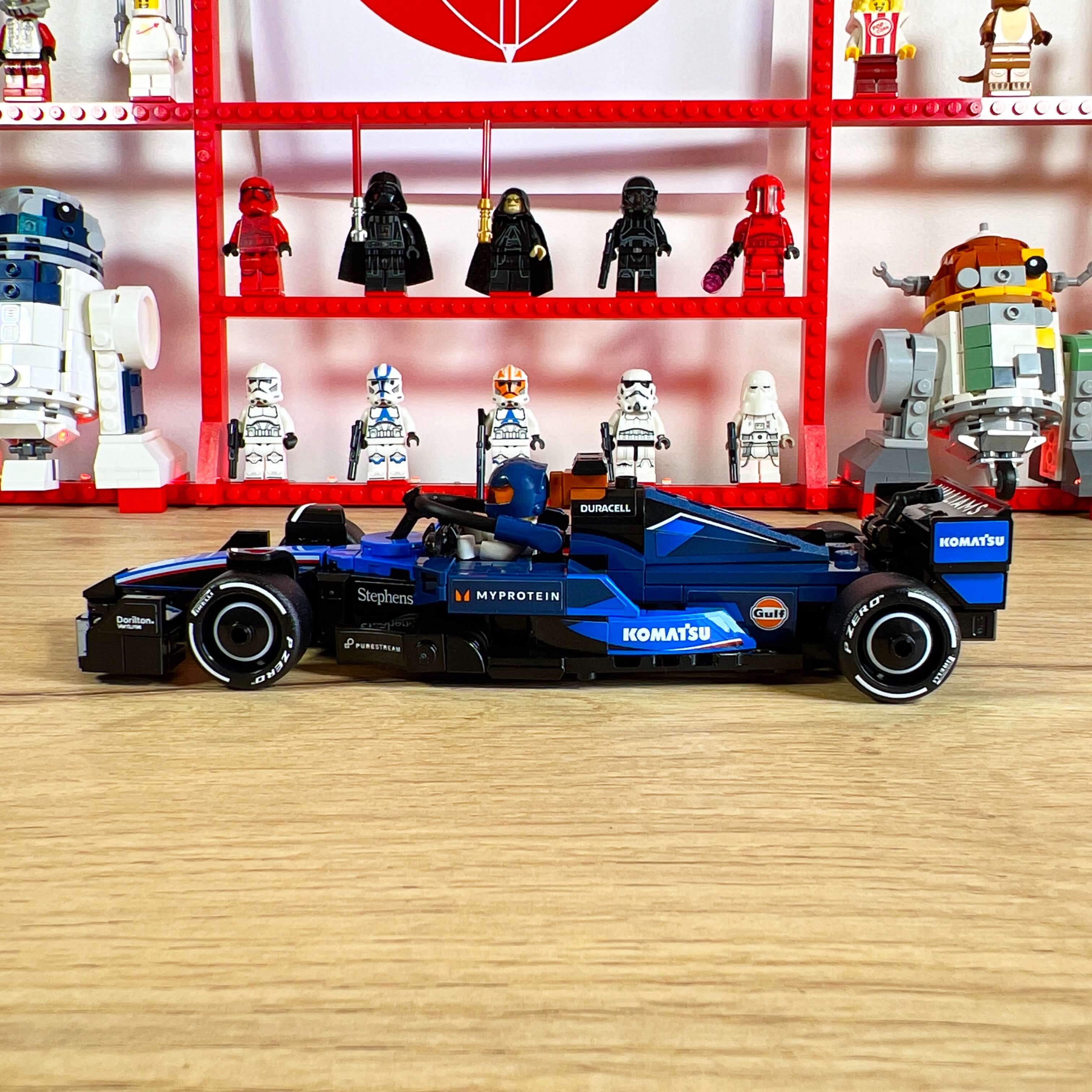
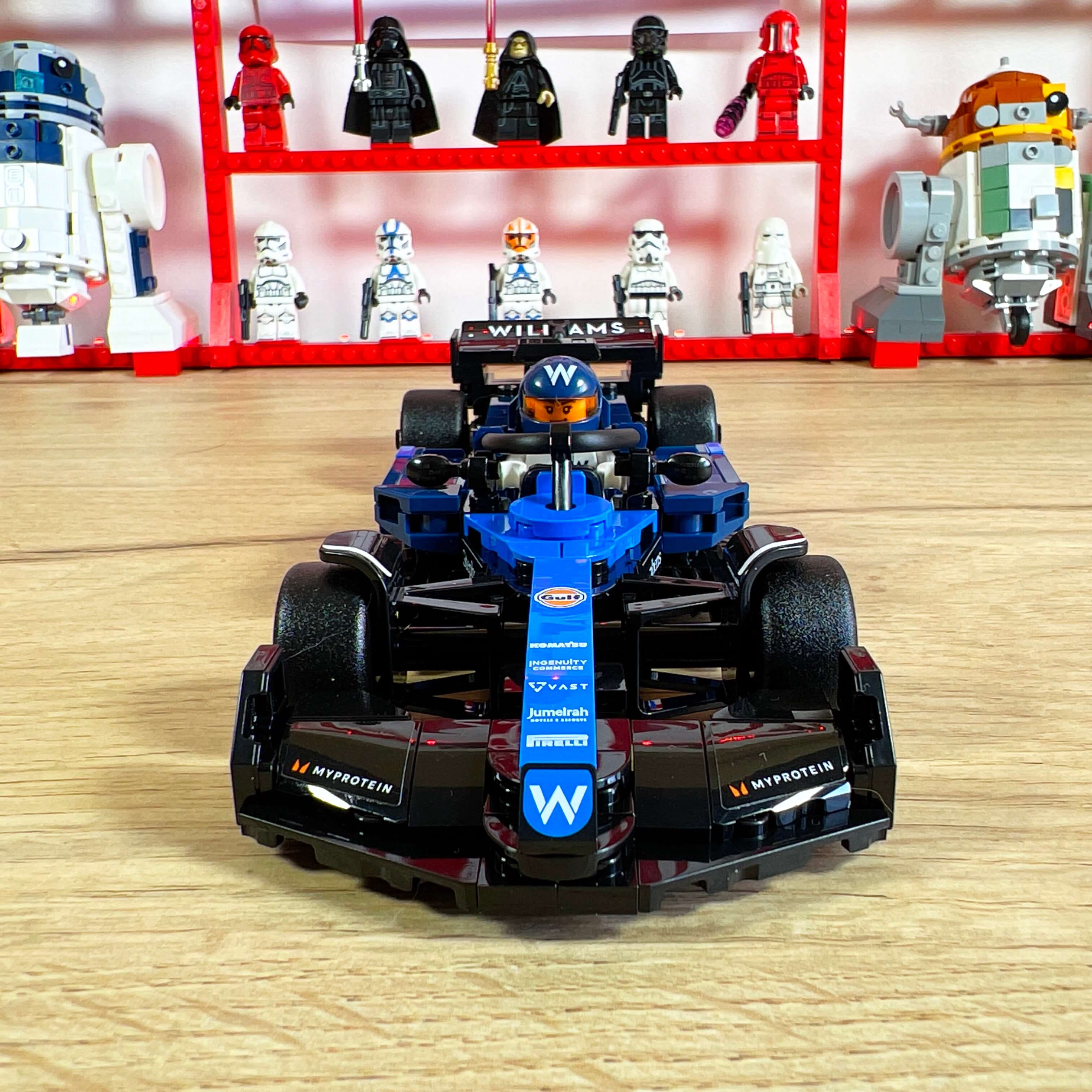
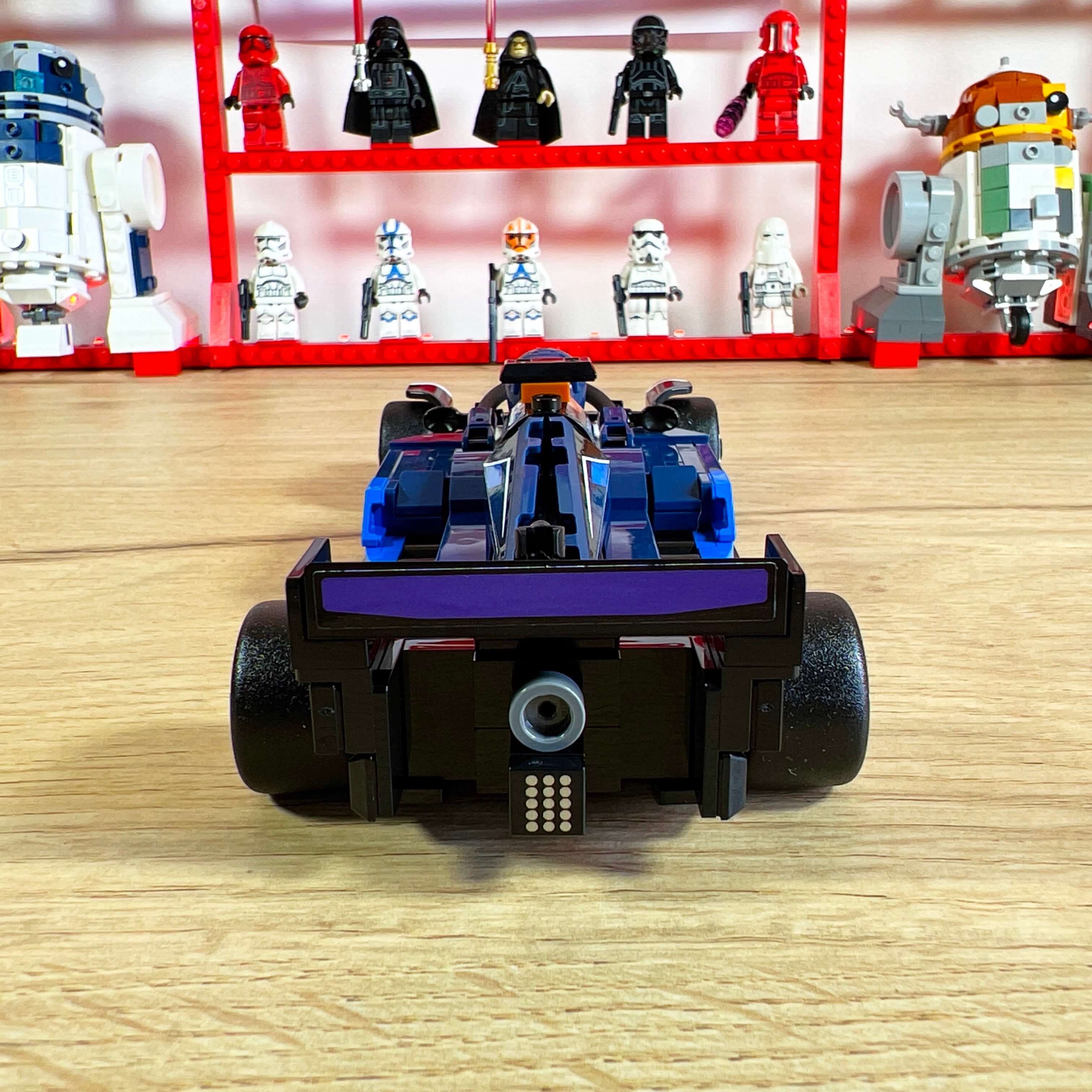
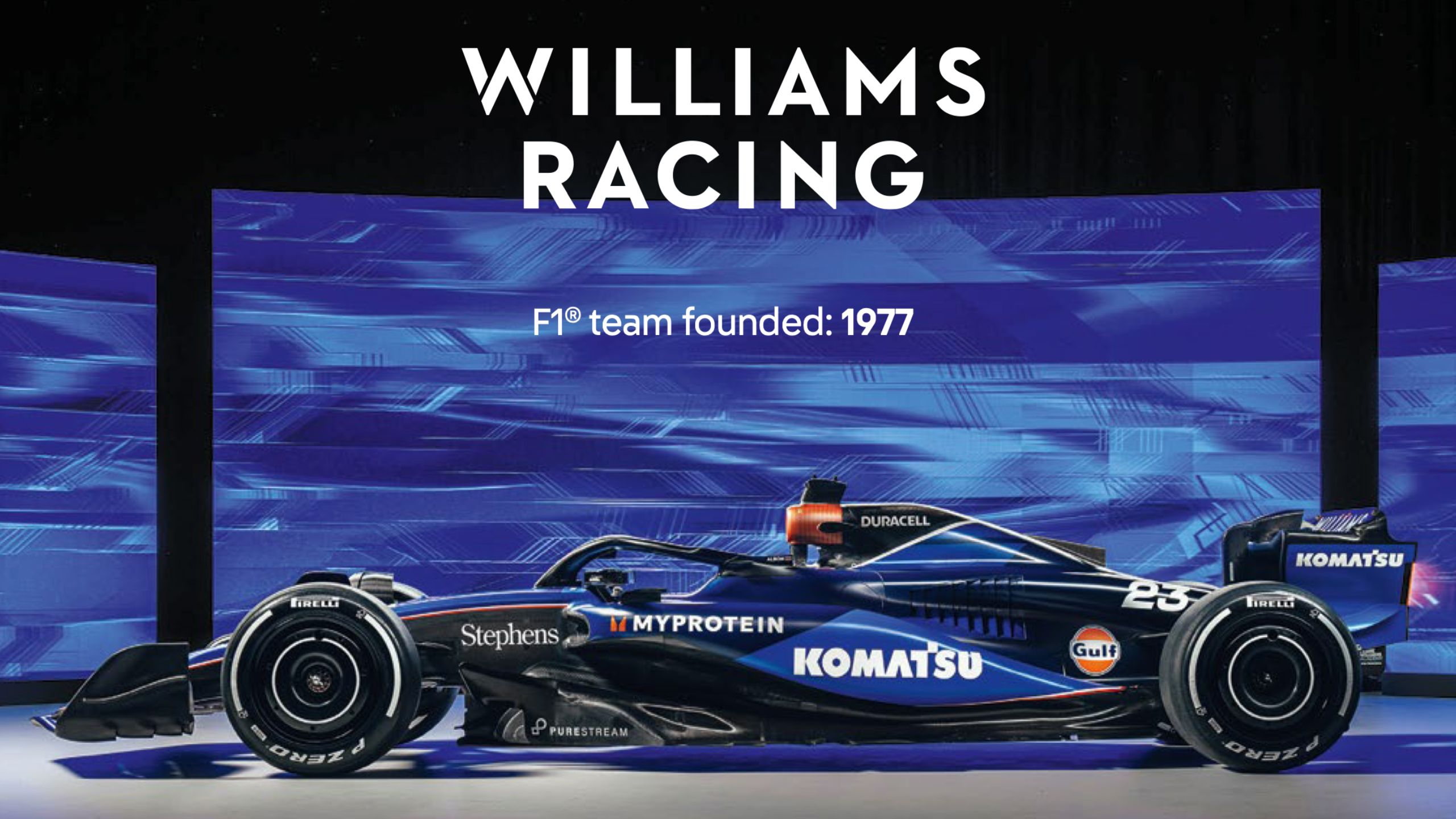
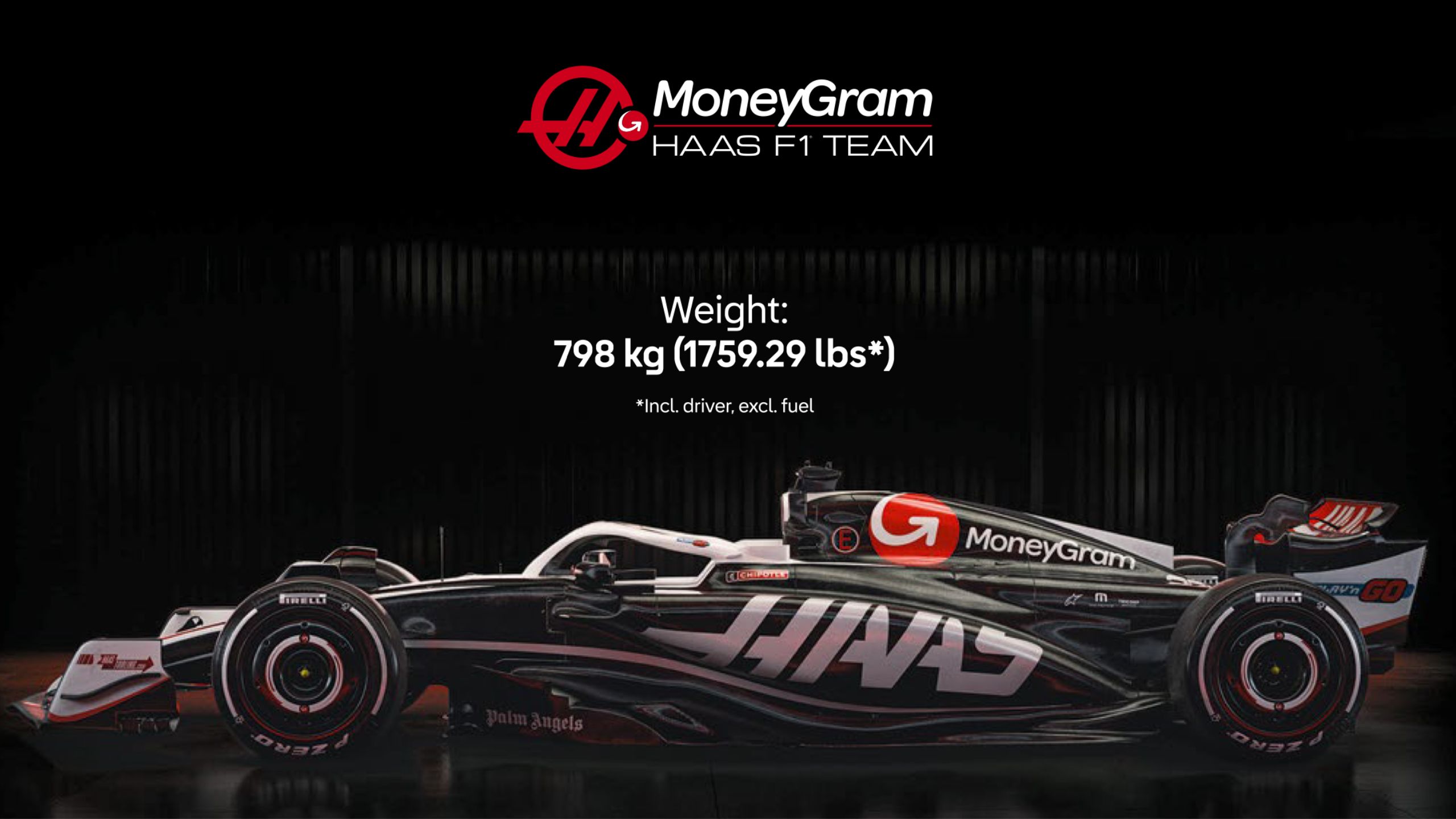
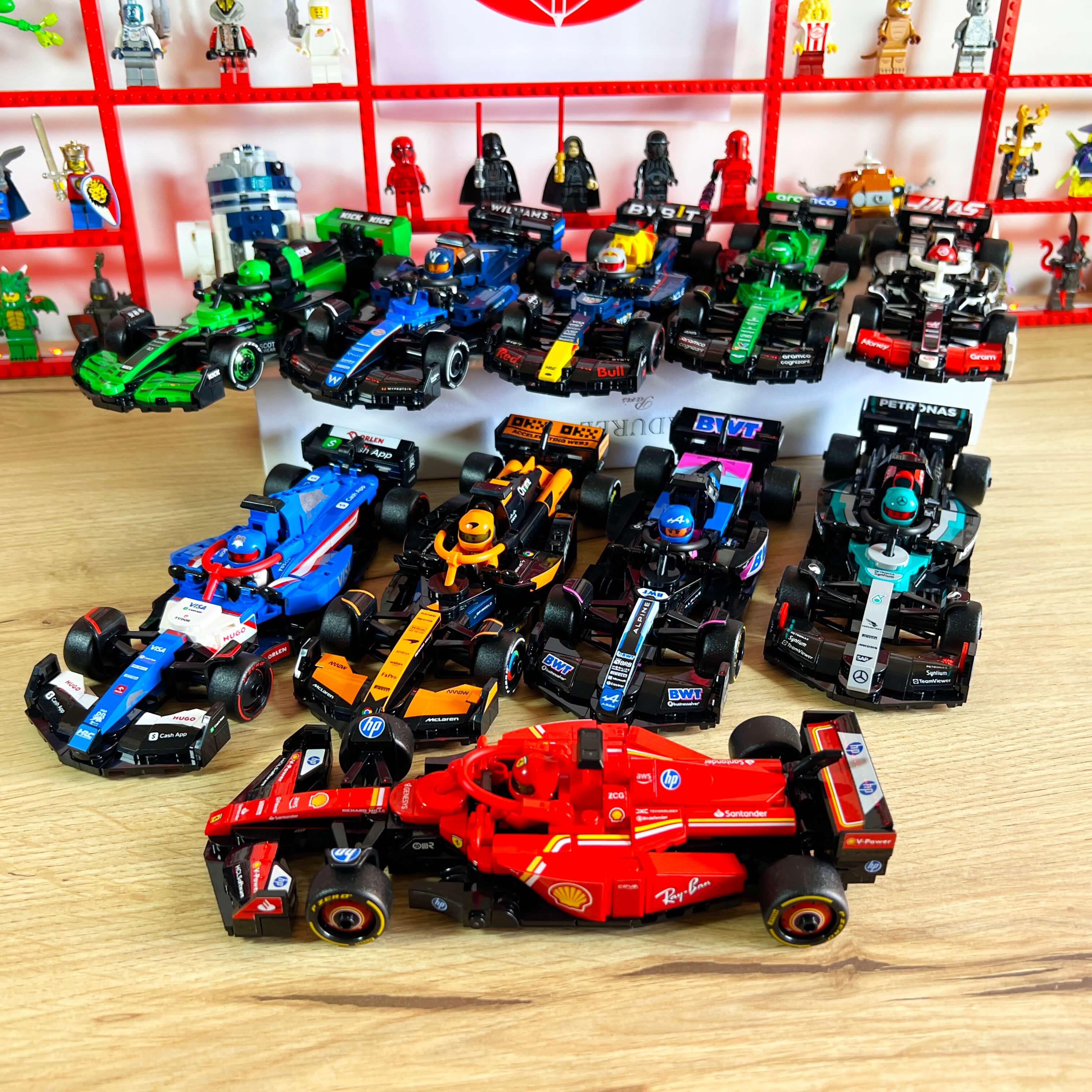
To begin the review of the ten Formula 1 cars, let's start with a general impression: these vehicles are extremely well executed, featuring a design that is very faithful to the real F1 cars, as you can see in the comparison photos taken from the instruction booklets.
77242 Ferrari SF-24
77243 Oracle Red Bull Racing RB20
77244 Mercedes-AMG PETRONAS W15 E Performance
77245 Aston Martin Aramco F1 AMR24
77246 Visa Cash App VCARB 01
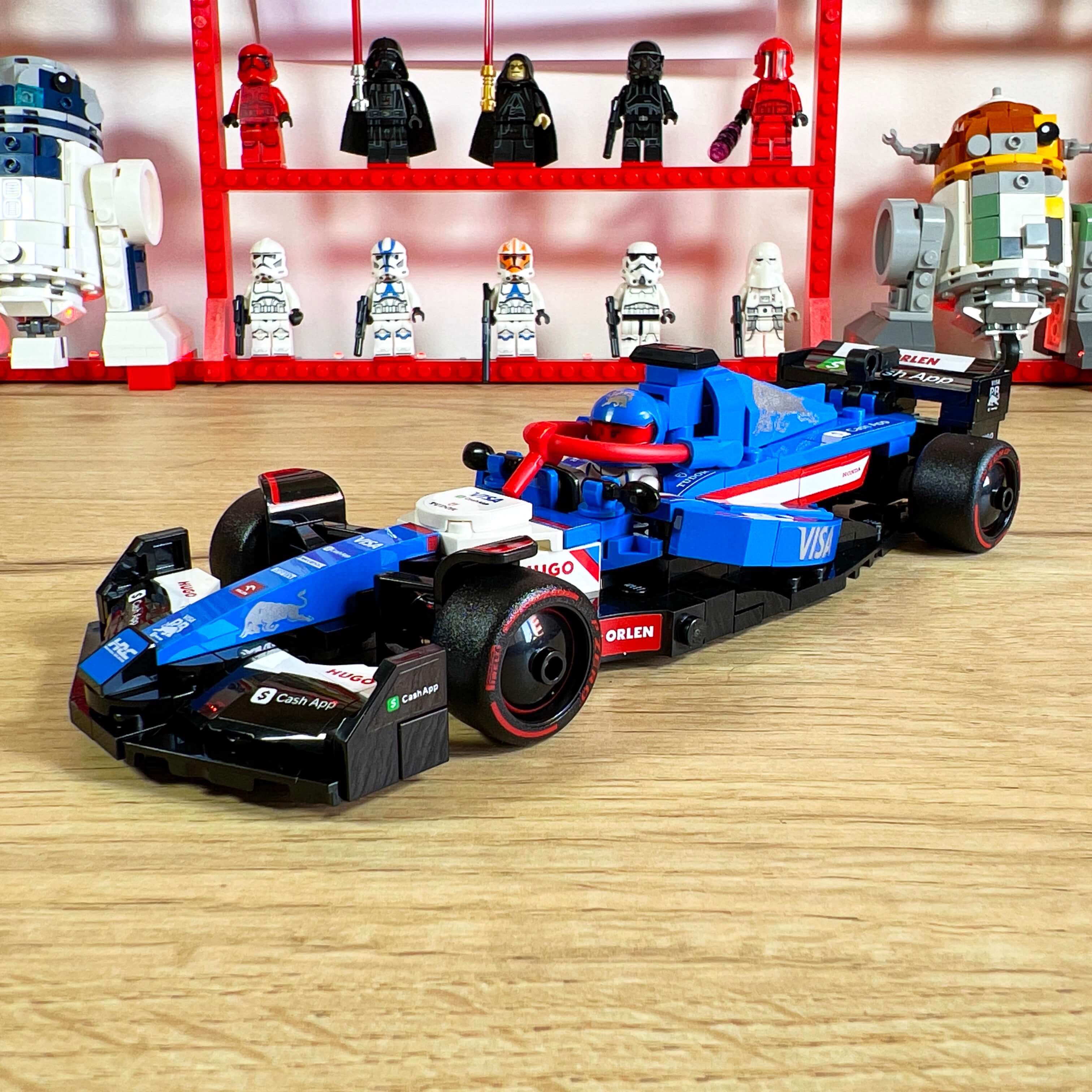
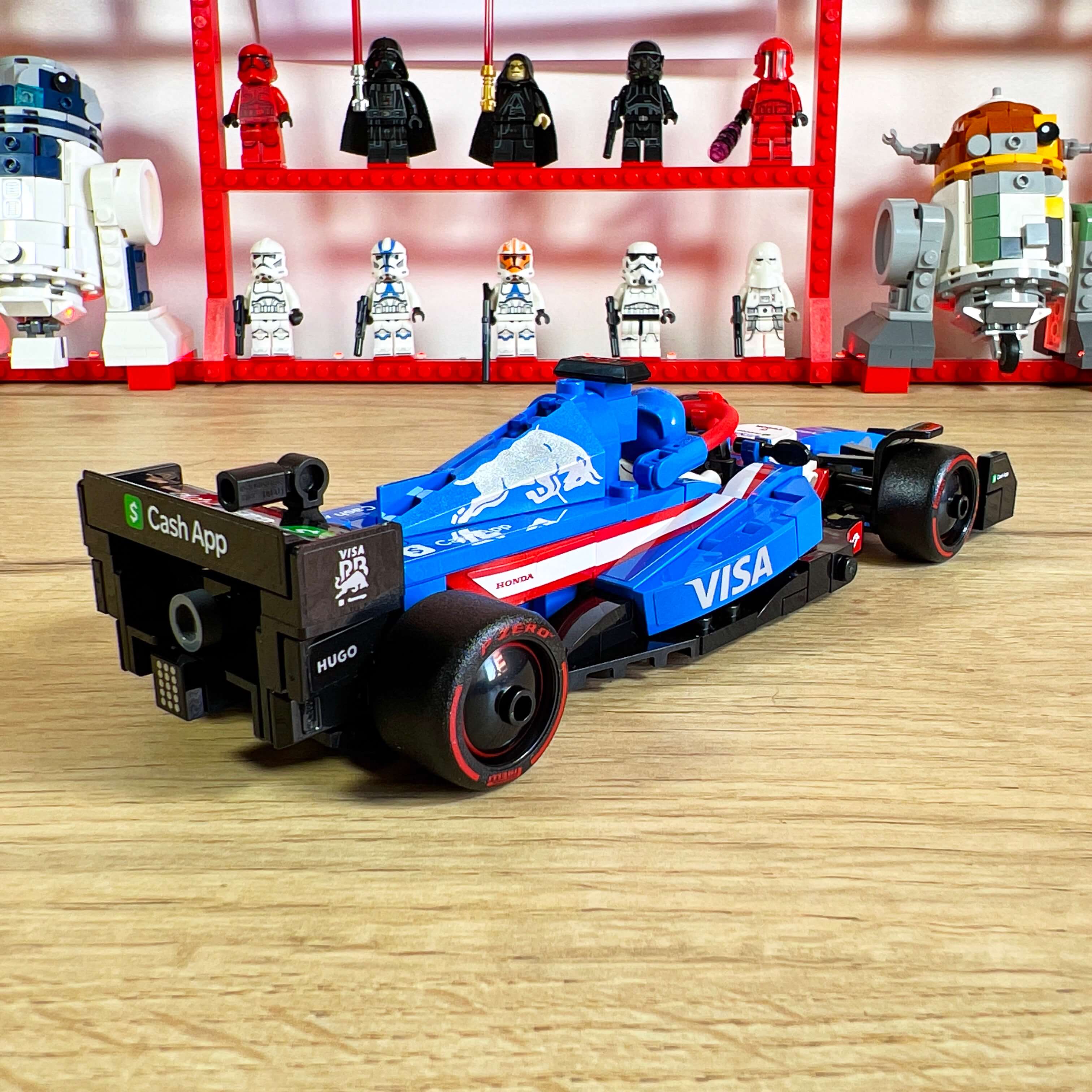
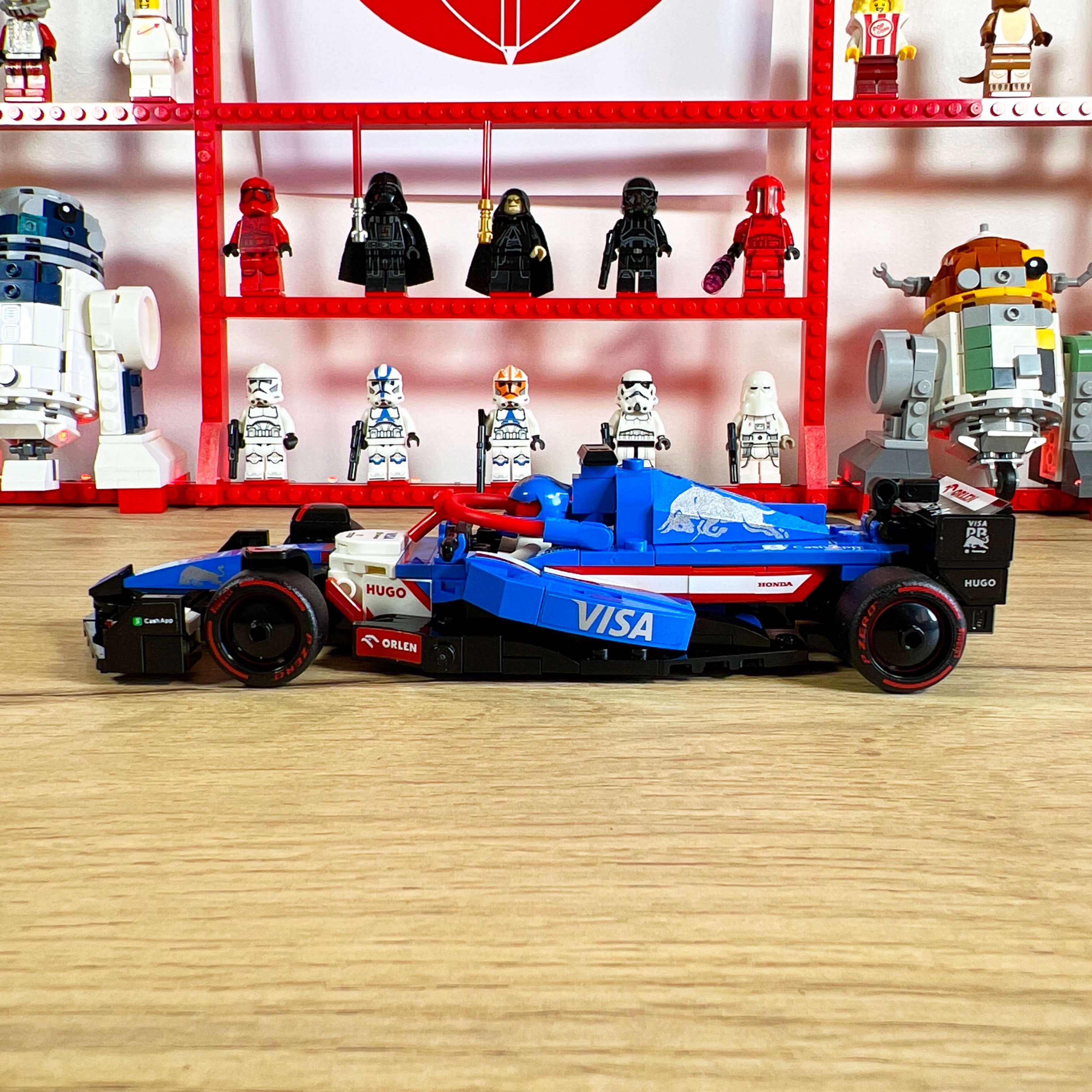
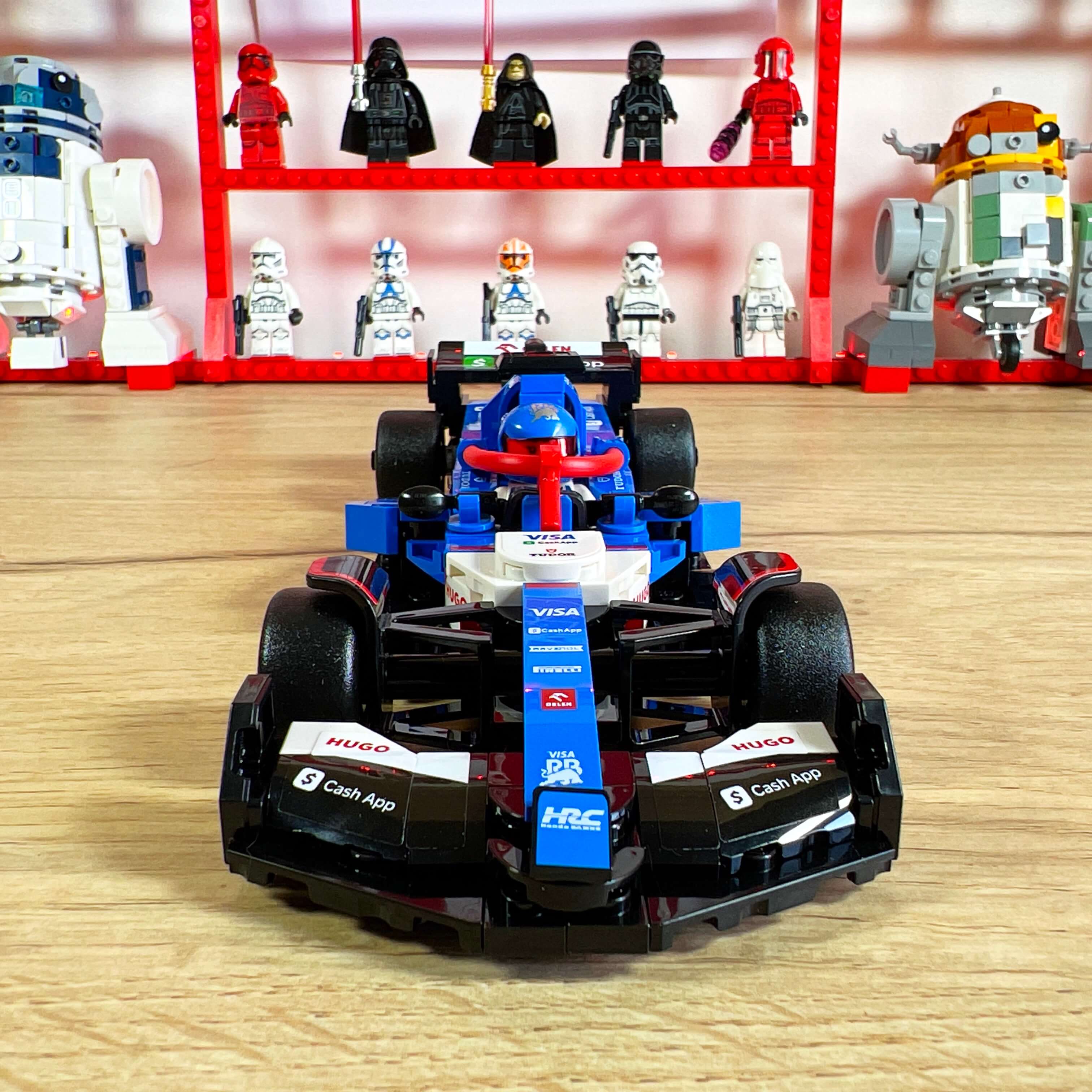
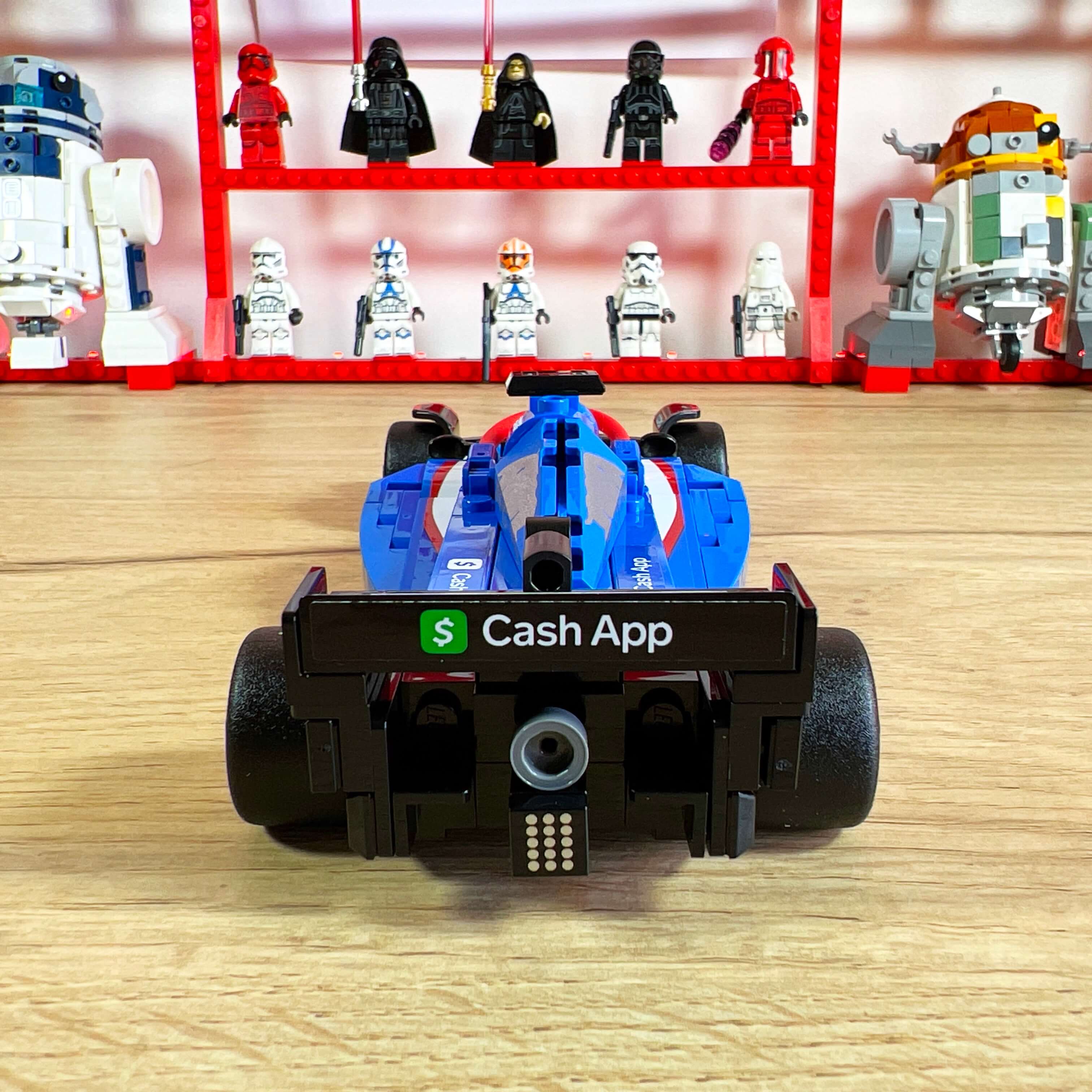
77247 KICK Sauber F1 Team C44
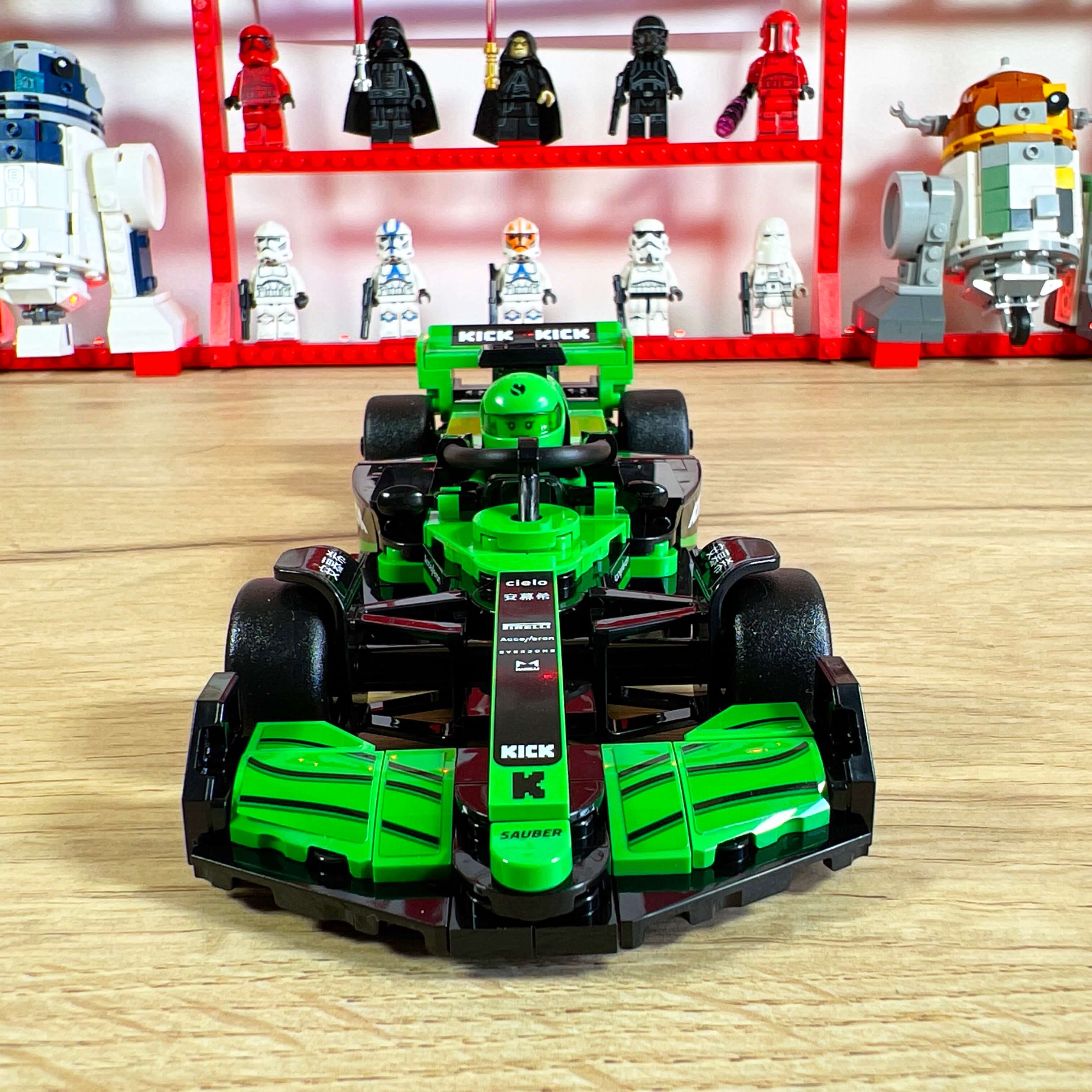
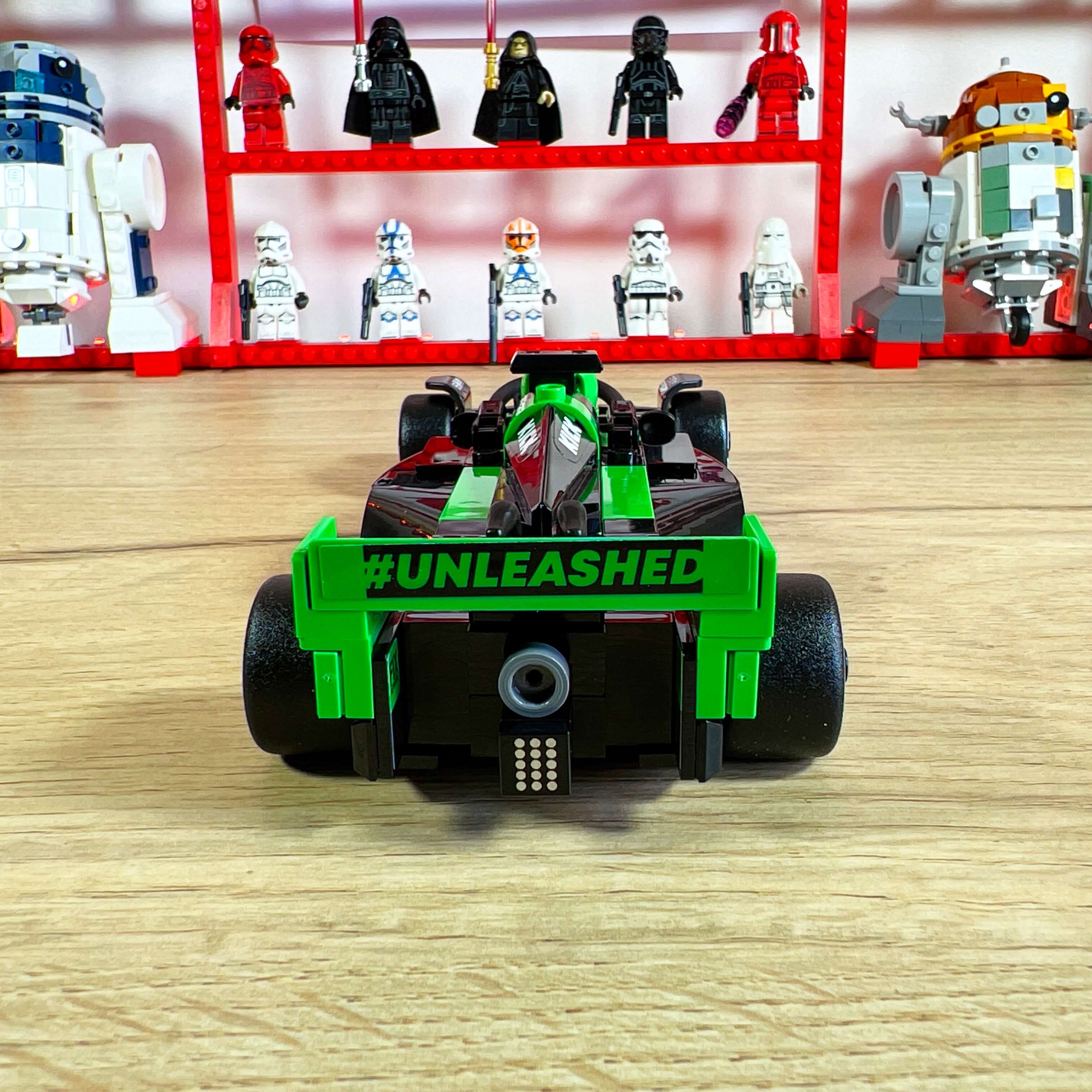
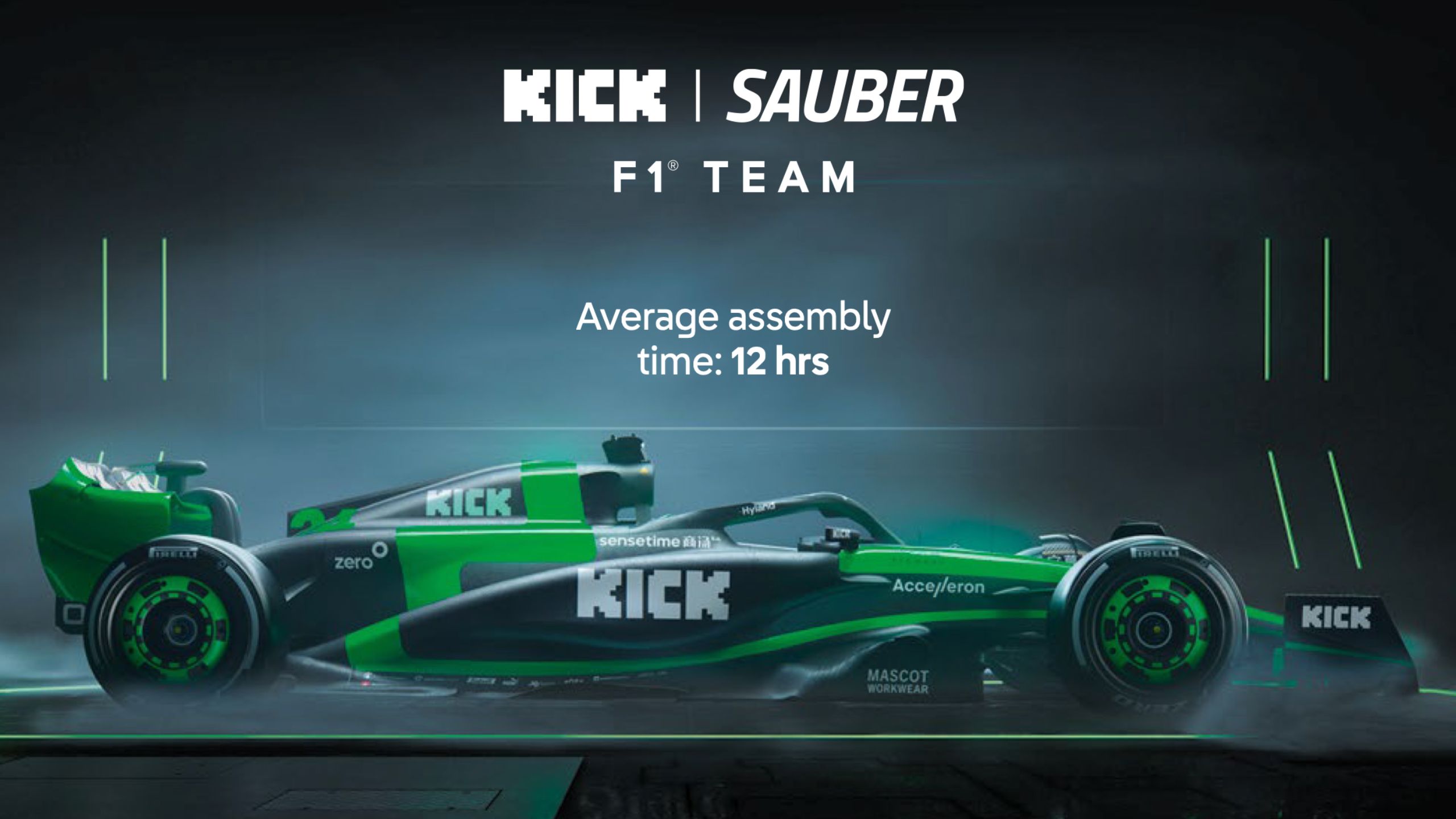
77248 BWT Alpine F1 Team A524
77249 Williams Racing FW46
77250 MoneyGram Haas F1 Team VF-24
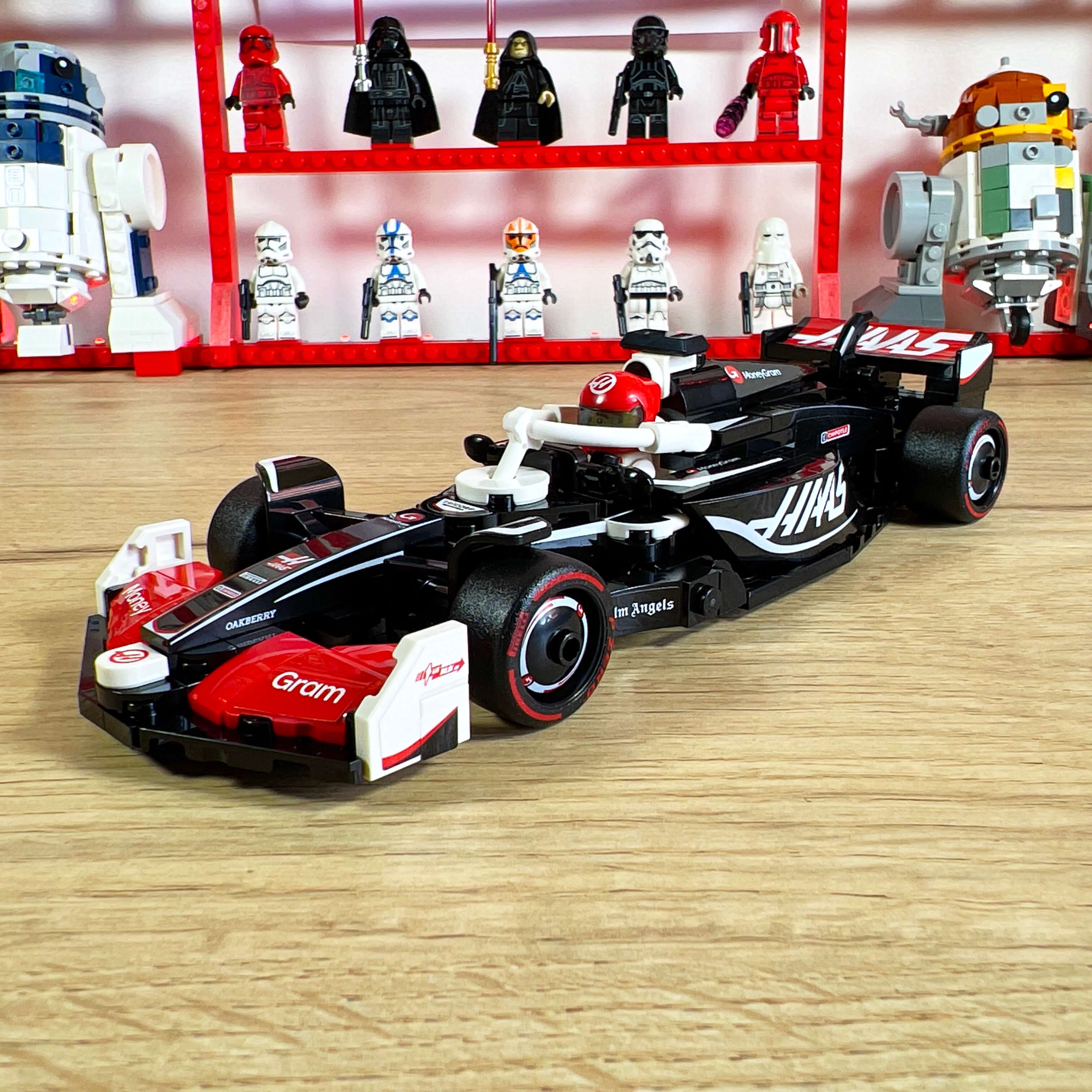
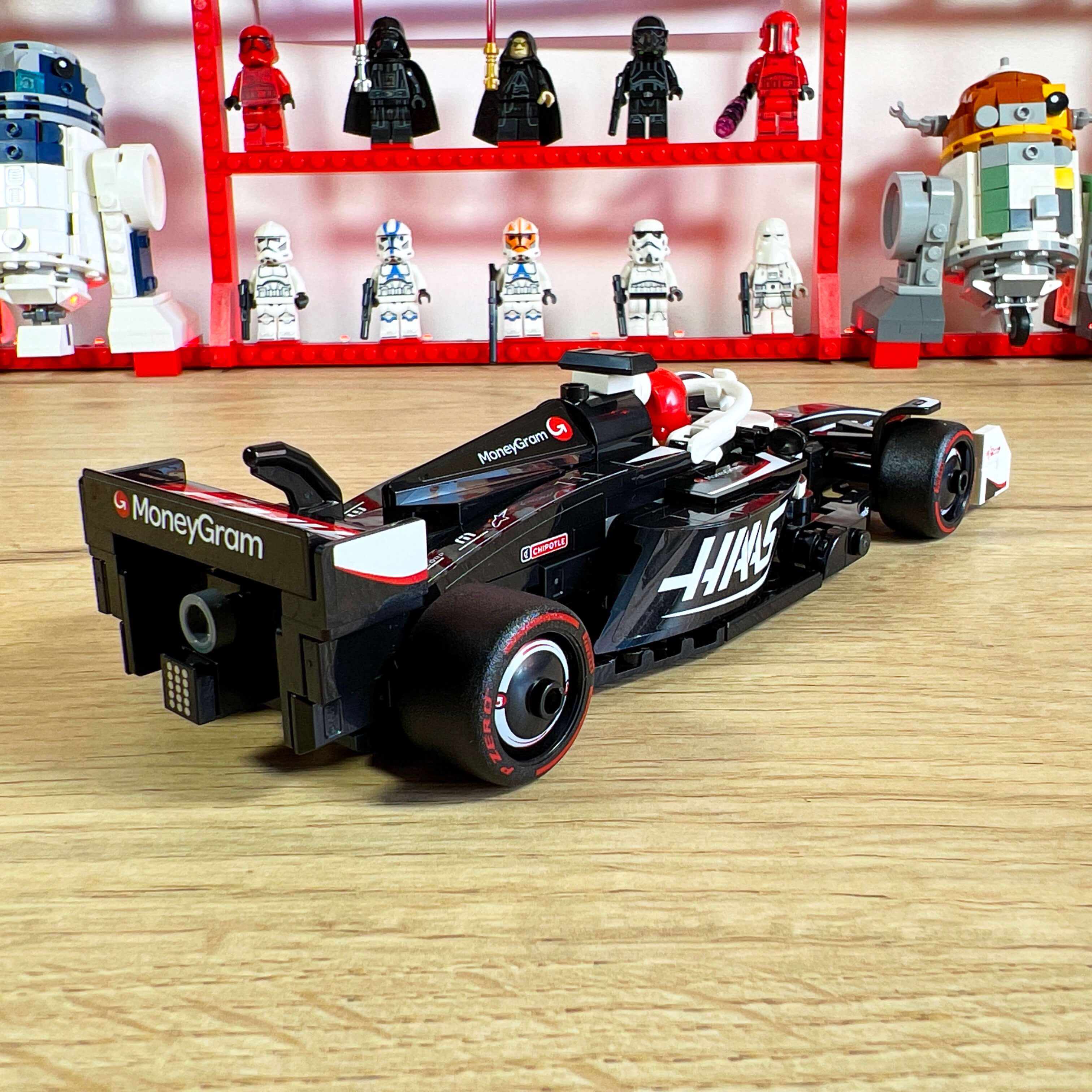
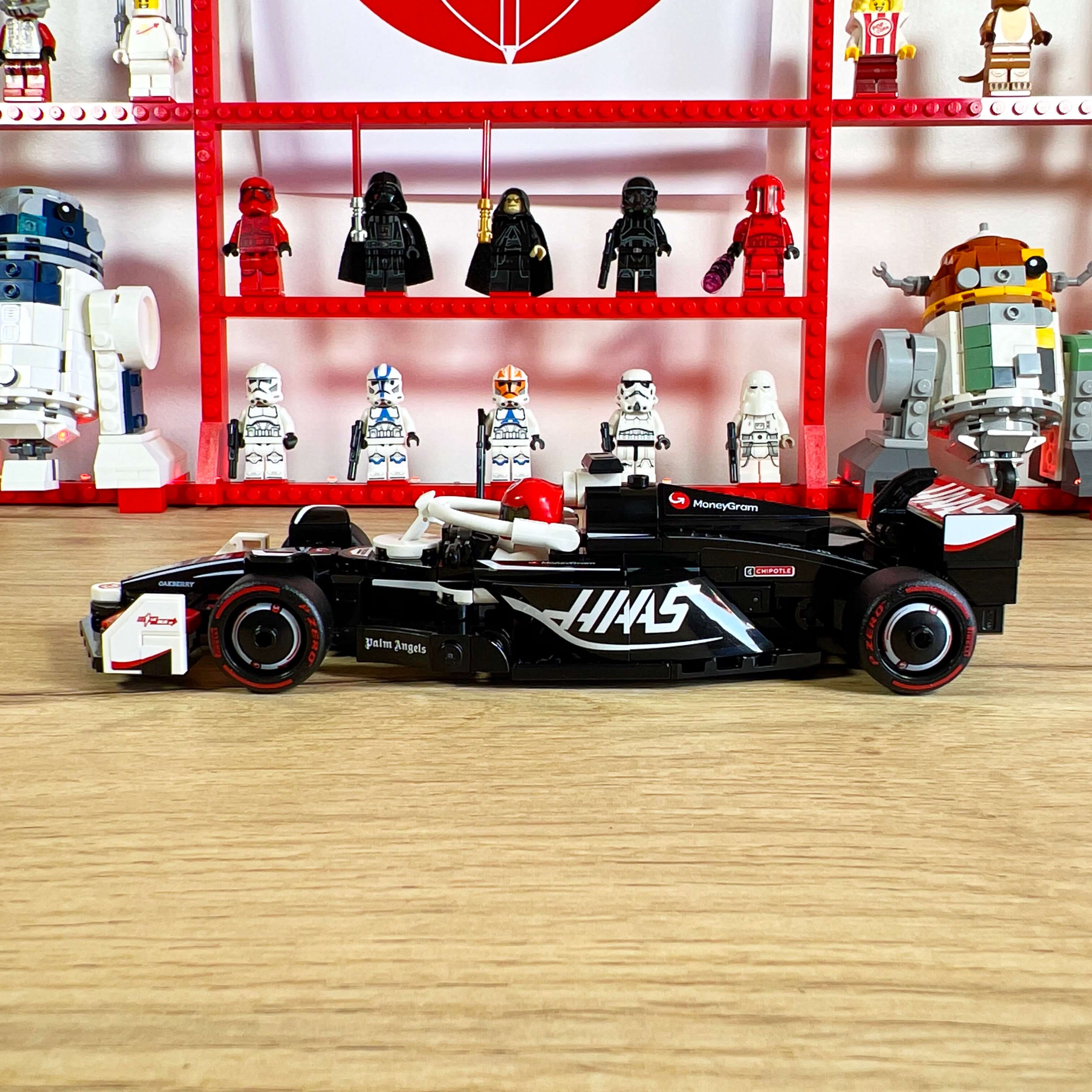
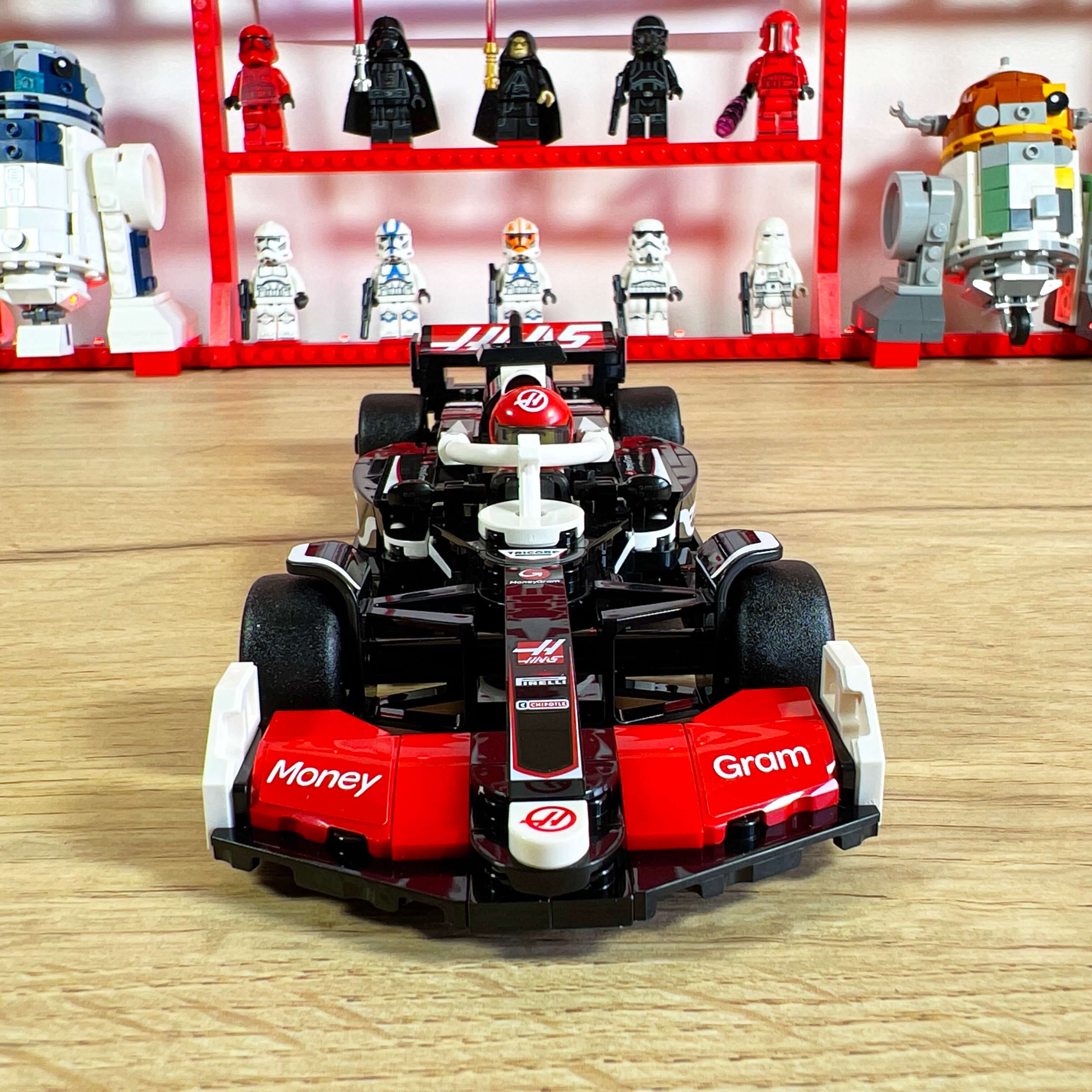
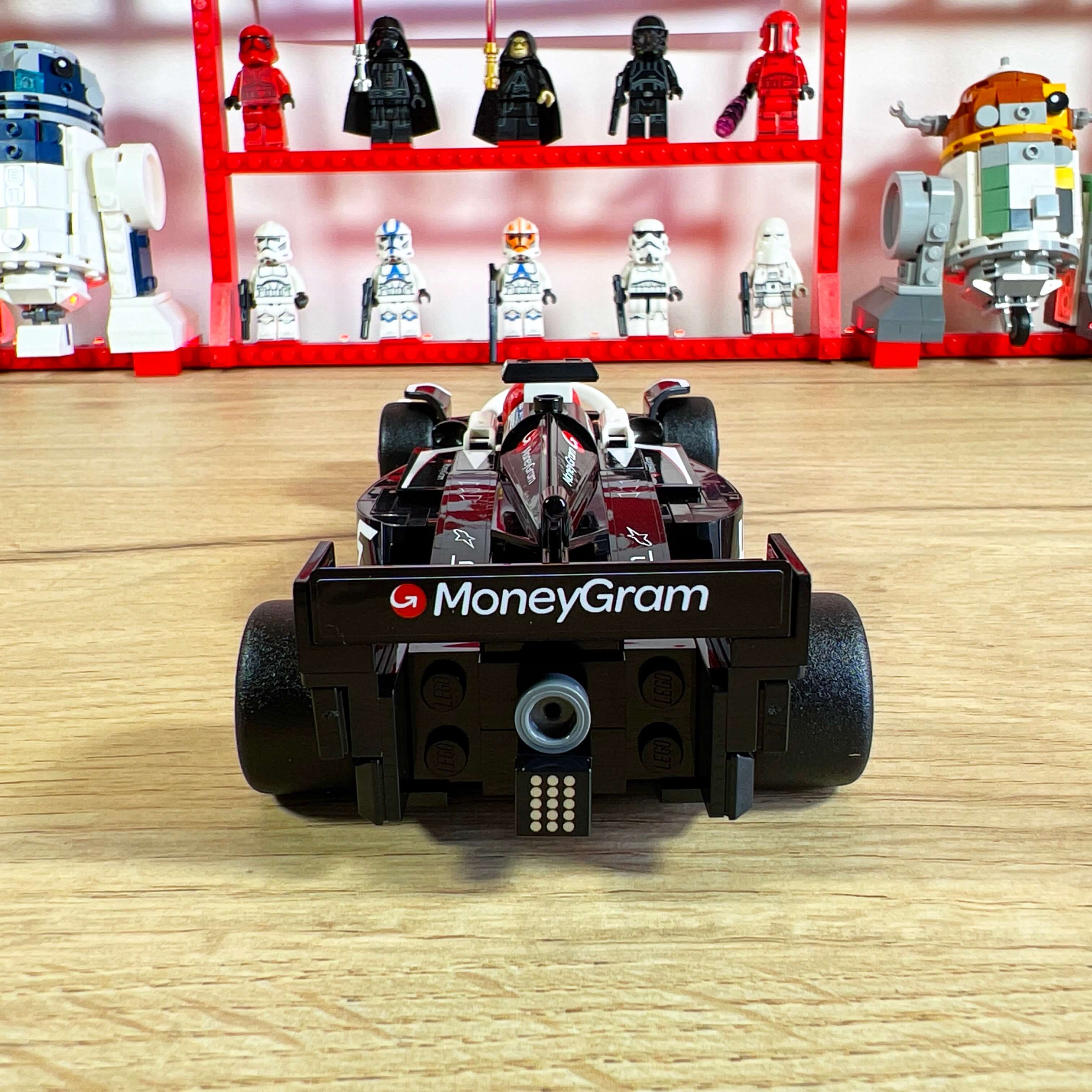
77251 McLaren F1 Team MCL38
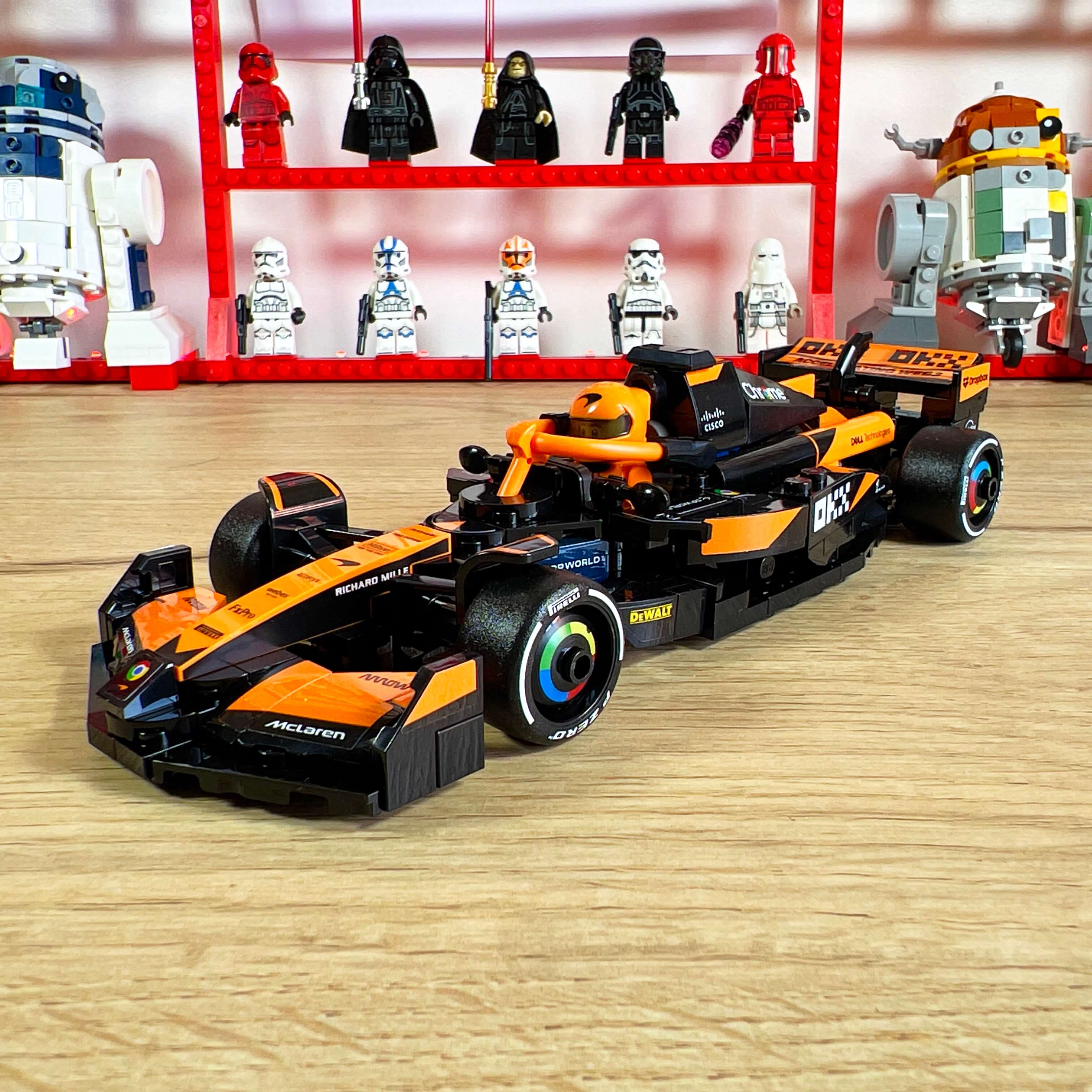
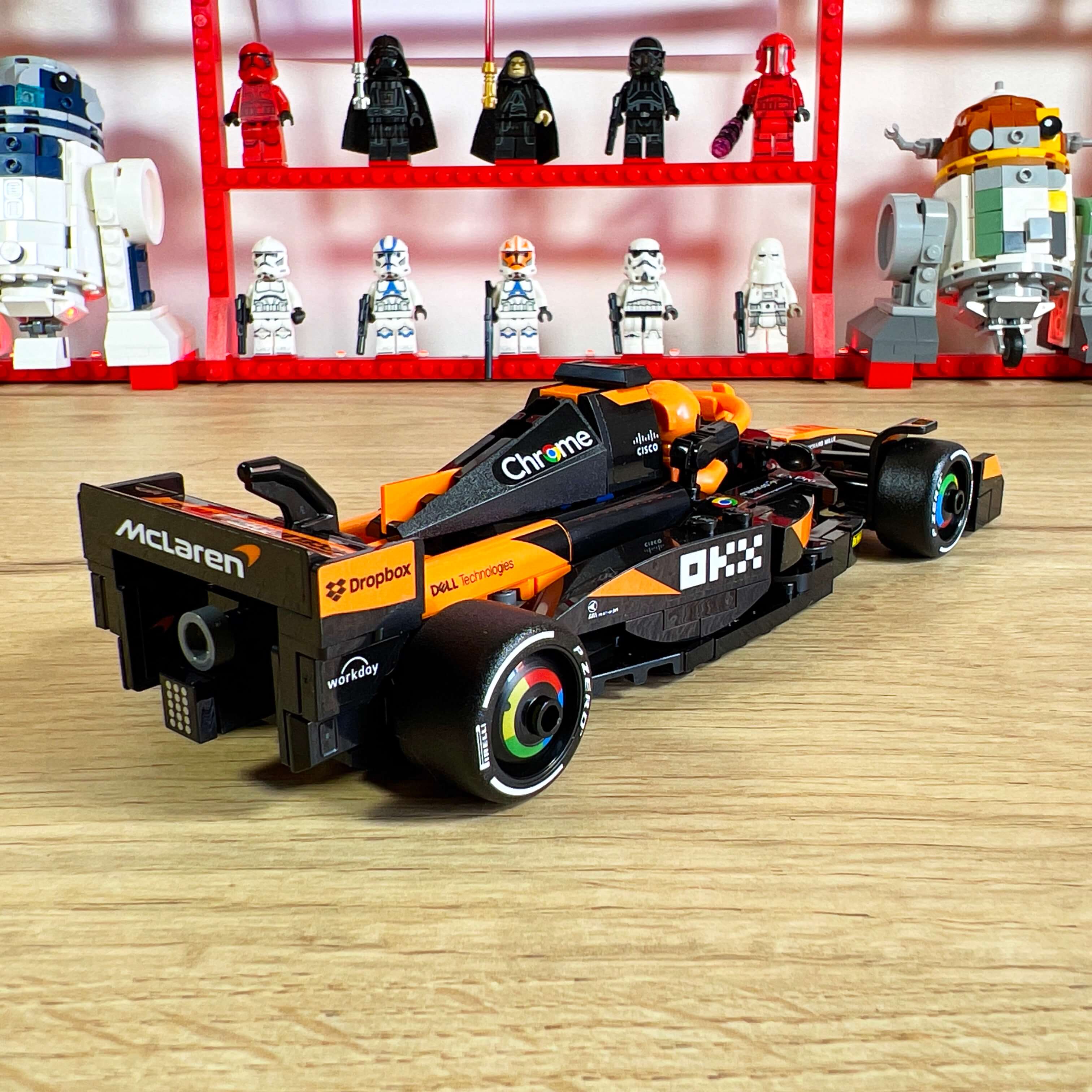
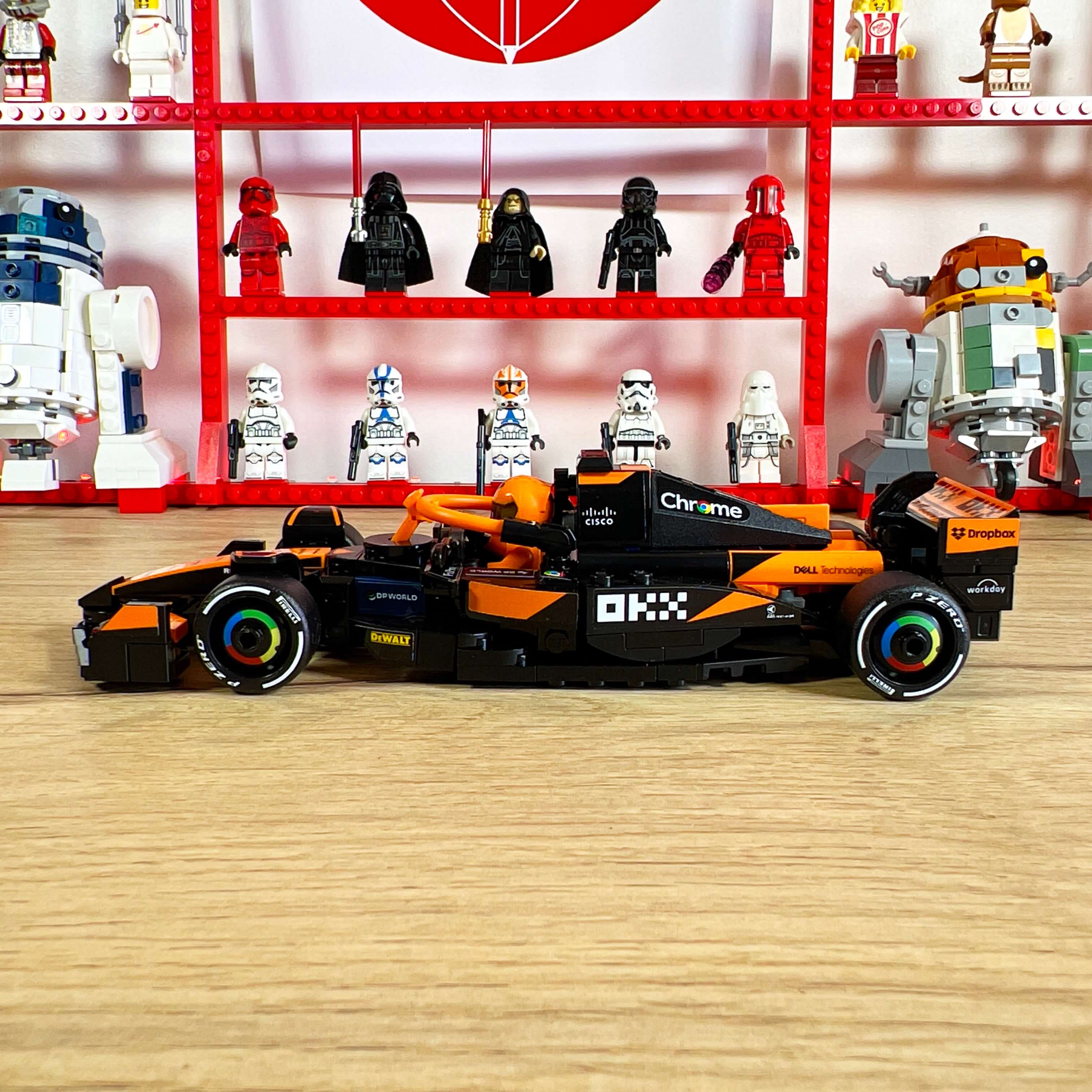
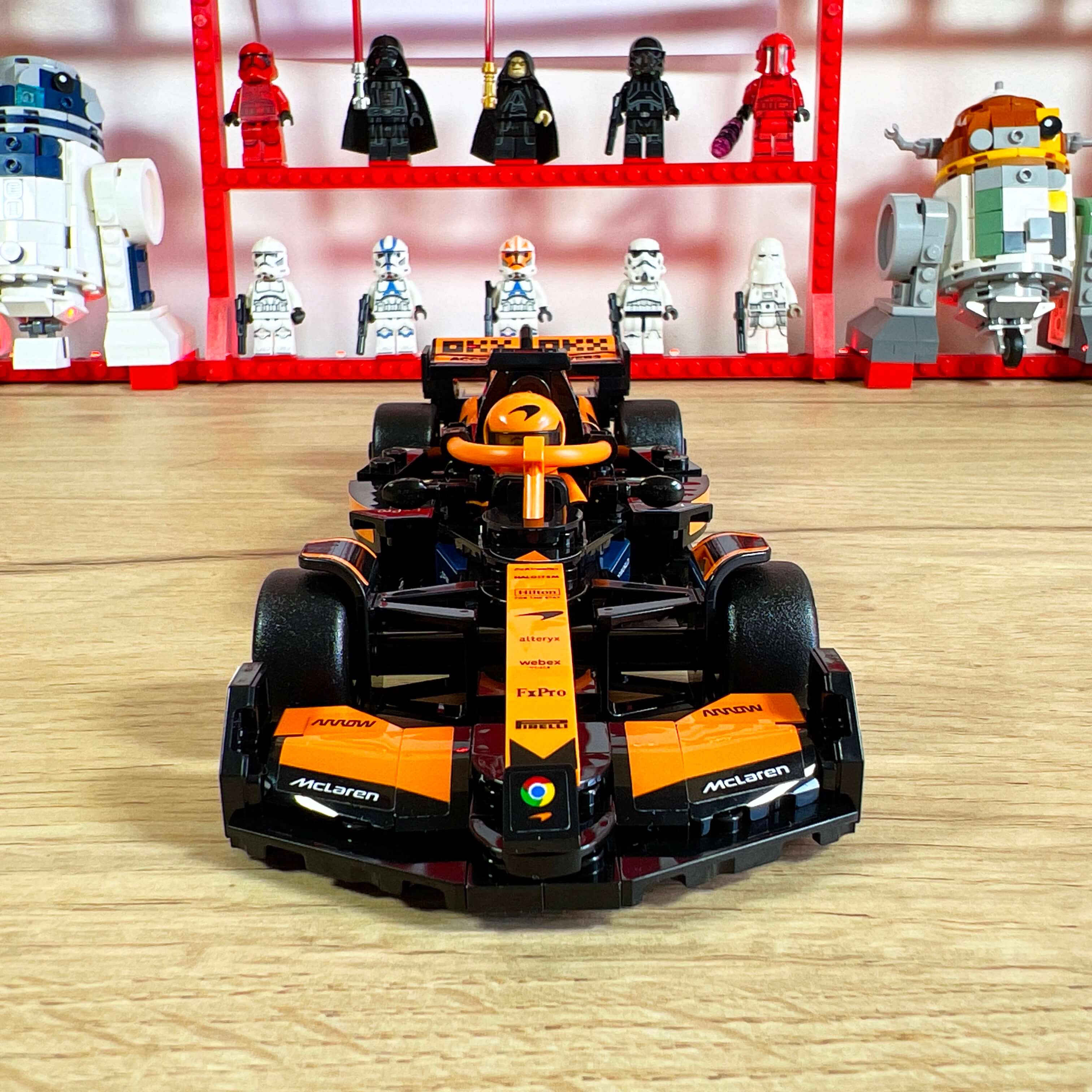
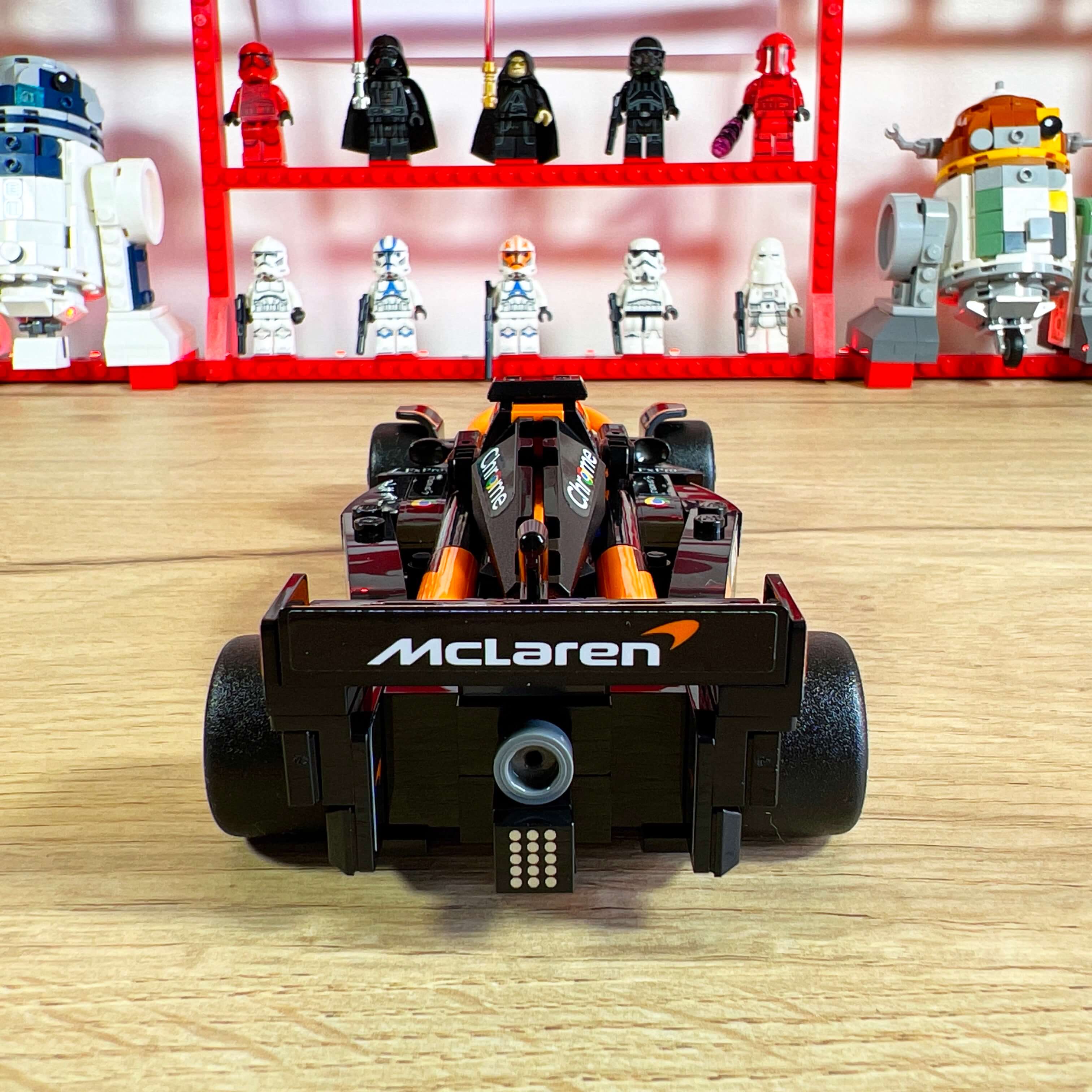
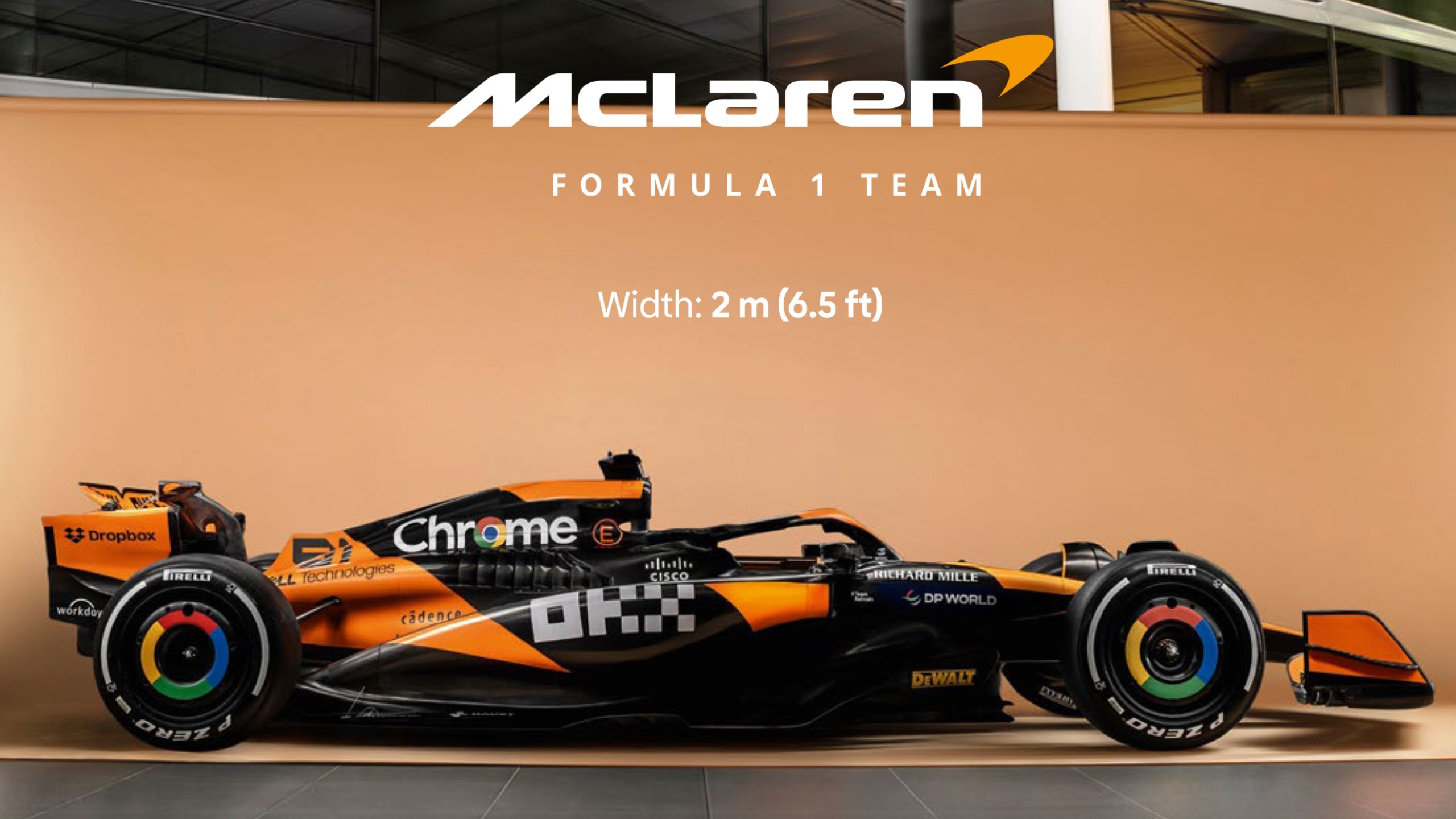
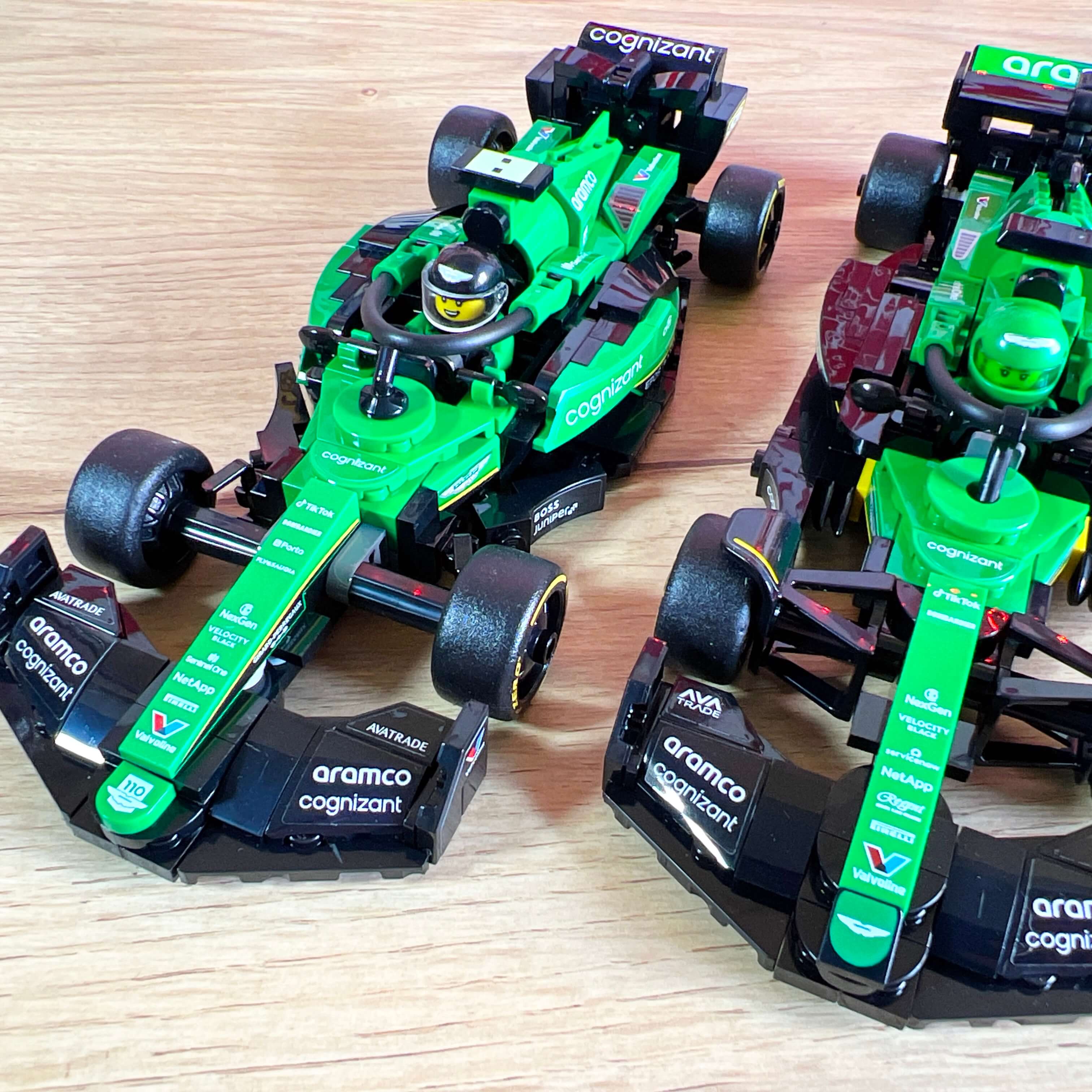
The only disappointment is the Aston Martin, whose color uses LEGO's standard green, which is too far removed from the real F1 car's Racing Green. It would have been preferable to use Bright Bluish Green, also known as Dark Turquoise, which is much closer to the original shade. LEGO eventually did so for the Technic 42208 Aston Martin Valkyrie set released a few months later.
Improvements Over Previous Versions
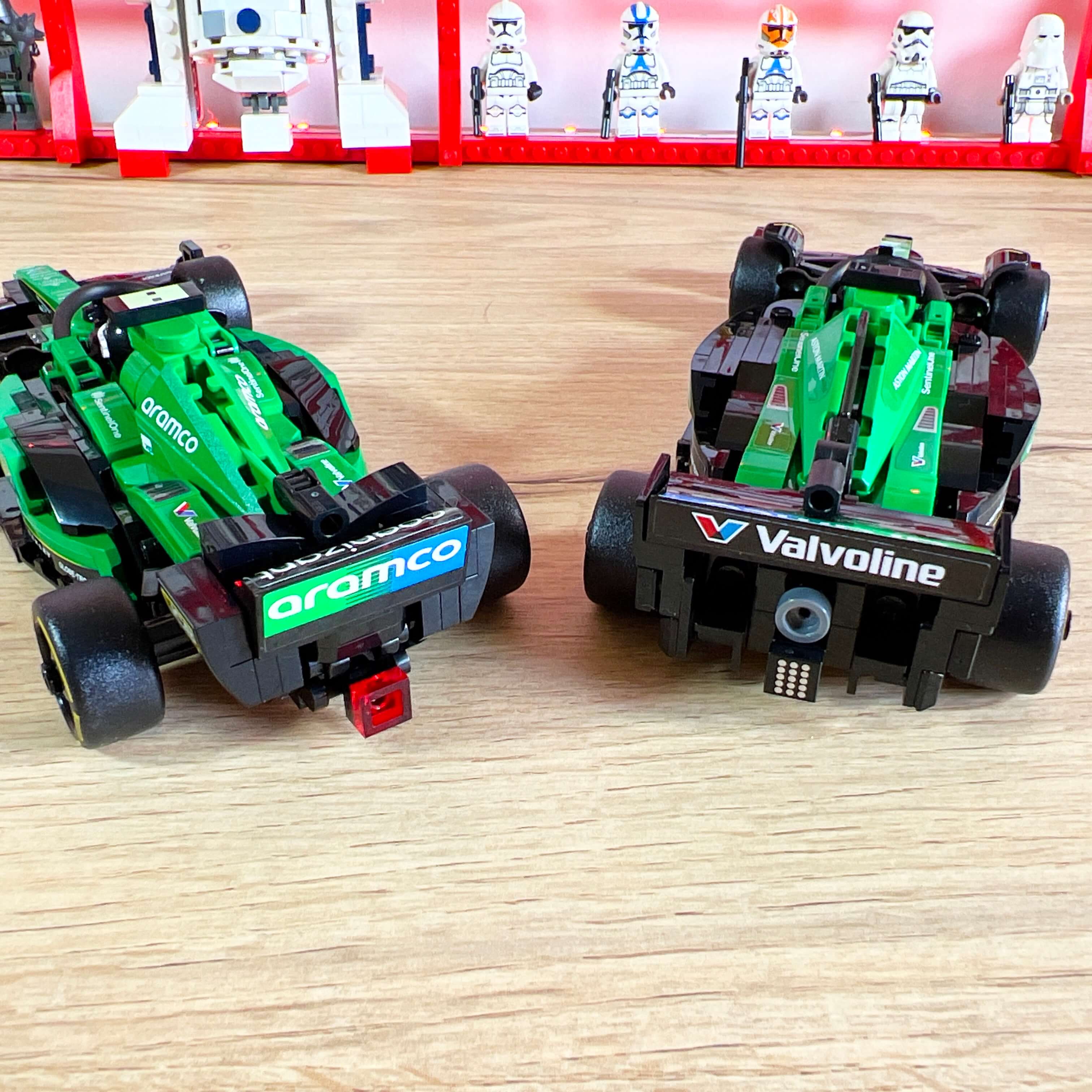
Having previously reviewed the 76919 McLaren F1 2023 set, I had already found its design to be highly successful, detailed, and faithful to the real F1 car. While these new cars may appear similar, they have received several improvements. I brought out that set, along with the 76925 Aston Martin Safety Car & AMR23, both released in 2024, for comparison.
First of all, the 2025 F1 cars use a new dedicated element to represent the suspension wishbones, replacing the Technic connector and bucket handle assembly used in previous sets. The wheels themselves have also been improved: while the 2024 sets used four identical wheels, the 2025 models feature wider rear wheels for increased realism.
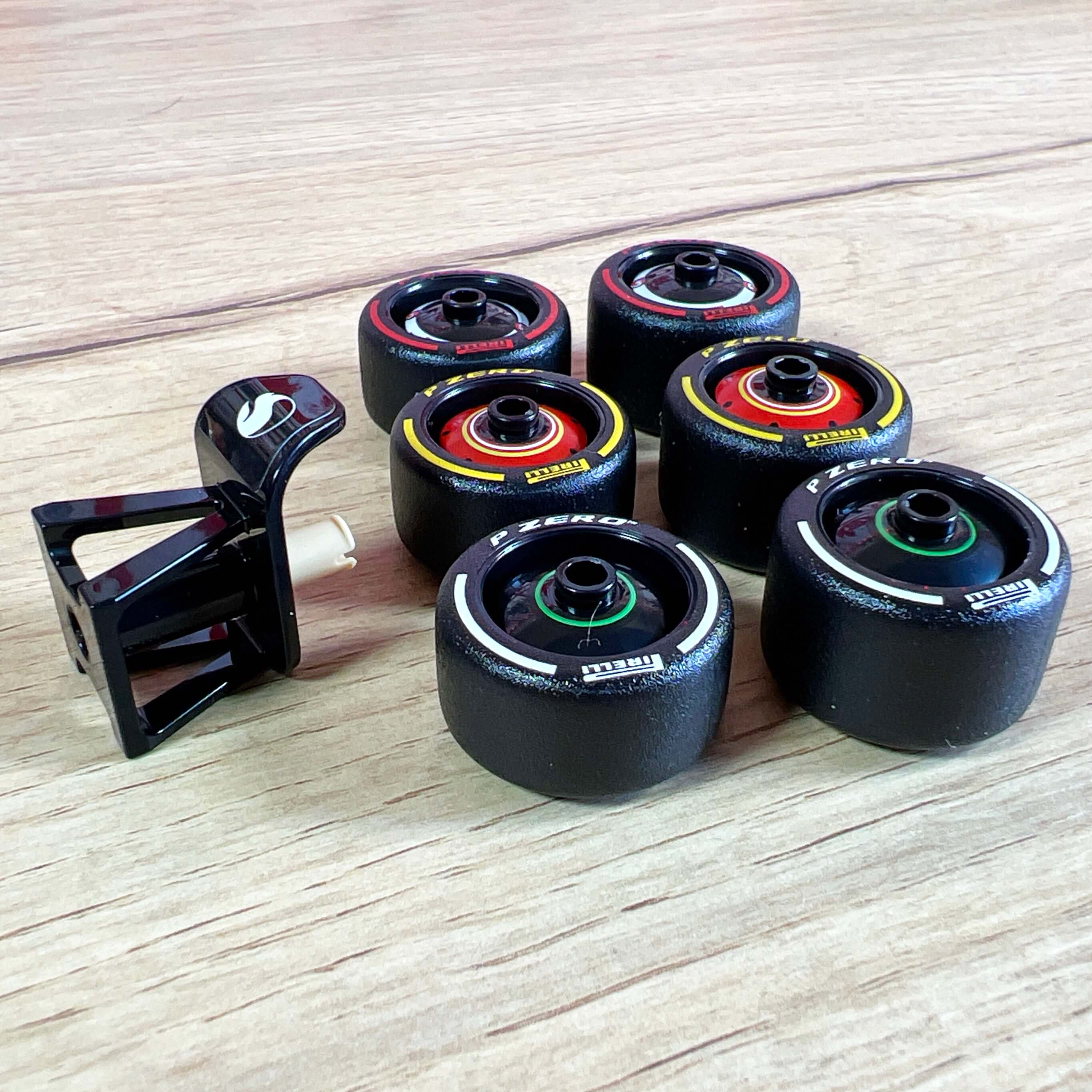
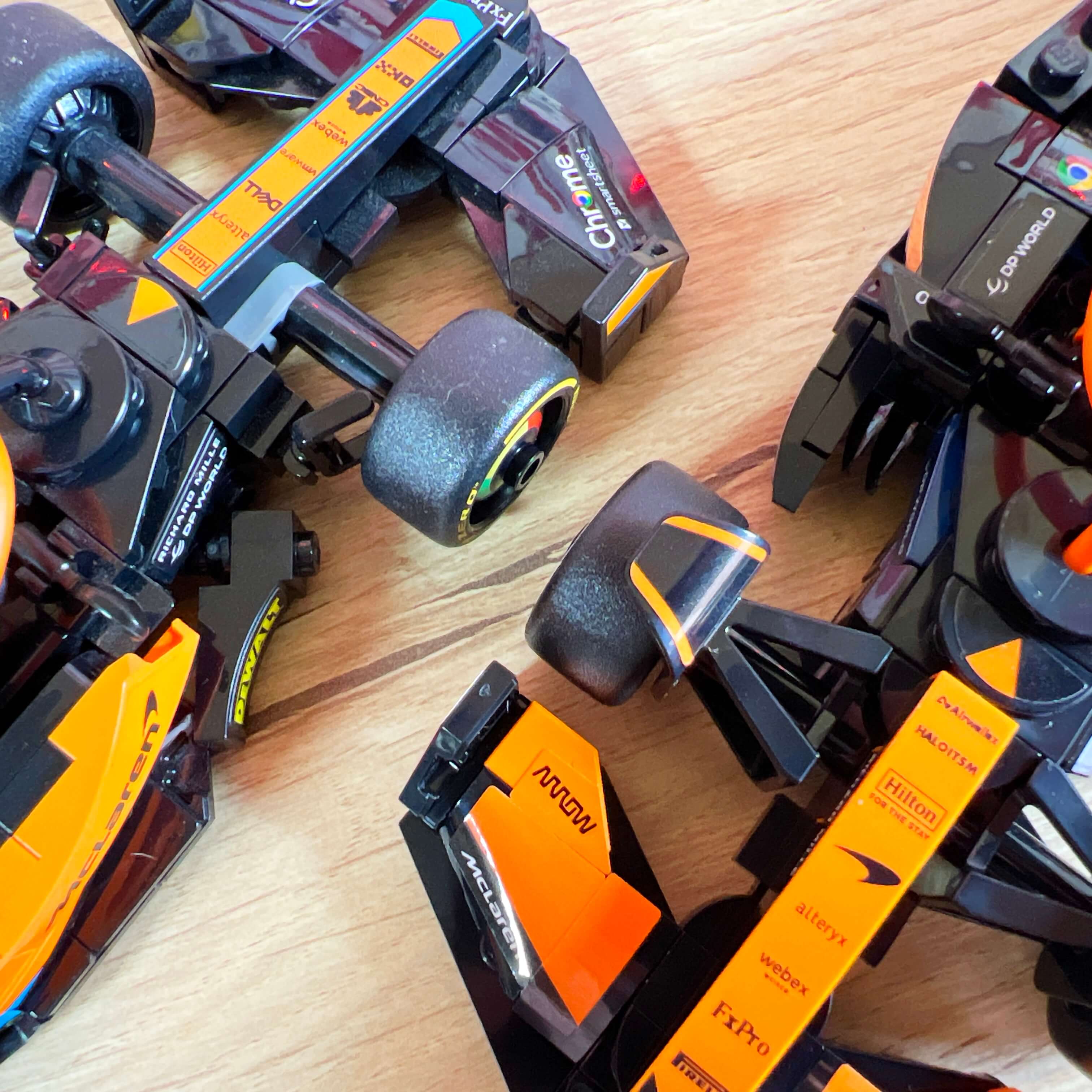
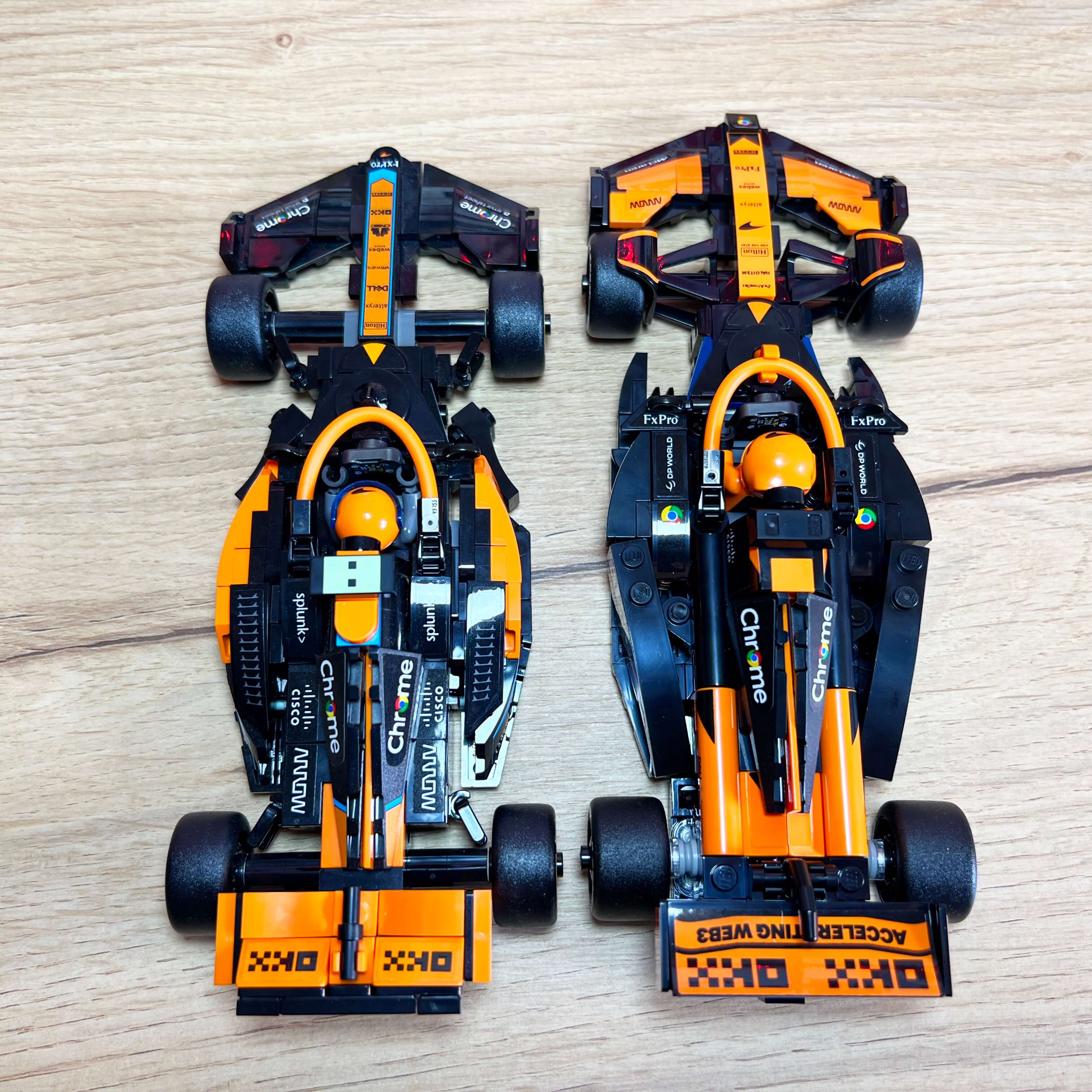
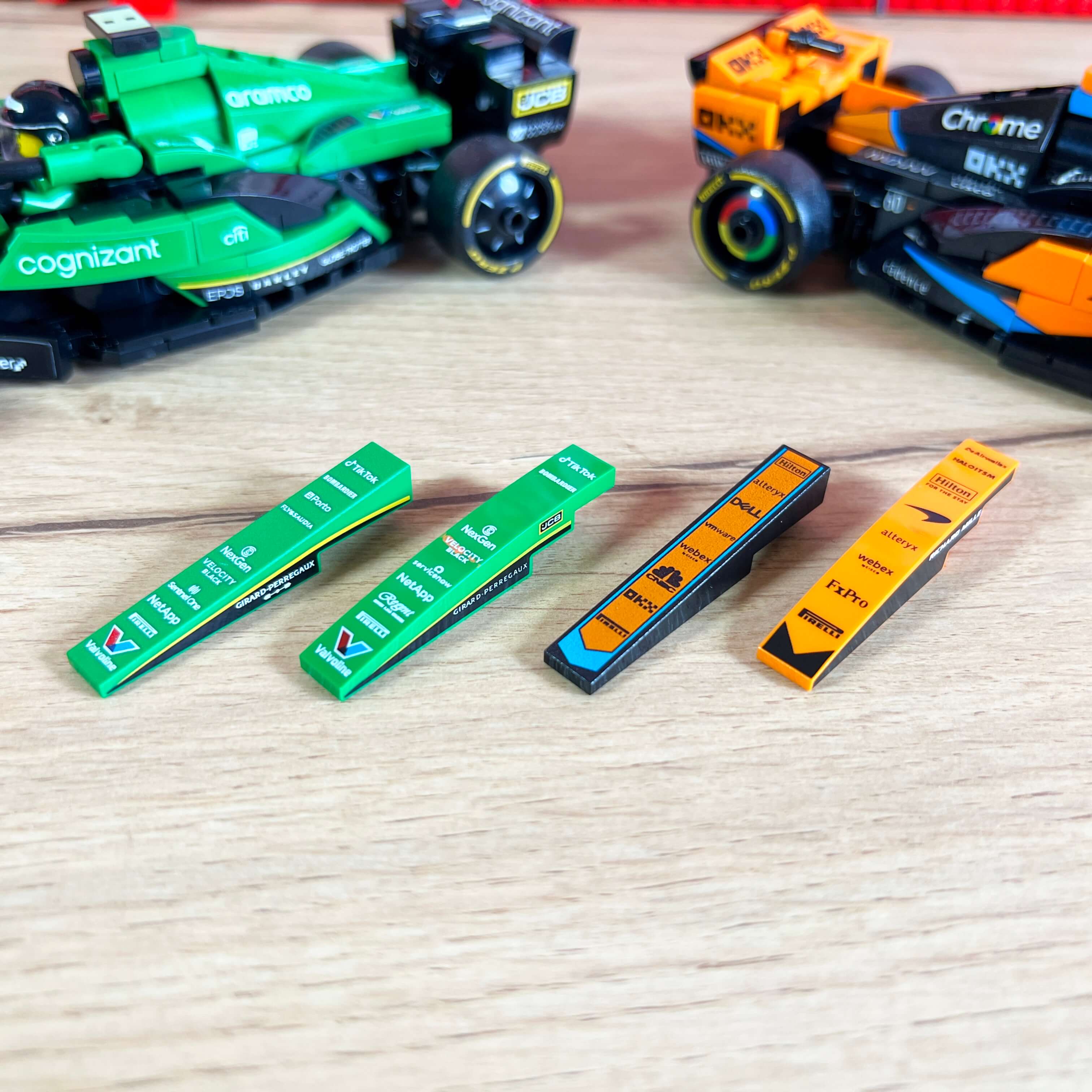
The final improvement concerns the printed elements, namely the noses of the F1 cars. Not only do they use a more realistic curved piece, but the print quality has improved significantly in terms of sharpness, especially compared to the nose piece used on the 2024 McLaren. The sides of the pieces are now printed as well, unlike on that set, although these improvements had already appeared on the 2024 Aston Martin.
The Number of Stickers: The Usual Speed Champions Drawback
Speaking of printed elements, the only parts that are printed on every F1 car are:
- the nose (the curved brick and the 1x1 piece at the tip)
- the wheel rims
- a 1x1 tile at the rear
- the steering wheel (which uses a video game controller piece)
Some cars include a few additional printed parts:
- the engine cover slope bricks on the Mercedes, Red Bull, and Visa Cash cars (all the others use stickers even though the parts are identical or very similar)
- 1x1 tiles on the Mercedes, Alpine, Haas, and Red Bull
- two 2x2 slopes at the front of the Visa Cash car (because they are partially covered by another piece; using a printed element in such cases seems to be a LEGO rule)
- the 1x4 rounded bricks at the rear of the McLaren, Ferrari, and Mercedes
- four side-printed elements on the Ferrari
- two 1x1 slopes on the Ferrari featuring the logo
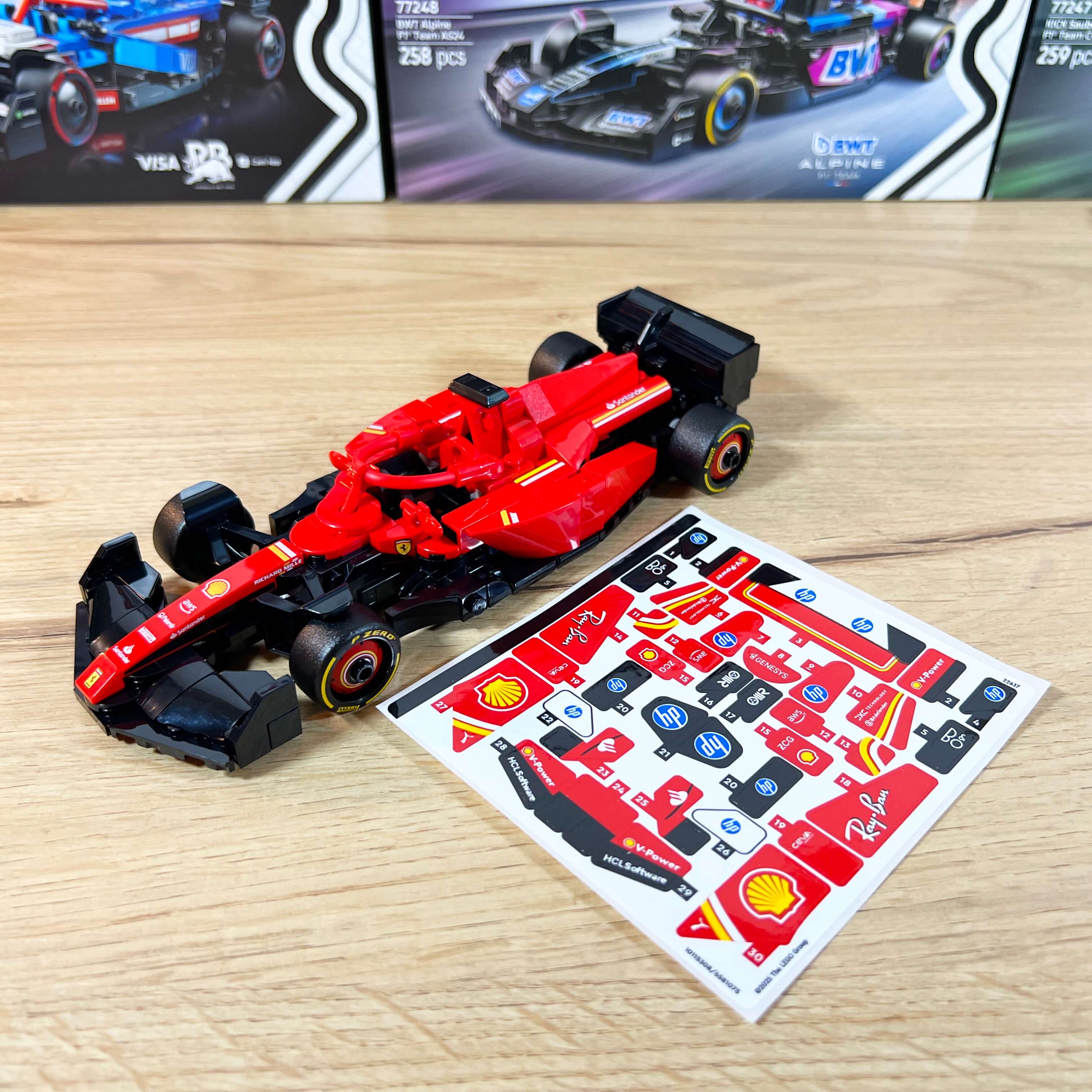
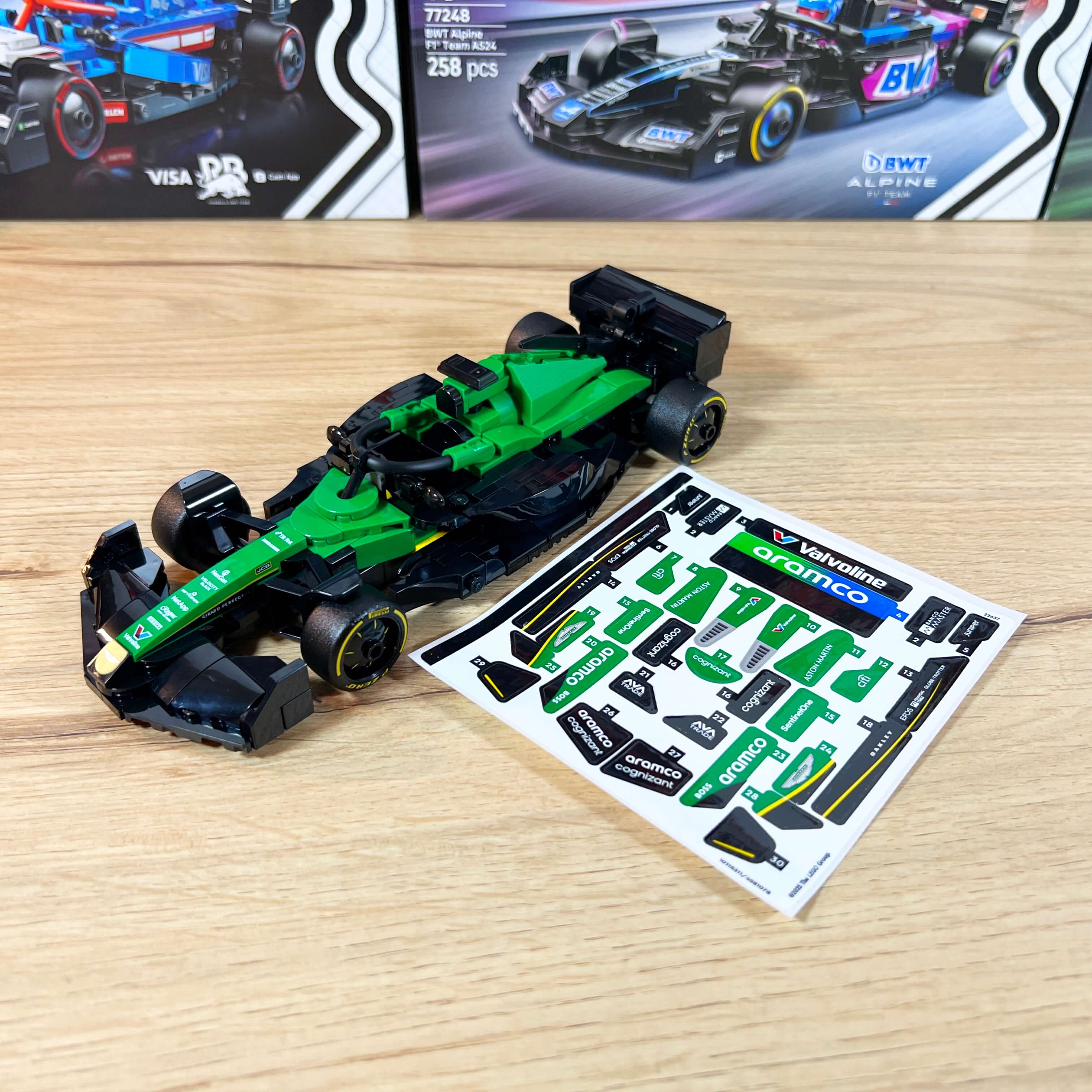
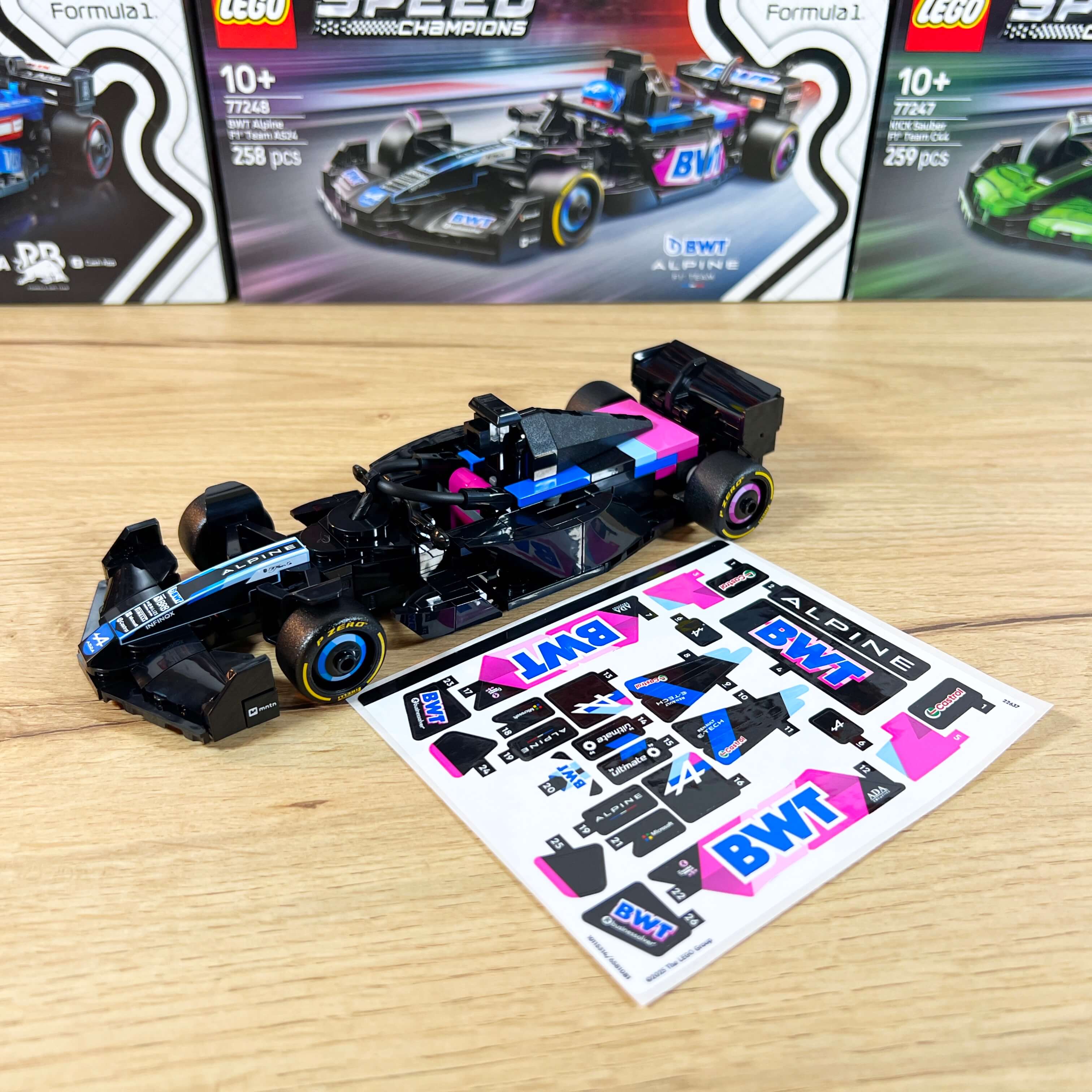
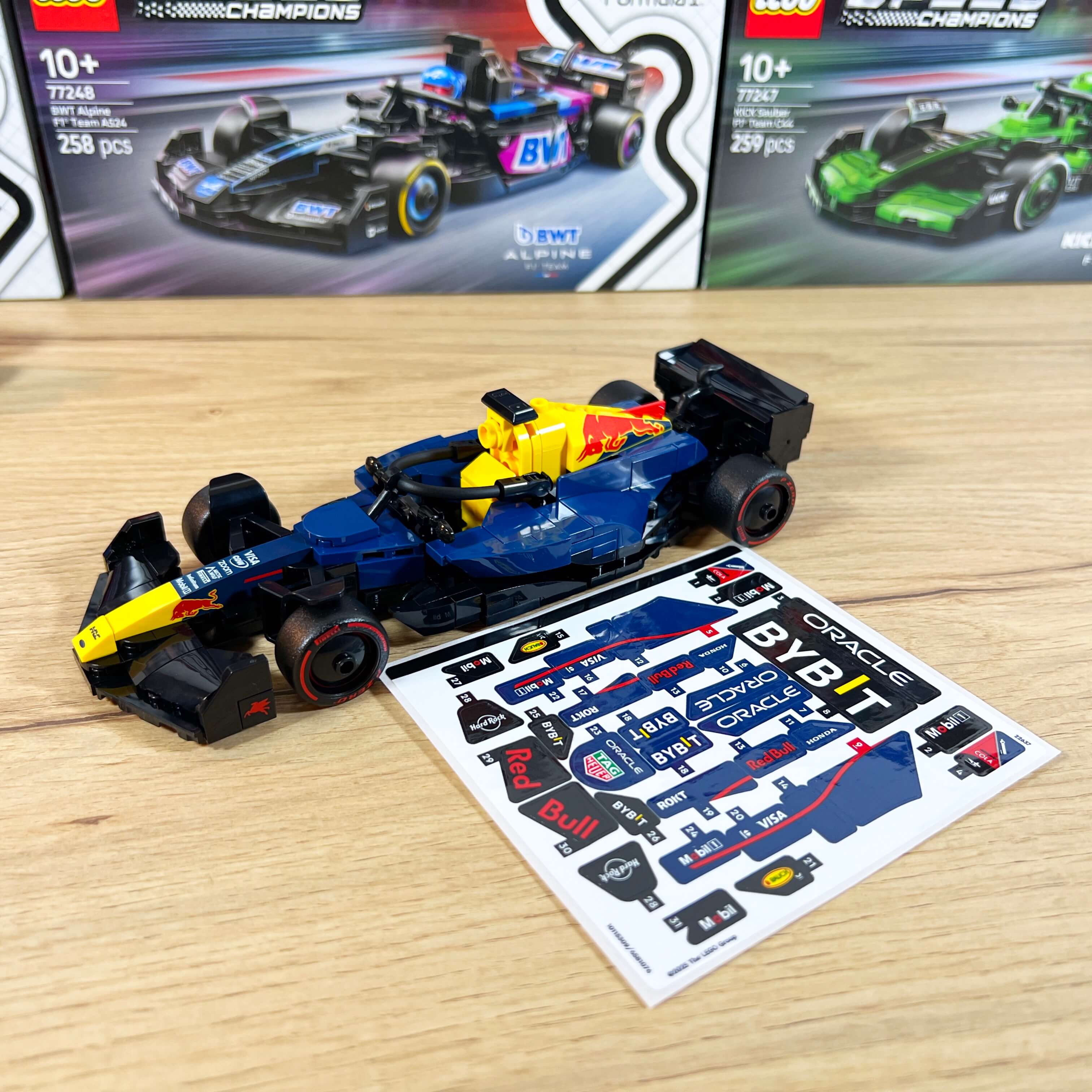
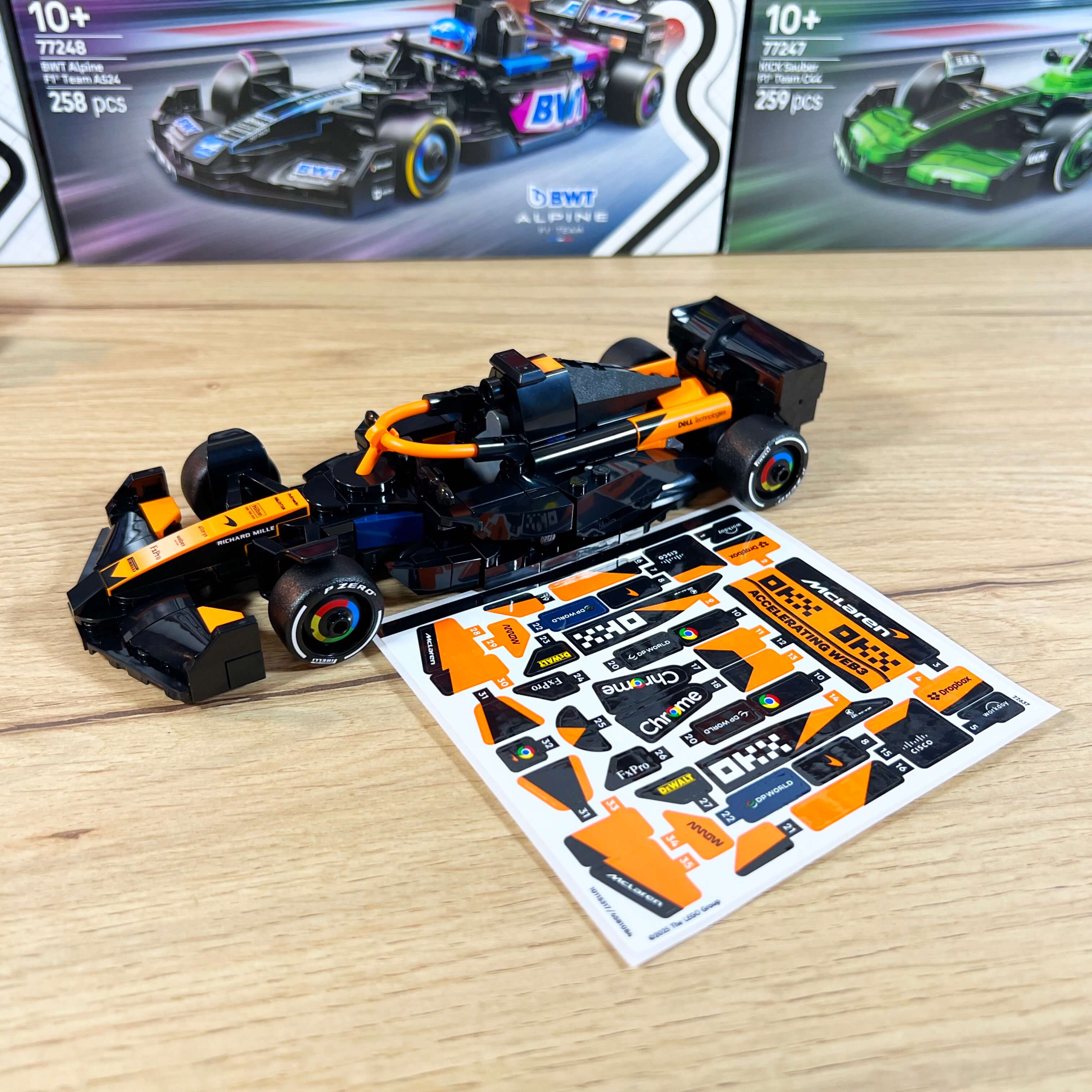
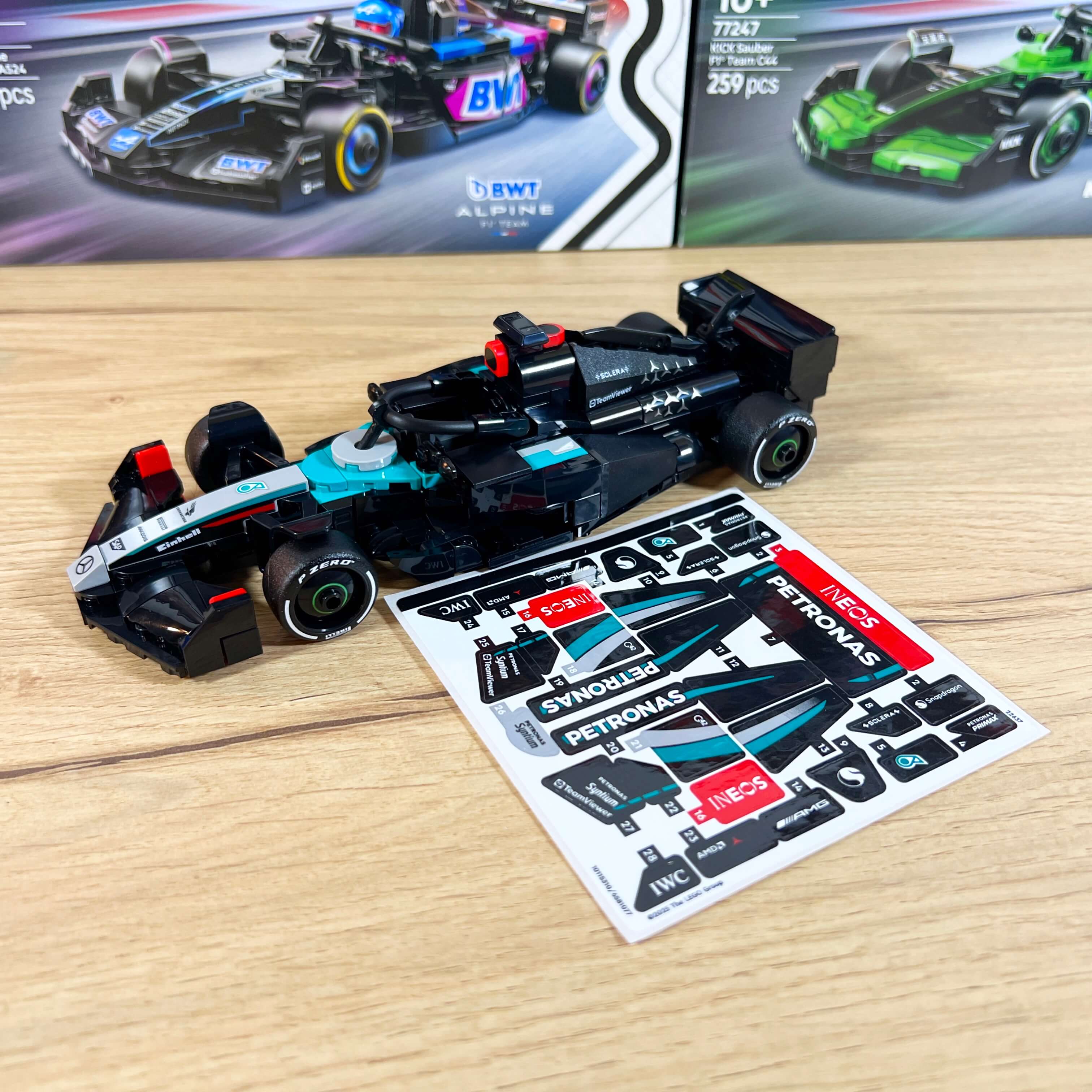
All other details are achieved using stickers, and as is often the case with Speed Champions sets, there are a huge number of them—around thirty per set. Having built all ten cars in succession, I applied the stickers for all ten sets one after another after finishing the builds, which proved particularly tedious. Many of these stickers feature graphics that span multiple pieces, requiring a great deal of precision to ensure proper alignment and continuity of the patterns. I took the opportunity to photograph the cars before applying the stickers.
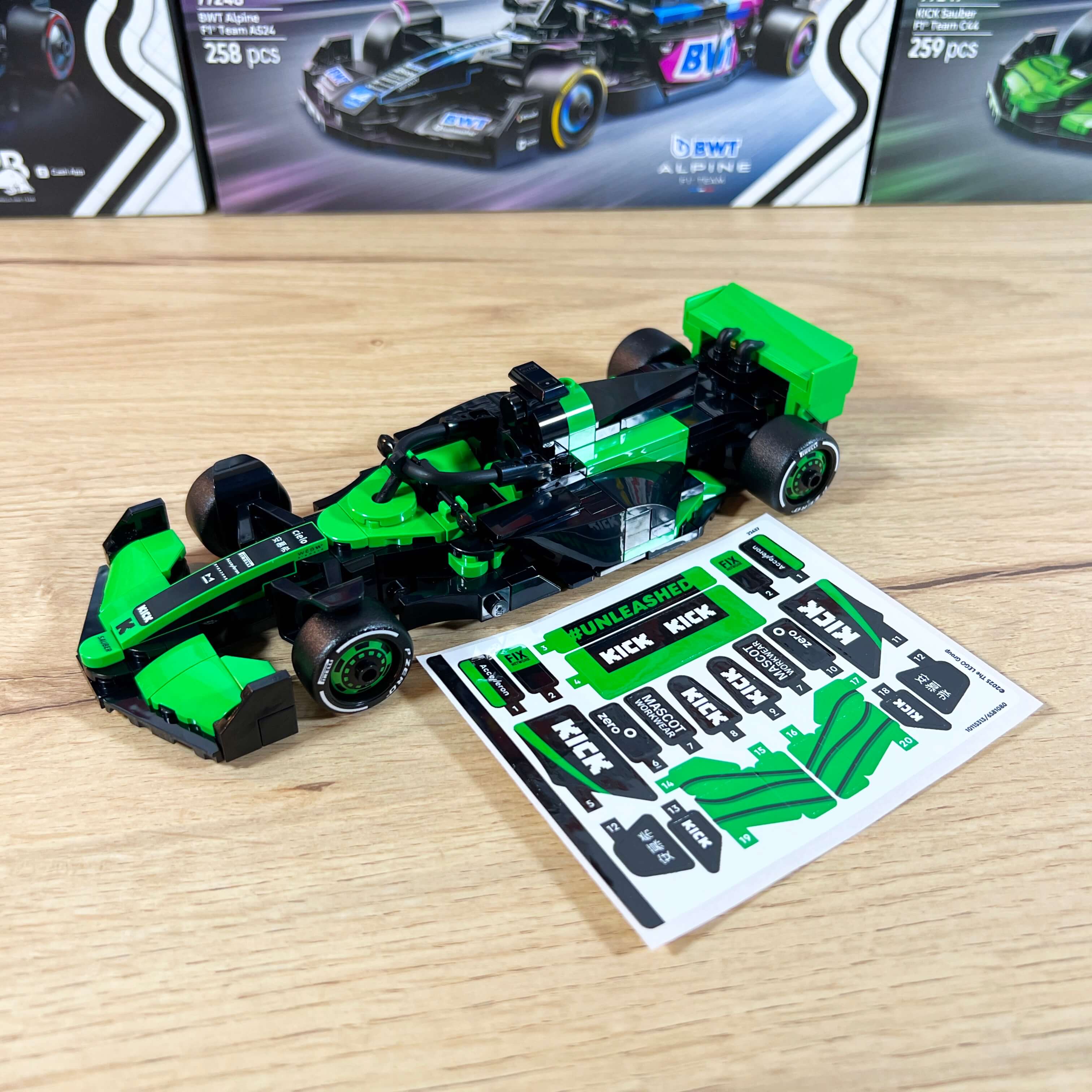
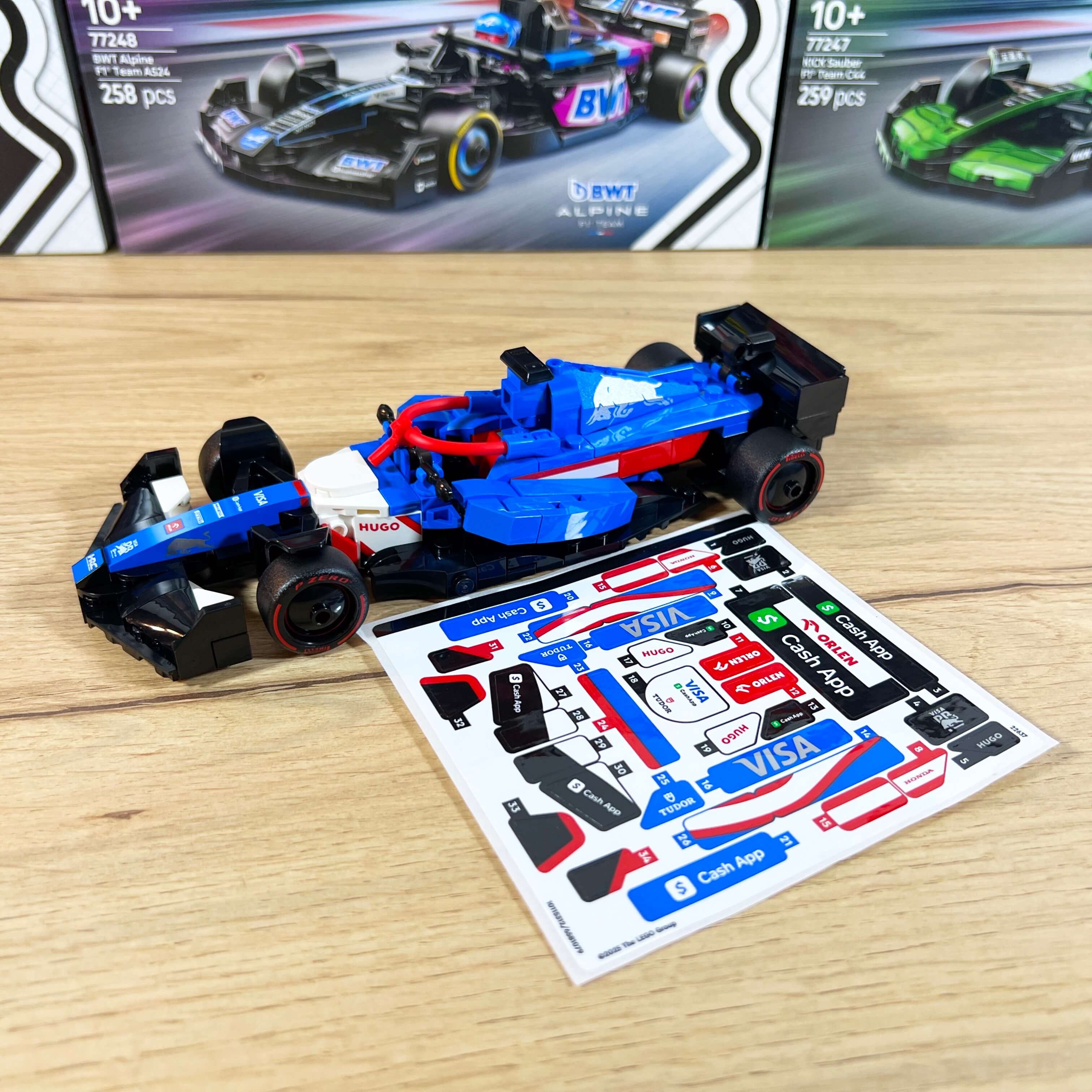
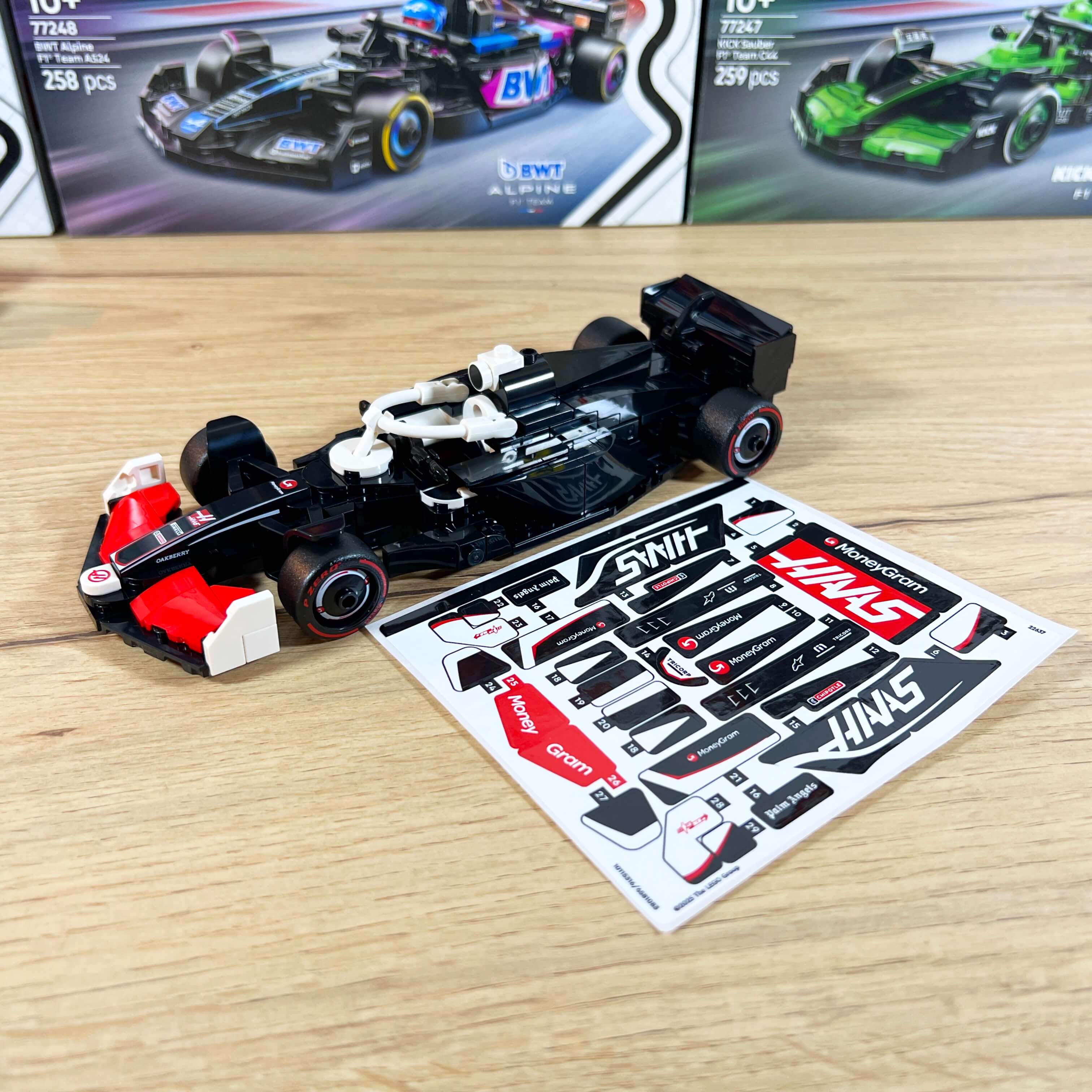
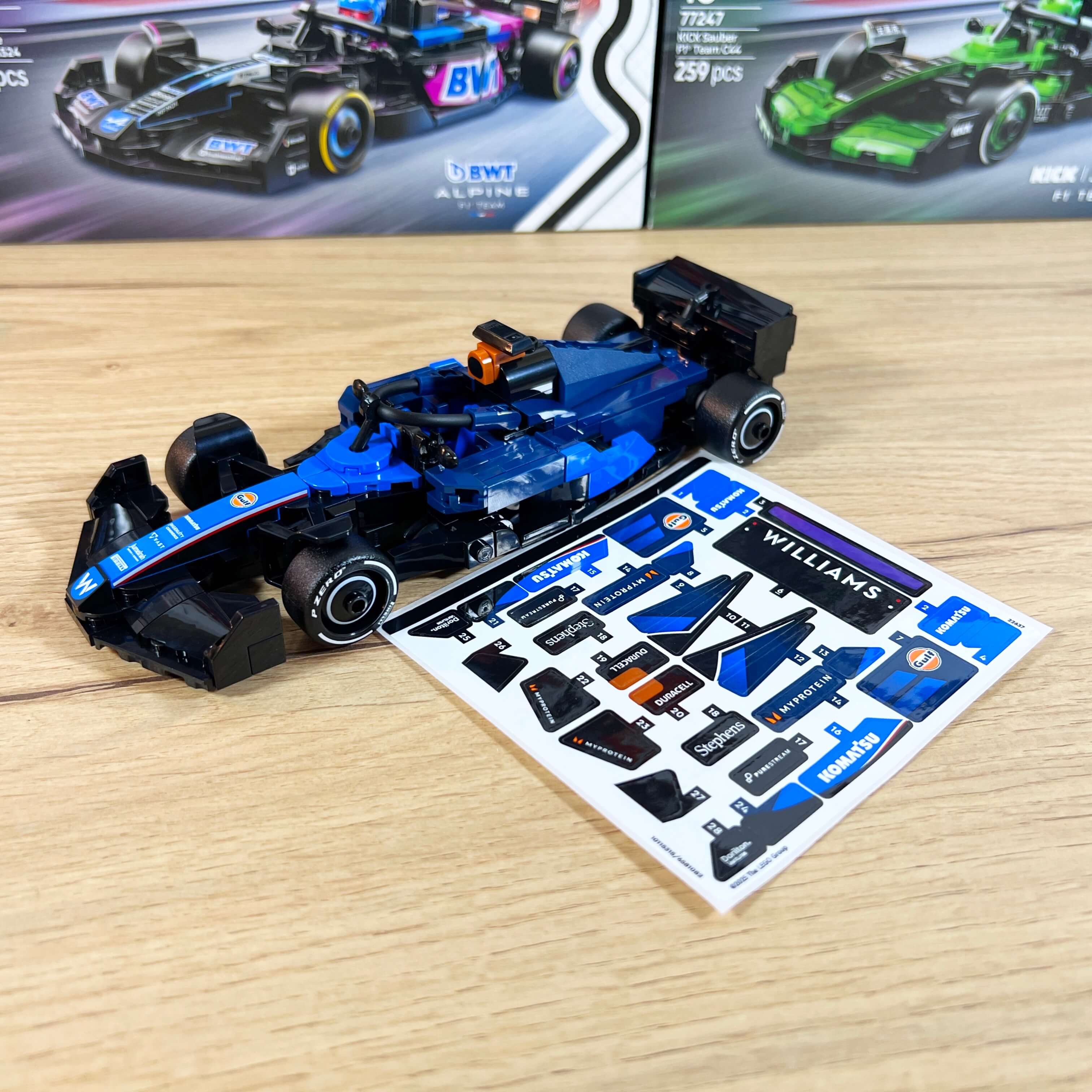
The Different Building Techniques Used Across the Sets
As I mentioned at the beginning of this review, while these ten cars look almost identical from a distance, each one features different building techniques to recreate the unique characteristics of its real-life F1 counterpart. The nose and wings are nearly identical across the range, with only two variations depending on the set, but the rest of the bodywork differs significantly.
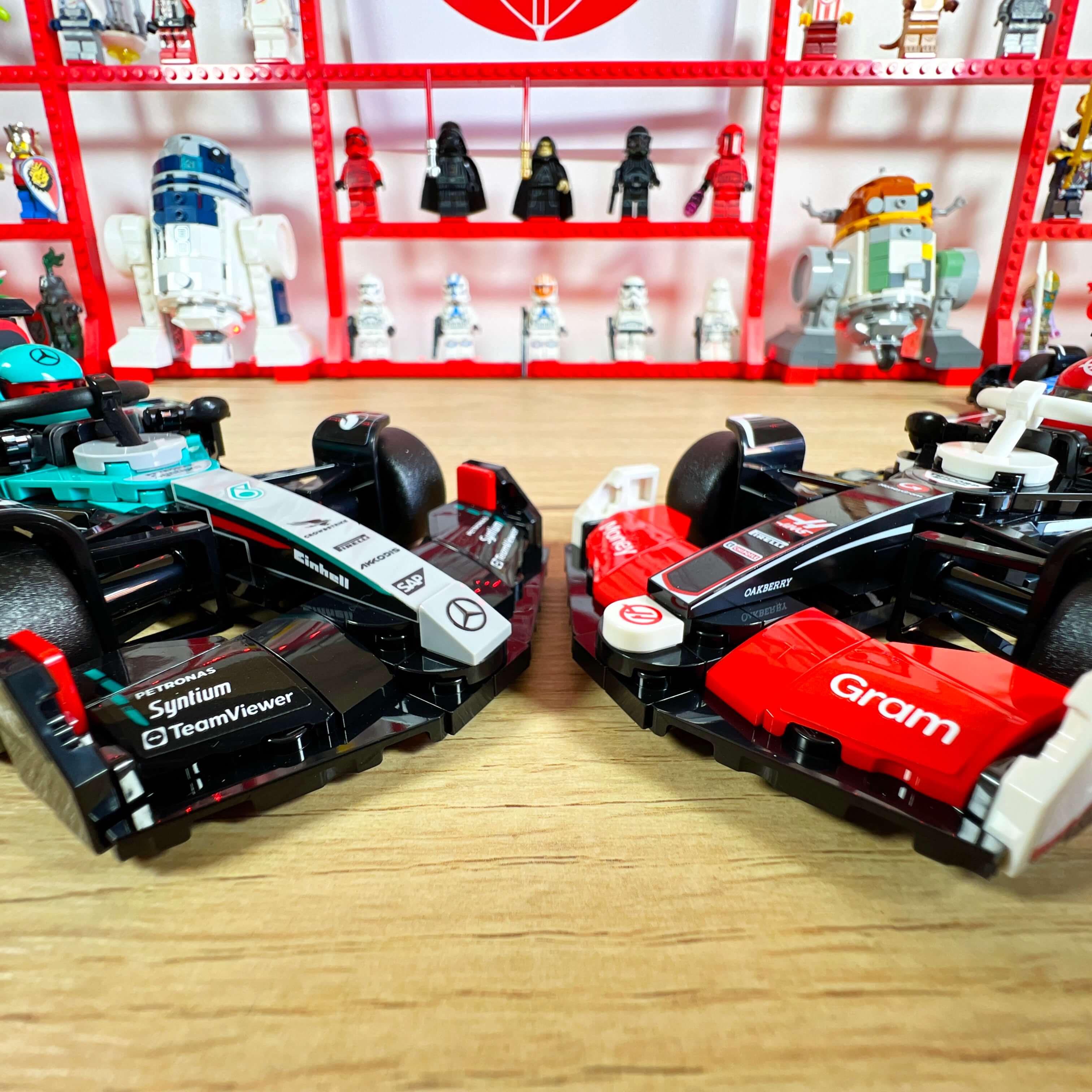
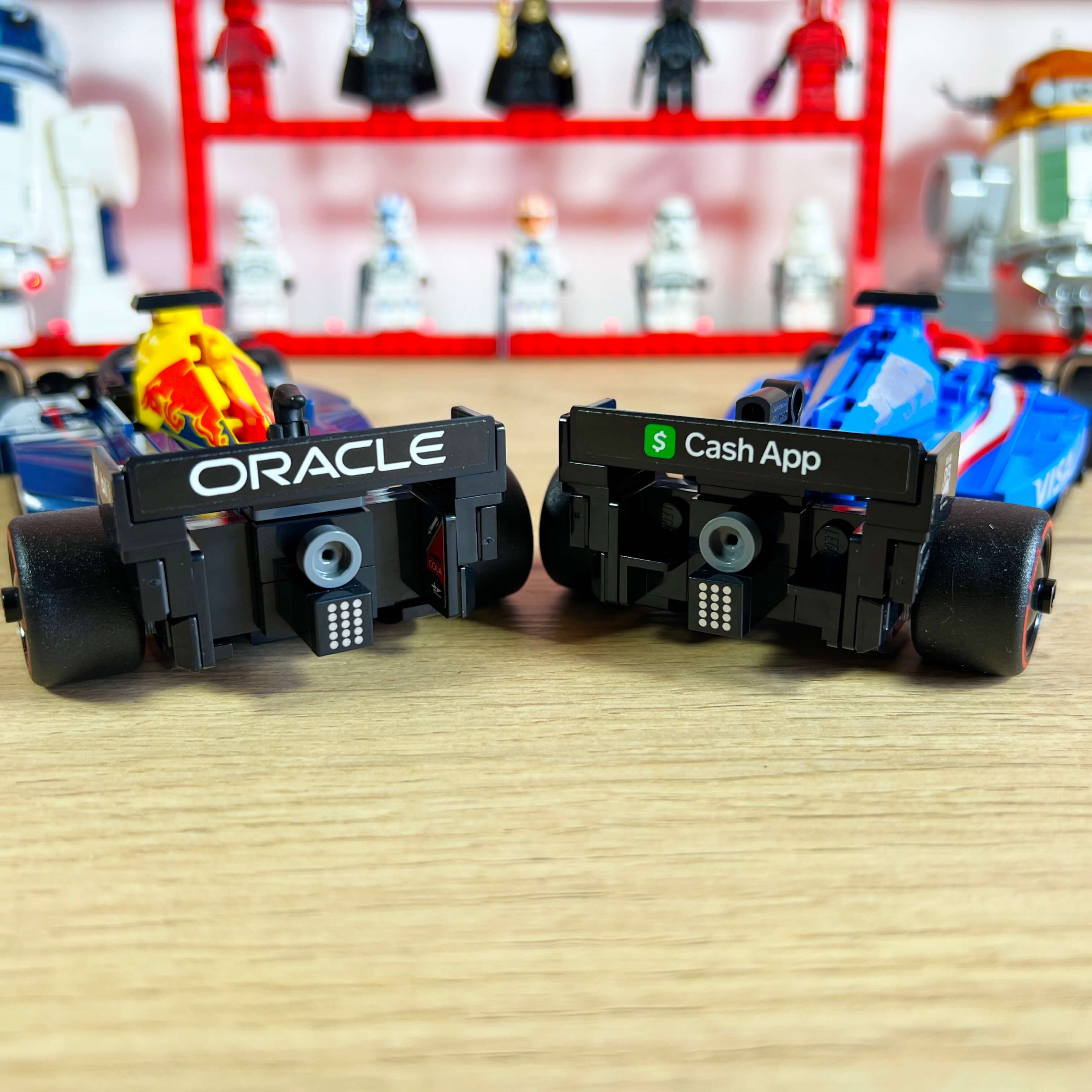
The differences become apparent around the cockpit and bodywork, where each set combines parts and techniques in its own way, making every F1 car unique. The area where these variations are most noticeable is the sidepods. Each car uses a distinct construction method: sometimes a relatively straightforward combination of curved slopes of various sizes and shapes, as seen on most sets, and sometimes more inventive solutions, such as an assembly angled relative to the horizontal plane on the Visa Cash car, or bricks mounted on pivot points on the McLaren and Ferrari.
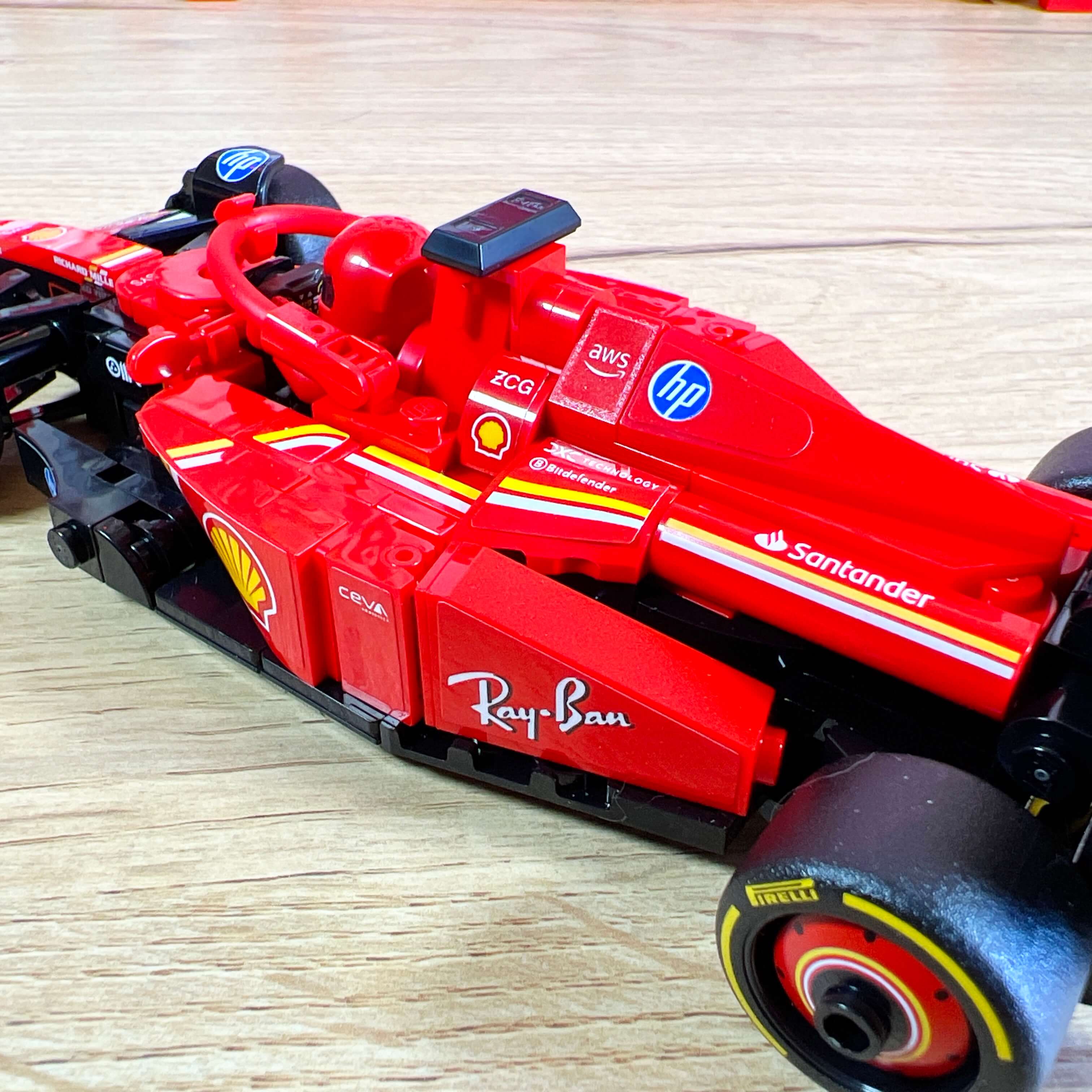
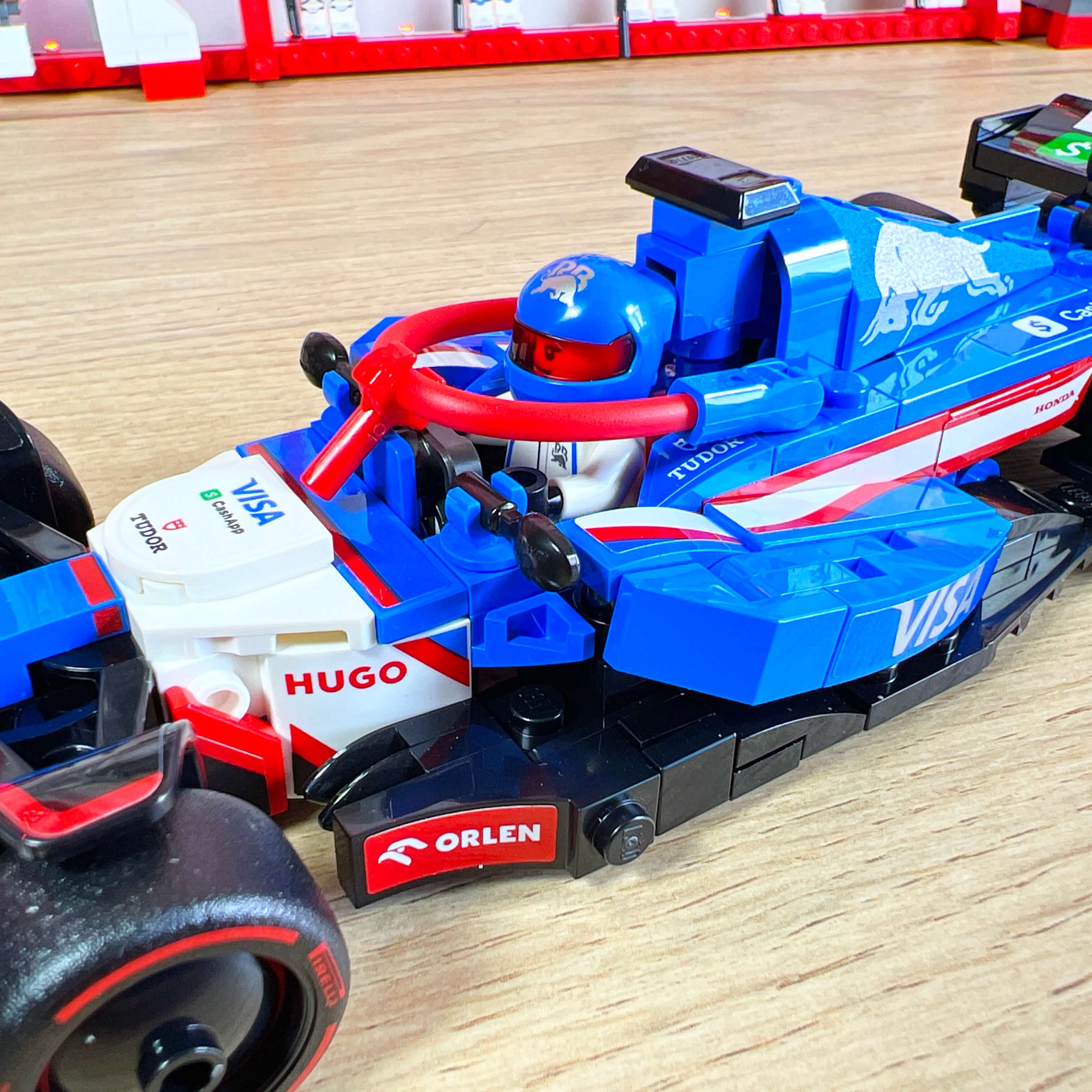
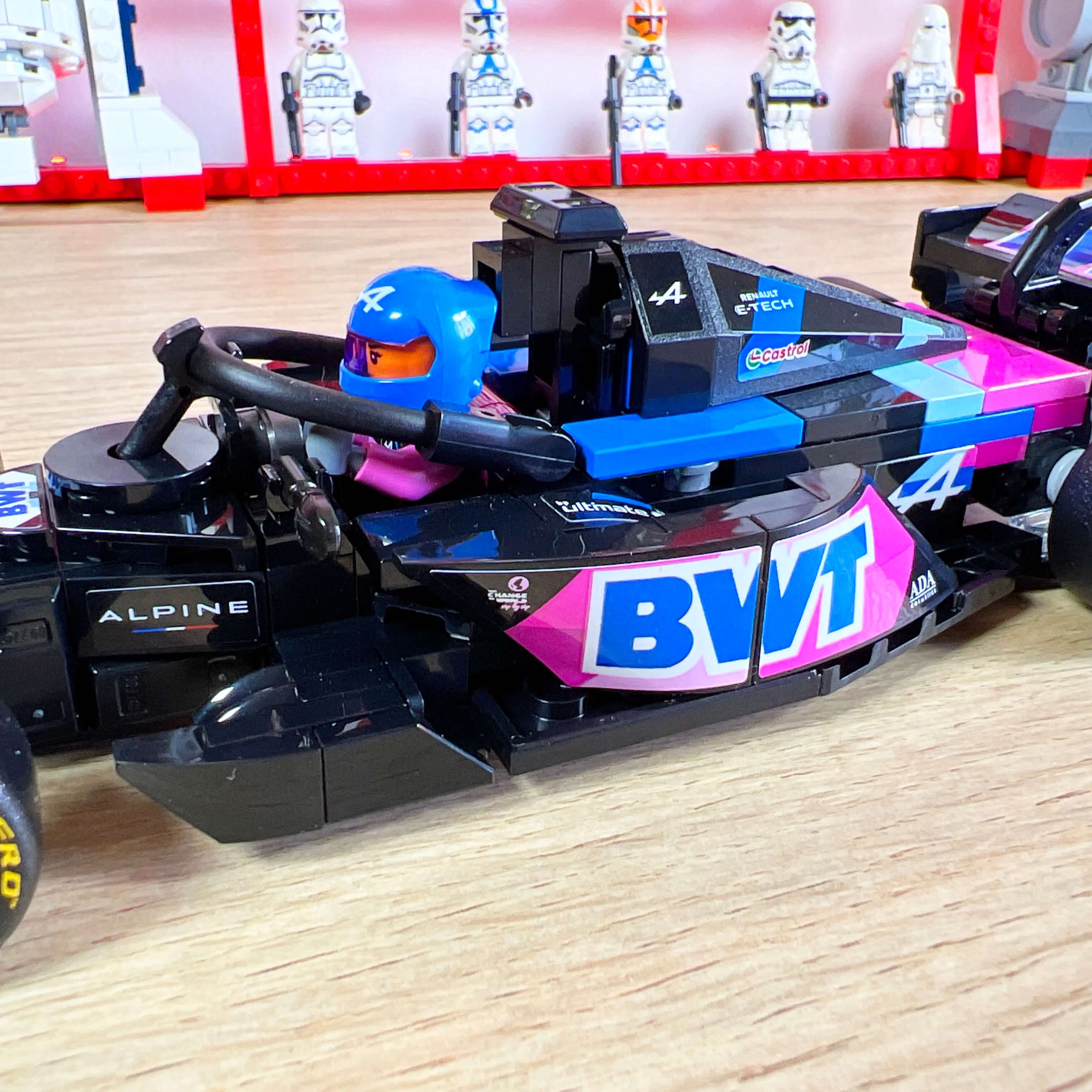
The engine cover also features noteworthy variations, particularly around the vertical fin. Some models, such as the Red Bull and Visa Cash cars, use a ski element placed between slope bricks, with the end hidden inside a window frame piece. Others, such as the Aston Martin and Mercedes, make use of the Black Saber blade element.
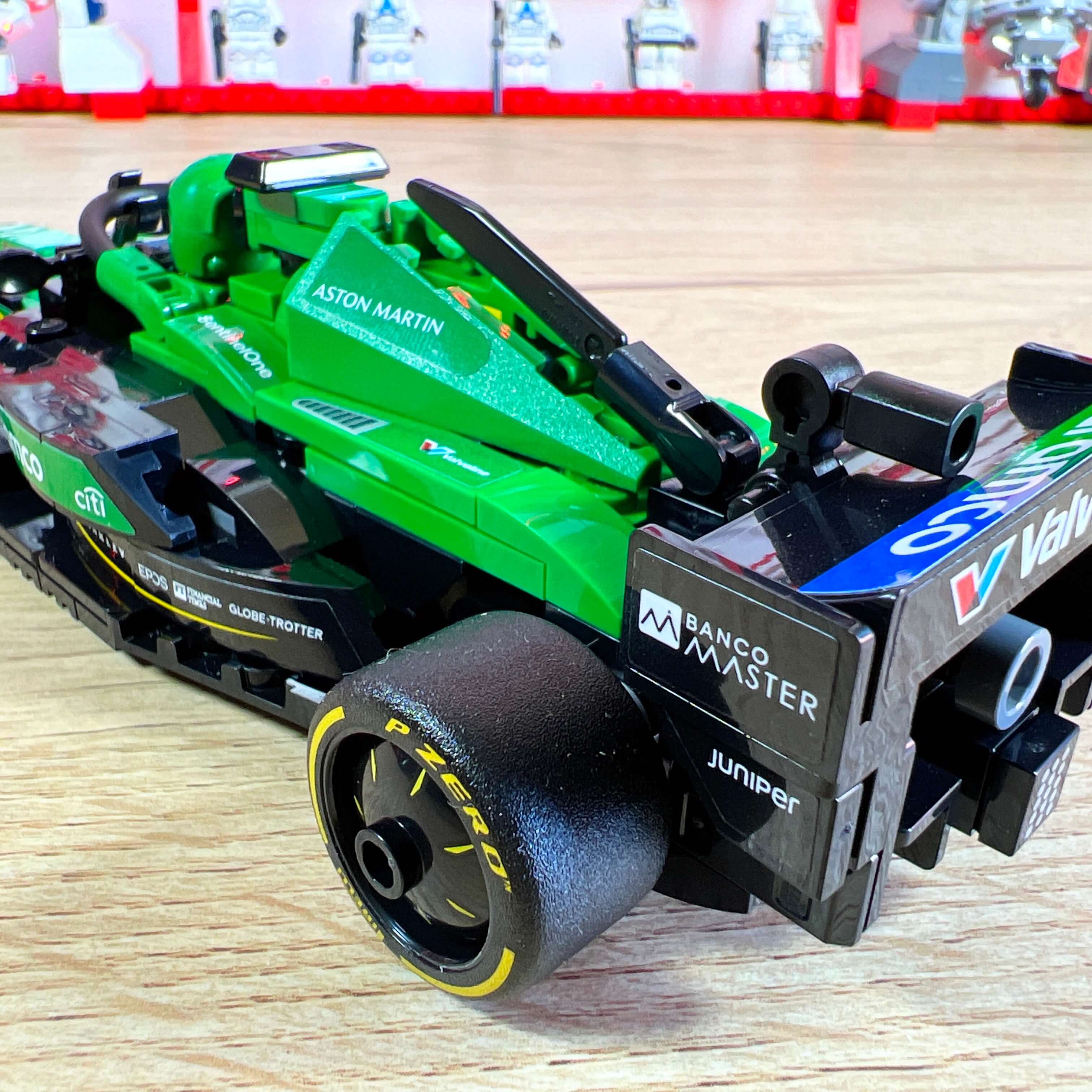
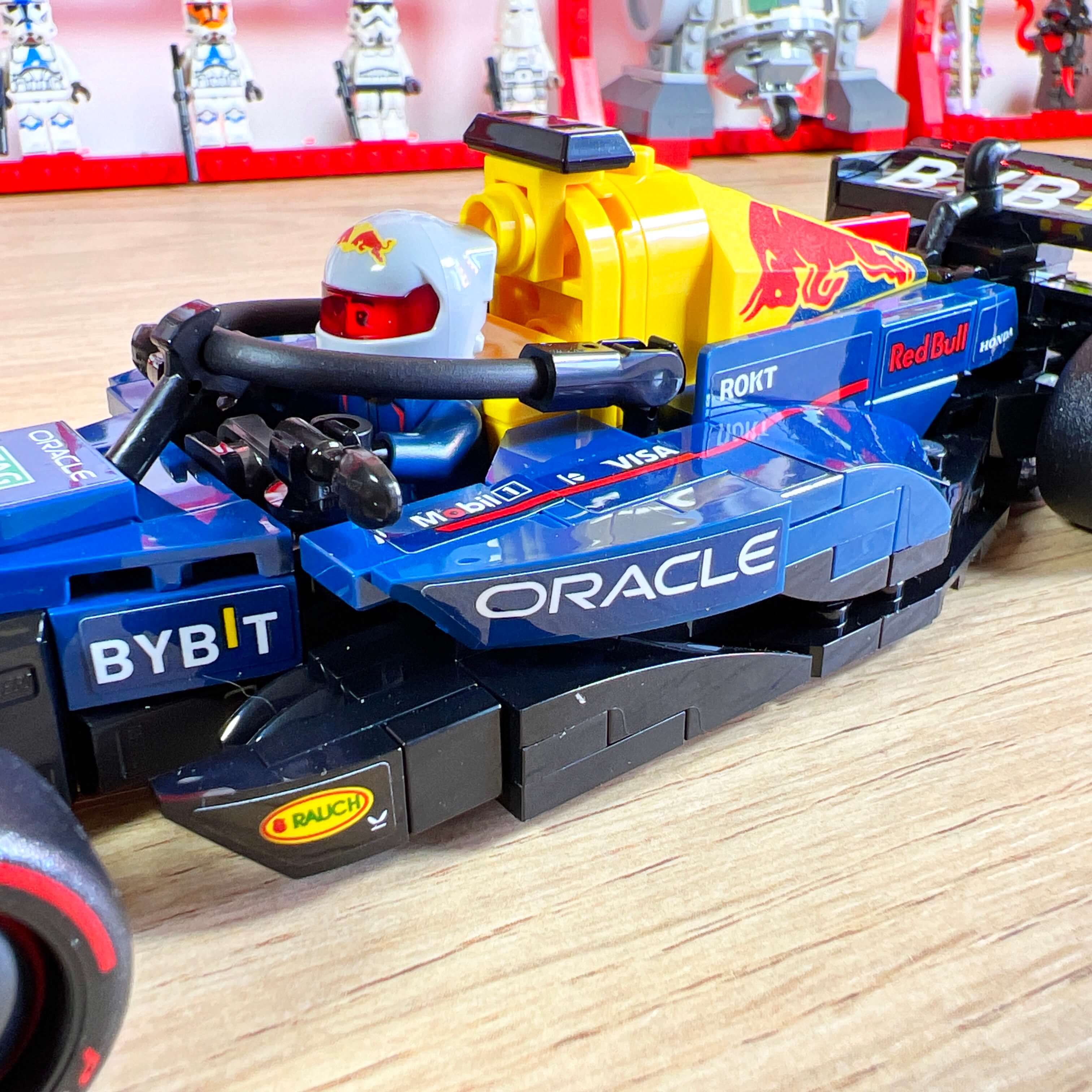
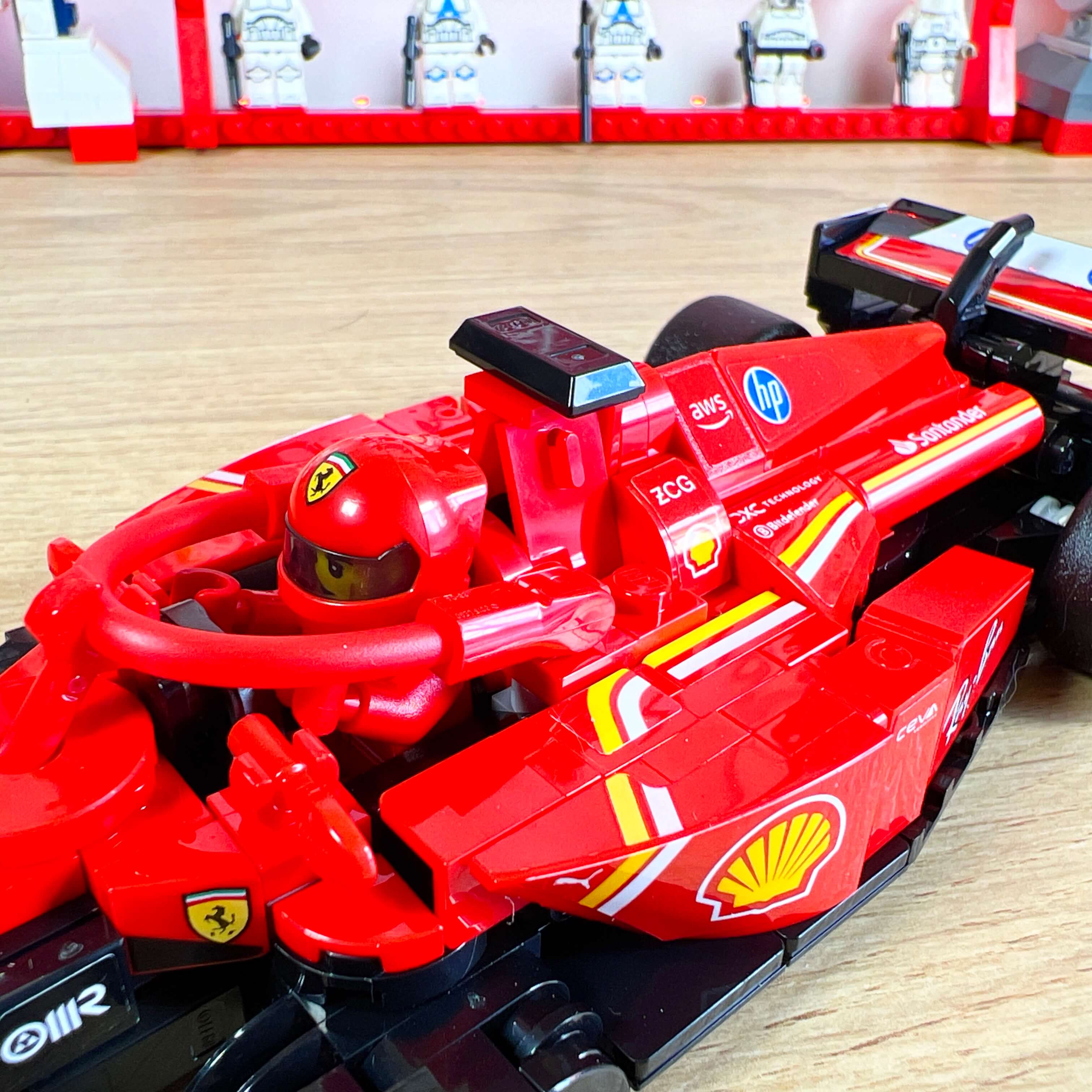
Another interesting variation can be found at the rear end of the engine cover behind the driver's head. The Ferrari, for example, features the most original construction, using two car door elements to hold an assembly together like a clamp.
My Verdict on the 2025 Speed Champions F1 Sets
To conclude and answer the question posed in the title of this review, I have to say that I am extremely satisfied with these sets. They offer everything one could expect from the Speed Champions theme: highly detailed cars combined with engaging and inventive building techniques. As I often mention in my reviews, Speed Champions is the theme that delivers the best building experience relative to the price of the sets, and these F1 cars are no exception. While they retain some of the range's usual shortcomings—namely stickers and the fragility of certain sections—they also introduce meaningful improvements over previous models.
So, should you buy them all? If you're an F1 fan, absolutely. If, like me, you're primarily a Speed Champions collector, it would be a shame to skip them simply because they look similar. The designer has introduced enough variation between the sets to keep the building experience from becoming overly repetitive. Just avoid building all ten at the same time like I did… If you're in any other situation, I would still recommend picking up at least one to try the experience for yourself—you probably won't regret it. Especially since these sets can often be found with discounts of 20% to 30%. At that price, they're hard to pass up. Be sure to check the Temple of Bricks price comparison tool to find the best deals!
Review Score for the 2025 Speed Champions F1 Sets
Review of the 2025 Lego Speed Champions F1 Sets by
Temple of Bricks:
| Criteria | Set Rating | Pros and Cons |
|---|---|---|
| Value for Money |

|
✅ Excellent value for money in line with the theme's standards |
| Collectibility |
|
✅ Accurate models faithful to the real F1 cars ✅ All ten teams represented |
| Display Value |

|
✅ Good level of detail ✅ Impressive display when all ten are showcased together |
| Playability |
|
✅ Cars that actually roll... ⛔️ ...but are fairly fragile |
| Minifigure Selection |
|
✅ New helmets featuring team logos ⛔️ Generic drivers |
| Building Experience |
|
✅ It's Speed Champions at its best ⛔️ It's better to space out the builds to avoid repetition between sets ⛔️ A large number of stickers |
| Inventory Quality |
|
✅ New exclusive elements ✅ Rare and interesting parts |



Passionate Lego enthusiast, I share my expertise with the AFOL community on this blog to guide you in your purchases by providing in-depth reviews, practical tutorials, and the latest Lego news. And of course, discover the best prices for both recent and vintage sets and minifigures, thanks to Temple of Bricks' exclusive comparator.
Other articles in this category
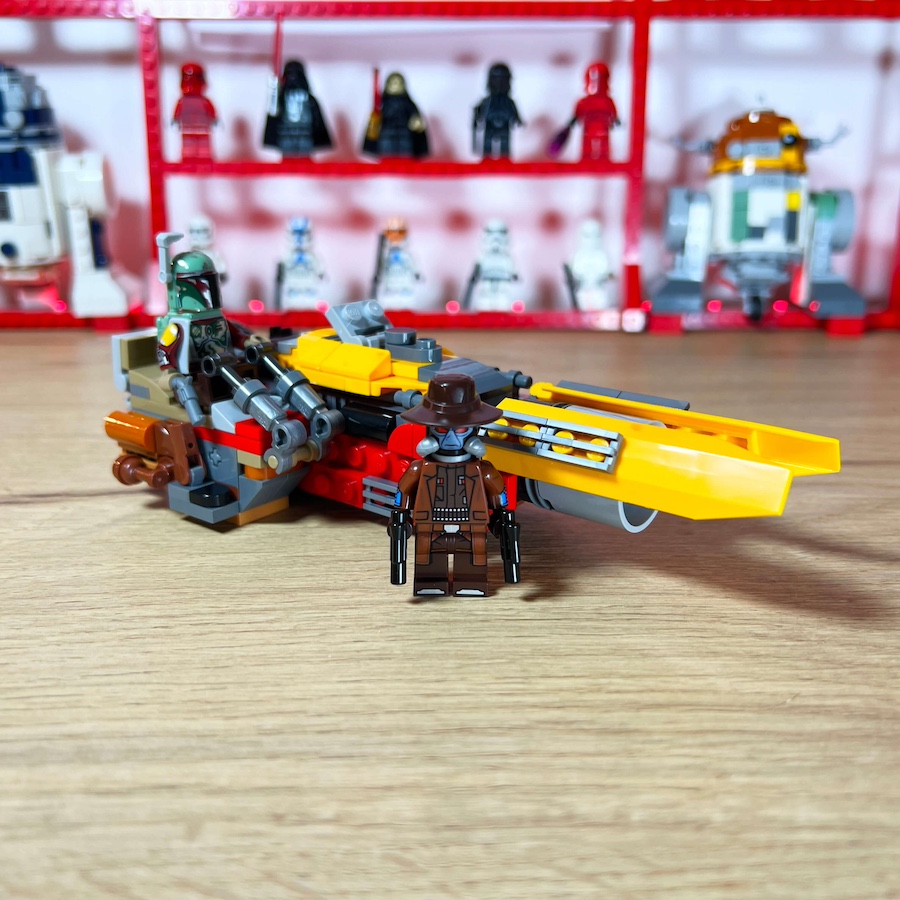
March 30, 2026 The review of the LEGO Star Wars set 75437, “Cobb Vanth’s Speeder,” a 2026 release based on The Mandalorian and The Book of Boba Fett, which includes two highly successful exclusive minifigures: Cobb Vanth and Cad Bane. Read the article >>
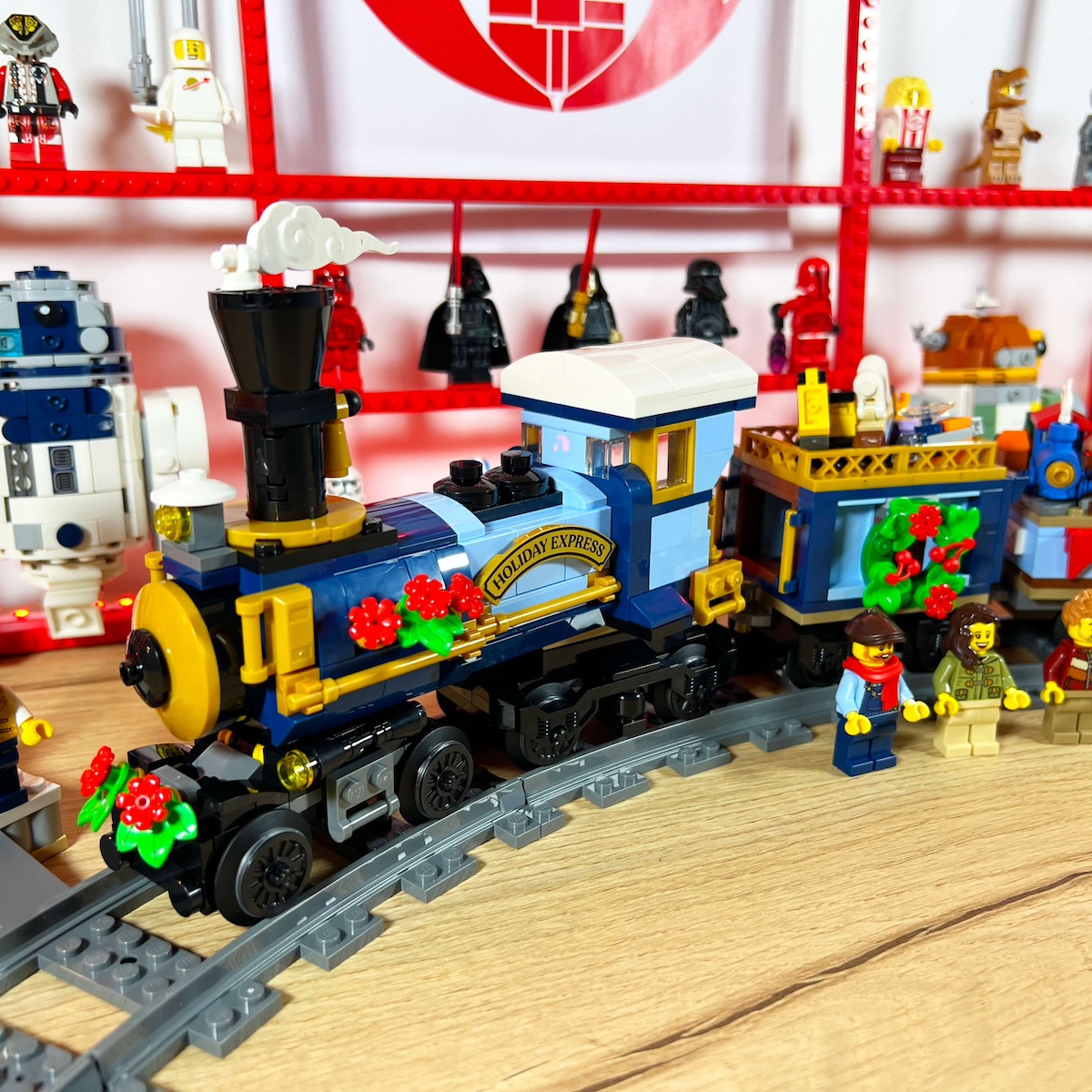
LEGO Icons 10361 Holiday Express Train Review: A Successful Winter Village Set?
December 14, 2025 The review of the new train of the Winter Village series, following the 2016 version, allowing to diversify your collection after the buildings of the previous years Read the article >>
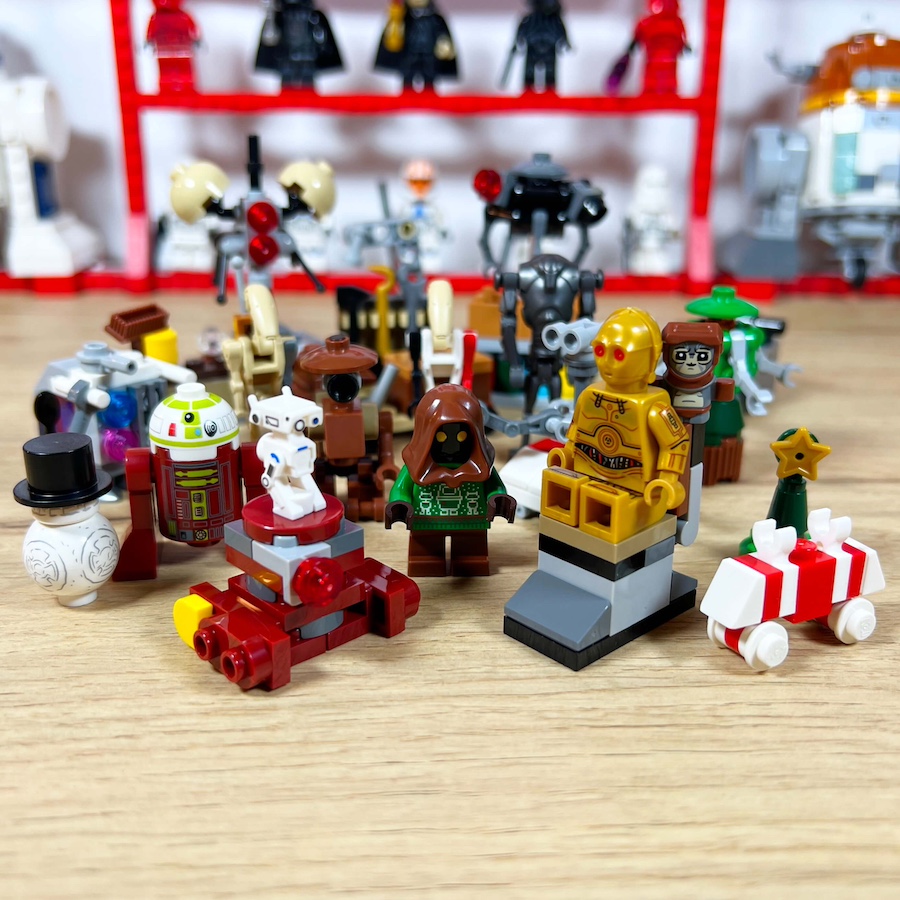
LEGO Star Wars 2025 Advent Calendar review: best or worst edition?
December 1, 2025 The review of the 2025 edition of the Lego Star Wars Advent Calendar, which marks a turning point, for better and for worse... Read the article >>